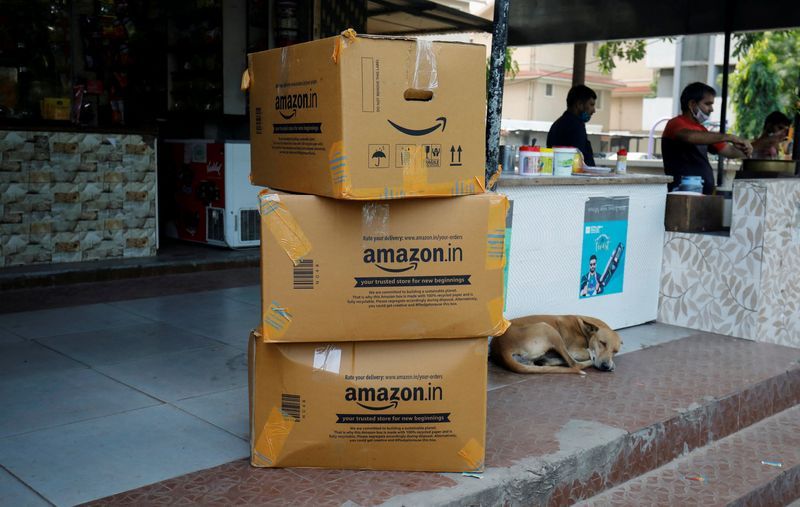
Amazon has committed to taking action against a third-party delivery partner in India following a deadly fire that claimed two lives, the company announced this week. The e-commerce giant stated it will impose "appropriate action" against M&M Logistics Solutions once police complete their investigation into the incident, which occurred in the northern state of Uttarakhand on June 5. Separately, Amazon has initiated its own independent internal review of the circumstances surrounding the tragedy.
The fire at the M&M Logistics facility exposed serious safety lapses at the warehouse. According to documents reviewed by Reuters from local police in Uttarakhand, the building lacked critical fire safety infrastructure including a valid fire safety certificate, functional fire alarm systems, smoke detection equipment, and a properly designated emergency exit route. These omissions represent fundamental failures in workplace safety protocols that are mandatory under Indian building and labour regulations.
M&M Logistics Solutions operates an extensive network across northern India as Amazon's trusted delivery partner. The company manages 45 distribution centres spanning 21 cities, serving as the backbone of Amazon's package delivery operations throughout the region. This scale underscores the significant scope of Amazon's reliance on third-party logistics providers and raises questions about oversight mechanisms across its supply chain infrastructure.
The incident has drawn scrutiny from worker advocacy groups. The Amazon India Workers Union has formally demanded an independent judicial inquiry into the deaths, characterizing the fire as symptomatic of systemic failures in workplace protection. The union's call for a judge-led investigation reflects broader concerns about accountability in Amazon's operations and whether internal reviews adequately address safety culture issues within the company's vendor ecosystem.
This incident represents the latest in a series of labour and safety controversies facing Amazon in India. Earlier in 2024, the company faced investigation by India's National Human Rights Commission over allegations of labour law violations at a warehouse facility near New Delhi during an intense heatwave period. That inquiry prompted the state government to initiate legal proceedings under India's labour statutes, signalling growing willingness by authorities to hold e-commerce giants accountable for worker conditions.
Amazon's supplier code of conduct explicitly prohibits working environments that endanger human safety, with specific reference to uncontrolled fire hazards. The code grants Amazon authority to suspend or terminate third-party contractors who violate these standards, establishing a contractual framework that should theoretically prevent such incidents. The gap between these written policies and their implementation at M&M Logistics raises questions about vendor compliance monitoring and the effectiveness of Amazon's oversight mechanisms.
The tragedy occurs within a broader context of safety concerns in India's rapidly expanding e-commerce logistics sector. As companies like Amazon scale operations through third-party partnerships, the decentralized nature of warehouse management creates fragmentation in safety standards and accountability. This structure allows contractors to operate facilities that would likely not meet safety requirements if directly managed by the parent company, creating a liability shield that regulatory bodies are increasingly scrutinizing.
For Malaysian readers, the incident carries relevance beyond the immediate context of Indian labour practices. Southeast Asia's e-commerce sector, including Malaysia's own rapidly growing online retail industry, mirrors India's model of outsourced delivery networks. The M&M Logistics fire highlights risks inherent in the platform economy model adopted across the region, where major technology firms rely on third-party contractors to minimize direct employment and regulatory exposure. Malaysia's regulatory approach to e-commerce labour standards, currently still developing, should heed lessons from India's experience.
Amazon's statement that worker safety is its "top priority" contrasts starkly with documented conditions at partner facilities. This disparity between corporate messaging and operational reality reflects broader tensions within the technology-enabled logistics industry, where cost pressures on contractors frequently override safety investments. The company's commitment to take action once investigations conclude leaves ambiguous the timeline and consequences, suggesting the announcement functions partly as damage control during an ongoing review period.
Regulatory momentum appears to be building against Amazon in India. Government bodies at both national and state levels are demonstrating willingness to enforce labour laws against the e-commerce sector, signalling that previous leniency toward technology companies may be diminishing. This represents a significant shift in how authorities treat platform companies, moving away from treating them as mere marketplaces toward holding them responsible for conditions throughout their supply chains.
The M&M Logistics case will likely influence how other e-commerce platforms in India and Southeast Asia manage third-party relationships moving forward. Companies may face pressure to establish more rigorous vendor oversight mechanisms, conduct regular safety audits, and accept greater liability for contractor operations. However, without mandatory minimum standards and enforcement mechanisms, incremental industry improvements remain dependent on corporate voluntarism rather than systemic change.
For workers and unions across the region, the case demonstrates the importance of collective action and public scrutiny in compelling companies to acknowledge safety failures. The Amazon India Workers Union's demand for judicial investigation rather than accepting corporate self-review sets a precedent that may inspire similar demands from labour organizations across Southeast Asia, potentially shifting power dynamics in negotiations with major e-commerce employers.

