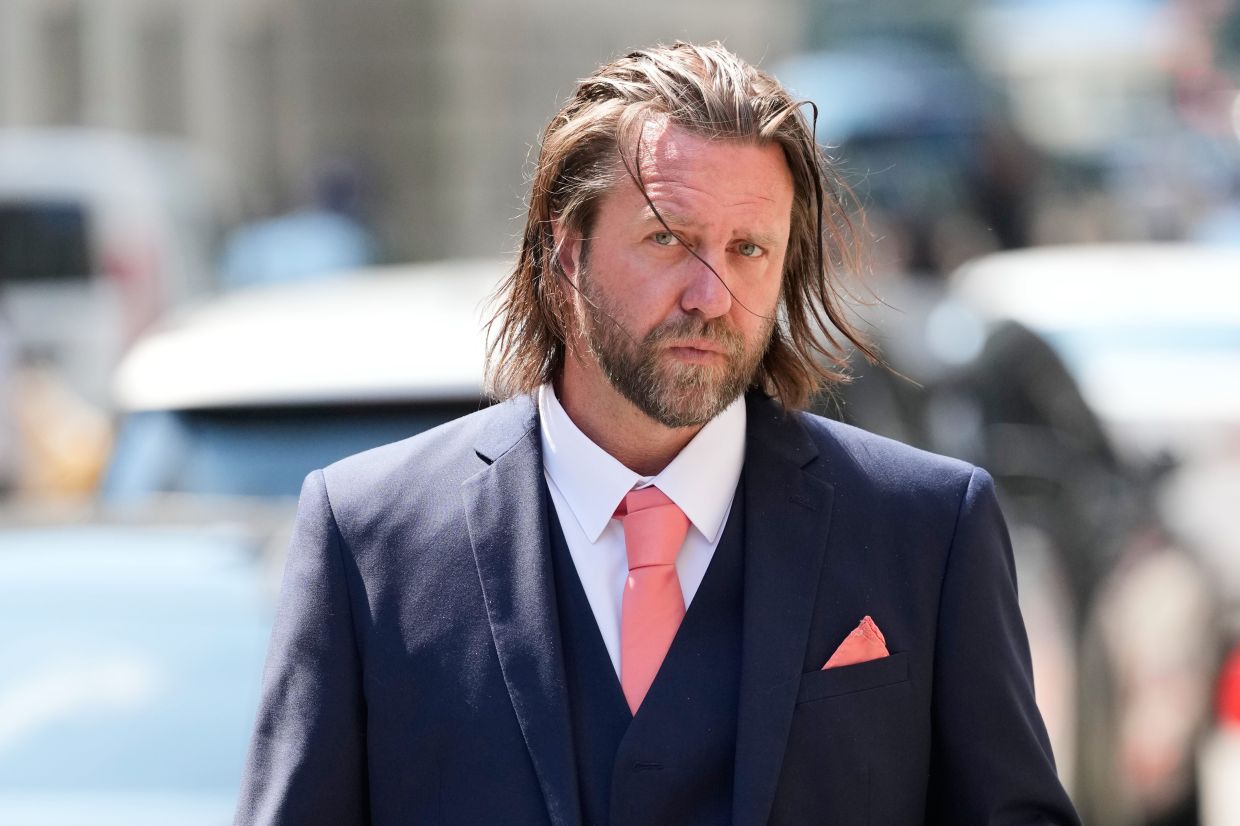
American film director Carl Rinsch, 48, has been handed a prison sentence following his conviction last year on charges of embezzling US$11 million provided by Netflix in 2020 to develop a science fiction television series. The case underscores mounting concerns within the entertainment industry about fiduciary responsibility and the risks posed when large production budgets are entrusted to individual creatives without adequate oversight mechanisms.
Rinsch was supposed to use the substantial sum to create the series, a project that centred on a scientist developing a colony of powerful clones exiled to a sealed zone within a Brazilian city. According to court documents, the narrative arc involved these engineered beings establishing an advanced technological society while entering into escalating confrontations with both ordinary humans and each other. However, rather than channelling resources into production, Rinsch diverted the funds for personal enrichment through a series of financially reckless and self-serving transactions.
U.S. Attorney for the Southern District of New York Jay Clayton characterised Rinsch's conduct in deliberately blunt terms, stating that "instead of using the money to make the show, Rinsch made risky bets on highly speculative stock options and cryptocurrency, and spent millions of dollars on luxury goods for himself." The spending pattern revealed during prosecution painted a portrait of unchecked excess: Rinsch acquired luxury apparel and designer furniture, purchased a red Ferrari sports car, and accumulated a collection of five Rolls-Royces—vehicles that collectively represent the kind of conspicuous consumption typically associated with individuals who have fundamentally lost perspective on the distinction between personal and corporate assets.
The scale of Rinsch's acquisitions suggests a troubling mindset in which the filmmaker had convinced himself that Netflix's production budget functioned as personal discretionary income rather than capital specifically earmarked for creative output. The Ferrari and Rolls-Royce purchases in particular signal a psychological disconnect from professional responsibility, as these vehicles serve no legitimate production purpose and represent straightforward personal indulgence financed by misappropriated studio money.
Beyond the prison sentence imposed by the court, Rinsch has been ordered to forfeit the entire US$11 million sum, a financial penalty designed to restore the streaming platform's losses. This restitution requirement, while unlikely to fully compensate Netflix for the project delays and reputational damage incurred, at least establishes a legal framework for financial accountability in cases involving creative fraud.
Rinsch's legal team mounted a mitigation strategy centred on psychological and circumstantial arguments, requesting that the judge exercise leniency by citing the director's decisions occurred "under the enormity of pressure" during a particularly demanding phase of his career trajectory. Defence lawyers further contended that an "incredibly contentious divorce" created emotional and financial stress that contributed to his poor judgment. These arguments attempted to reframe deliberate fraud as a byproduct of external circumstances rather than conscious criminal intent.
The dispute between Rinsch and Netflix had reportedly been contentious from the project's inception, with disagreements over the series—which was originally titled before potential later revisions—suggesting that professional friction may have exacerbated underlying issues. Yet regardless of any acrimonious production dynamics, the fundamental breach of fiduciary duty remained indefensible under law, as Rinsch's personal grievances could not justify the misappropriation of funds explicitly designated for production purposes.
Interestingly, prominent figures within the film industry registered their perspective on Rinsch's case. Keanu Reeves, the acclaimed actor who had worked with Rinsch previously, submitted a letter to the presiding judge appealing for "leniency and mercy." Reeves characterised his former collaborator as an "exceptional artist" while acknowledging Rinsch's tendency toward "self-sabotage," suggesting that creative brilliance and destructive behaviour had coexisted within the same individual—a reality that, however poignant, does not constitute legal exculpation.
The Rinsch case carries significant implications for how streaming platforms and traditional production companies structure contractual agreements and financial disbursement mechanisms with independent creatives. Major studios have historically relied on trust-based relationships with established directors, but this fraud demonstrates the vulnerabilities inherent in systems that defer substantial capital release to individuals without robust checkpoint systems, independent auditing, and periodic financial accounting requirements.
For Malaysian and Southeast Asian entertainment professionals, the case offers instructive lessons regarding financial governance in creative industries that are increasingly attracting international investment. As regional production capabilities expand and streaming platforms establish localized content operations, implementing rigorous financial controls—while preserving creative autonomy—becomes essential. The reputational and legal consequences that befell Netflix, combined with Rinsch's criminal conviction, illustrate why financial transparency and accountability frameworks must be non-negotiable elements of high-budget production agreements, regardless of a director's previous artistic achievements or industry reputation.

