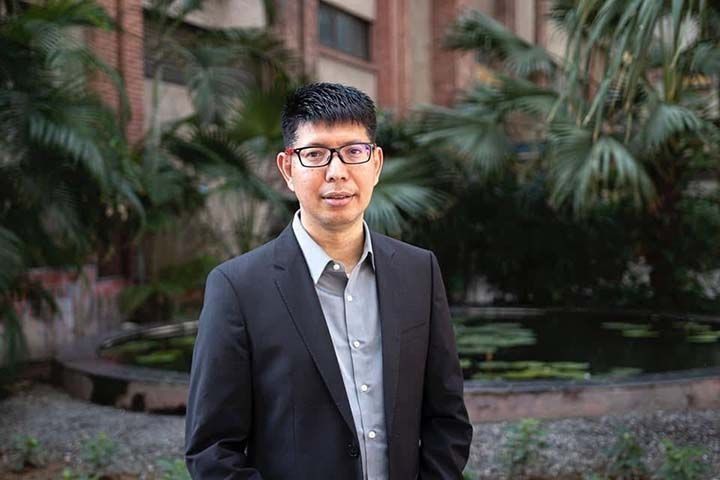
An American scholar who studies Myanmar has been detained in China while traveling to attend an academic conference, according to his research institute, which has called for his immediate and unconditional release. Min Zin, executive director of the Institute for Strategy and Policy (ISP) - Myanmar, was taken into custody on June 3 in the southwestern city of Kunming. China's foreign ministry confirmed his arrest the following week, alleging he was engaged in spying and posed a threat to national security.
The think tank that Min Zin founded has firmly rejected the accusations, stating in a statement released on Wednesday (June 17) that he was in Kunming solely to participate in an academic workshop. ISP-Myanmar emphasised that it condemns what it describes as baseless allegations against one of its leaders. The institute stressed that research and academic organisations must be able to conduct their work without facing intimidation or unfounded charges.
The United States has also come to Min Zin's defence, with the State Department rejecting China's claims against him. American consular officials have already visited the detained scholar, and the State Department is actively engaging with Chinese authorities to ensure he receives appropriate consular assistance. However, China's foreign ministry has maintained its position, reiterating through official channels that Min Zin is suspected of espionage and that the case will be handled according to Chinese law.
The timing of Min Zin's detention carries significant political weight. He was arrested merely weeks before Myanmar's military leader, Min Aung Hlaing, was scheduled to make a five-day state visit to China. This proximity suggests the arrest may have diplomatic undercurrents, though Chinese officials have not explicitly connected the two events. China has long been one of Myanmar's most crucial foreign partners, maintaining deep economic and strategic ties with the country's armed forces.
The military context in Myanmar remains volatile and consequential for the region. The armed forces detained the country's elected government led by Aung San Suu Kyi in February 2021, triggering widespread public anger and demonstrations. What began as peaceful protests evolved into a sophisticated armed insurgency, with newly established pro-democracy militia groups joining forces with longstanding ethnic armed organisations to challenge military control. This conflict has destabilised Myanmar and created ripple effects across Southeast Asia.
Min Zin himself has a notable history connected to Myanmar's struggle for democratic governance. He was a student activist who participated in the democracy movement of 1988, a pivotal moment in Myanmar's political history. He went on to study political science at the University of California, Berkeley, where he gained formal academic training that would shape his later career in research and policy analysis. This background demonstrates his deep commitment to understanding and promoting democratic principles in his home country.
The Institute for Strategy and Policy that Min Zin helped establish reflects his scholarly interests and political concerns. Initially operating within Myanmar, the think tank relocated its operations overseas following the 2021 military coup, a common trajectory for many civil society organisations and intellectuals fleeing the junta's control. From its external base, ISP-Myanmar has produced research examining Myanmar's internal armed conflict, pathways to political transition, the deteriorating state of the national economy, and critically, the complex relationship between Myanmar and China on trade and diplomatic matters.
The detention raises broader questions about scholarly independence and freedom of research in the region. Think tanks and academic institutions studying Myanmar have become increasingly vulnerable to pressure from authorities, particularly when their work touches on sensitive political topics or involves cross-border collaboration. The allegation of espionage against someone attending an academic workshop suggests a broader chilling effect on international scholarly exchange, a concerning trend for the region's intellectual community and democratic movements.
Min Zin's case also illuminates the complicated position China occupies in Myanmar. While Beijing has been a steadfast supporter of the military regime since the coup, it also cultivates relationships with civil society figures and researchers. The detention of a respected scholar may create friction with international partners and civil society groups that view China as complicit in curtailing academic freedom. For Malaysia and other Southeast Asian nations, the case underscores how geopolitical tensions in the region can affect intellectuals and researchers across borders, particularly those engaged in politically sensitive work.
The incident reflects a recurring pattern in Myanmar and across Southeast Asia where governments increasingly view independent research institutions and scholars as potential security threats. This dynamic extends beyond Myanmar to encompass regional concerns about political stability, foreign interference, and the role of academic institutions in shaping public discourse. For Malaysian policymakers and observers, the detention serves as a reminder of how precarious the position of independent scholars can be in the region, and how international academic cooperation faces headwinds from nationalist and security concerns.