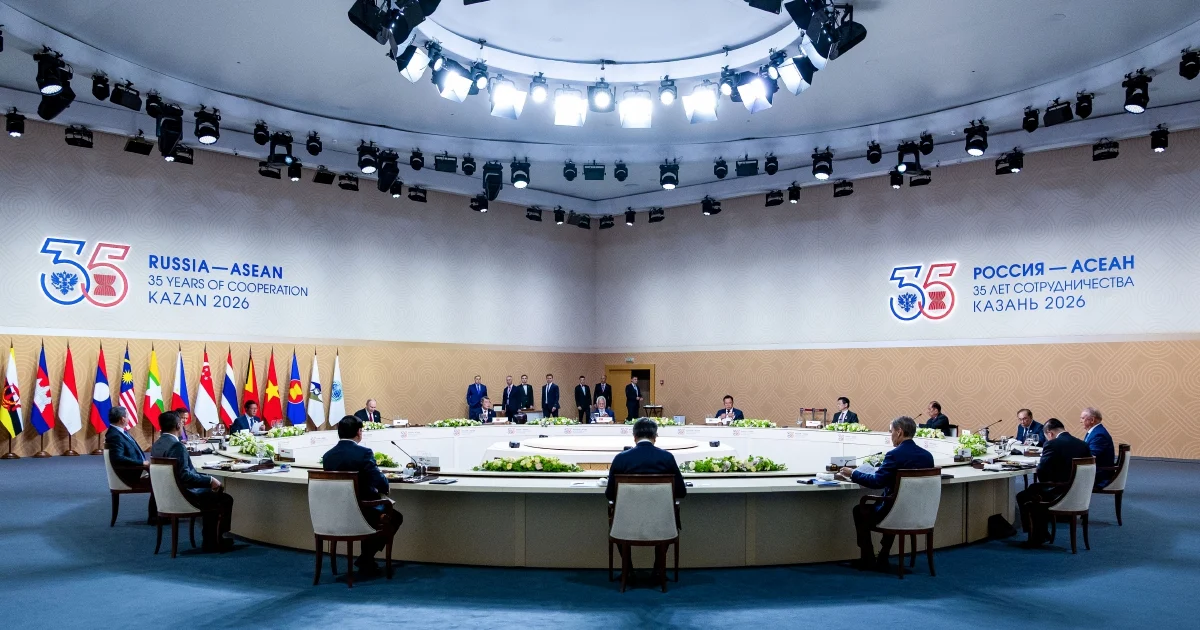
Prime Minister Datuk Seri Anwar Ibrahim's whirlwind diplomatic tour across three Central Asian capitals—Tashkent, Kazan, and Ashgabat—underscores Malaysia's deliberate recalibration of its foreign economic strategy. Rather than confining engagement to traditional Southeast Asian networks or distant Western partners, the government is now actively cultivating relationships with nations that occupy a geopolitically pivotal position at the crossroads of Europe, Russia, China, and the Middle East. This expansion reflects a sophisticated understanding that Malaysia's prosperity increasingly depends on diversifying its economic partnerships beyond the familiar terrain of ASEAN, while simultaneously hedging against the uncertainties that characterise great-power competition in the region.
The significance of these visits extends far beyond ceremonial diplomatic protocols. Uzbekistan, Russia's Tatarstan region, and Turkmenistan represent distinct economic opportunities that collectively offer Malaysian businesses and investors exposure to vast markets and untapped resources. Tashkent serves as the gateway to Central Asia's largest economy, with substantial agricultural, energy, and manufacturing sectors that remain relatively accessible to foreign enterprises seeking to establish regional headquarters or production facilities. Kazan, as the capital of Tatarstan, functions as a major industrial and financial hub within the Russian Federation, offering Malaysian companies potential pathways into Russian markets despite geopolitical tensions affecting broader Western-Russian relations. Ashgabat, meanwhile, controls some of the world's most significant natural gas reserves, positioning Turkmenistan as an energy partner of considerable importance, particularly as global energy markets undergo profound structural changes.
Malaysia's pivot toward Central Asia cannot be divorced from the broader context of Southeast Asian economic stagnation and intensifying regional competition. As ASEAN struggles to maintain cohesion and individual member states compete fiercely for foreign direct investment, Malaysian policymakers recognise that relying exclusively on intra-regional trade and investment flows constrains the nation's growth trajectory. Central Asian markets, by contrast, remain less saturated with multinational competition and offer genuine opportunities for Malaysian enterprises to establish first-mover advantages in telecommunications, financial services, halal food production, and Islamic finance—sectors where Malaysia possesses genuine competitive advantages.
The halal economy dimension merits particular emphasis. All three nations visited—Uzbekistan, Tatarstan, and Turkmenistan—possess substantial Muslim populations whose consumption patterns increasingly align with global halal standards. Malaysia's position as the world's leading certification body and exporter of halal-certified products creates natural synergies. Malaysian companies can position themselves not merely as suppliers but as partners in building halal food production ecosystems, value-adding industries, and certification infrastructure across these markets. This represents a sophisticated form of economic statecraft that leverages Malaysia's soft power and genuine technical expertise simultaneously.
From a broader geopolitical perspective, Malaysia's Central Asian engagement signals an attempt to maintain strategic autonomy amid intensifying pressure from major powers to choose sides in their respective spheres of influence. By cultivating relationships with nations that maintain complex relationships with both Russia and China, Malaysia preserves its capacity to navigate between competing blocs without appearing captive to any single power's interests. This approach mirrors Malaysia's traditional foreign policy doctrine of non-alignment, adapted for contemporary circumstances where outright neutrality proves increasingly untenable, but strategic diversification remains achievable.
The timing of Prime Minister Anwar's visits deserves scrutiny. These journeys occur amid Malaysia's evolving approach to the Ukraine conflict and Russia's international standing. While maintaining diplomatic relations with Russia, Malaysia has avoided becoming entangled in the geopolitical disputes that have marginalised Russia within Western-dominated institutions. Central Asian nations similarly walk this tightrope, depending substantially on Russian security guarantees whilst simultaneously seeking to diversify their economic partnerships and reduce vulnerability to Russian coercion. Malaysia's outreach therefore resonates with these nations' own strategic imperatives, creating mutual interest in deepening bilateral relationships.
Investment flows constitute the practical manifestation of expanded economic diplomacy. Malaysian sovereign wealth funds, pension schemes, and private investors increasingly seek entry points into Central Asian markets that offer both growth potential and portfolio diversification benefits. Infrastructure development projects, technology partnerships, and sectoral collaborations in energy, agriculture, and manufacturing can generate returns whilst simultaneously positioning Malaysia as a trusted development partner rather than a source of extractive capital. This approach builds long-term relationships capable of weathering short-term political fluctuations.
Central Asia's geographic position as a transit hub between China's Belt and Road Initiative projects and European markets creates additional opportunities for Malaysian logistics and financial services companies. As trade routes evolve and supply chains shift away from their previous concentrations, Malaysian firms positioned in Central Asian capitals can capture value-added services, warehousing, financial intermediation, and customs clearance activities. This represents an underutilised pathway for Malaysian economic expansion that requires minimal direct government investment whilst offering substantial commercial returns.
The institutional mechanisms supporting this expanded engagement deserve attention. Trade missions, bilateral investment committees, and sectoral partnerships in education and technology transfer provide the scaffolding for sustaining momentum beyond ceremonial visits. Malaysia's universities can attract Central Asian students, creating long-term networks and brand recognition that facilitate commercial relationships. Similarly, training programmes in Malaysian financial institutions and corporate organisations build human capital whilst fostering reciprocal relationships and personal connections that drive business transactions.
Practical challenges remain formidable. Central Asian nations often lack the sophisticated regulatory frameworks, transparent legal systems, and established customs procedures that facilitate smooth commercial operations. Currency convertibility, banking system integration, and political risk insurance all require careful navigation. Malaysian companies venturing into these markets require government support through diplomatic channels, risk mitigation instruments, and strategic guidance—precisely the services that expanded governmental engagement at prime ministerial level can facilitate and accelerate.
The longer-term implication involves Malaysia's repositioning within emerging Eurasian economic architecture. As China consolidates its Belt and Road influence and Russia navigates international isolation, opportunities emerge for smaller, non-aligned nations to establish themselves as regional economic connectors and development partners. Malaysia possesses the technical capabilities, capital resources, and soft power requisites to occupy this niche effectively. Central Asian engagement represents initial experimentation with this strategic positioning, with potential for expansion into the Caucasus, the broader Middle East, and South Asia if initial ventures prove commercially viable.
Prime Minister Anwar's Central Asian tour ultimately reflects sophisticated strategic thinking about Malaysia's medium-term economic interests. Rather than accepting the constraints of regional competition or great-power alignment, the government is actively constructing new economic partnerships that enhance national autonomy, diversify revenue sources, and position Malaysian companies for success in emerging markets. Whether these ambitious initiatives translate into sustained commercial relationships and meaningful investment flows remains to be determined, but the strategic clarity driving this diplomatic engagement undoubtedly represents a significant evolution in Malaysia's approach to international economic relations.
%22%2F%3E%3C%2Fpattern%3E%3C%2Fdefs%3E%3Crect%20width%3D%22100%25%22%20height%3D%22100%25%22%20fill%3D%22url(%23ph471m2g)%22%2F%3E%3Crect%20width%3D%22100%25%22%20height%3D%22100%25%22%20fill%3D%22url(%23ph471m2p)%22%2F%3E%3Ctext%20x%3D%2250%25%22%20y%3D%2250%25%22%20text-anchor%3D%22middle%22%20dominant-baseline%3D%22central%22%20fill%3D%22rgba(255%2C255%2C255%2C0.95)%22%20font-family%3D%22Georgia%2C%20'Times%20New%20Roman'%2C%20serif%22%20font-weight%3D%22700%22%20font-size%3D%22136%22%20letter-spacing%3D%22-0.02em%22%3ETerengganu%3C%2Ftext%3E%3C%2Fsvg%3E)