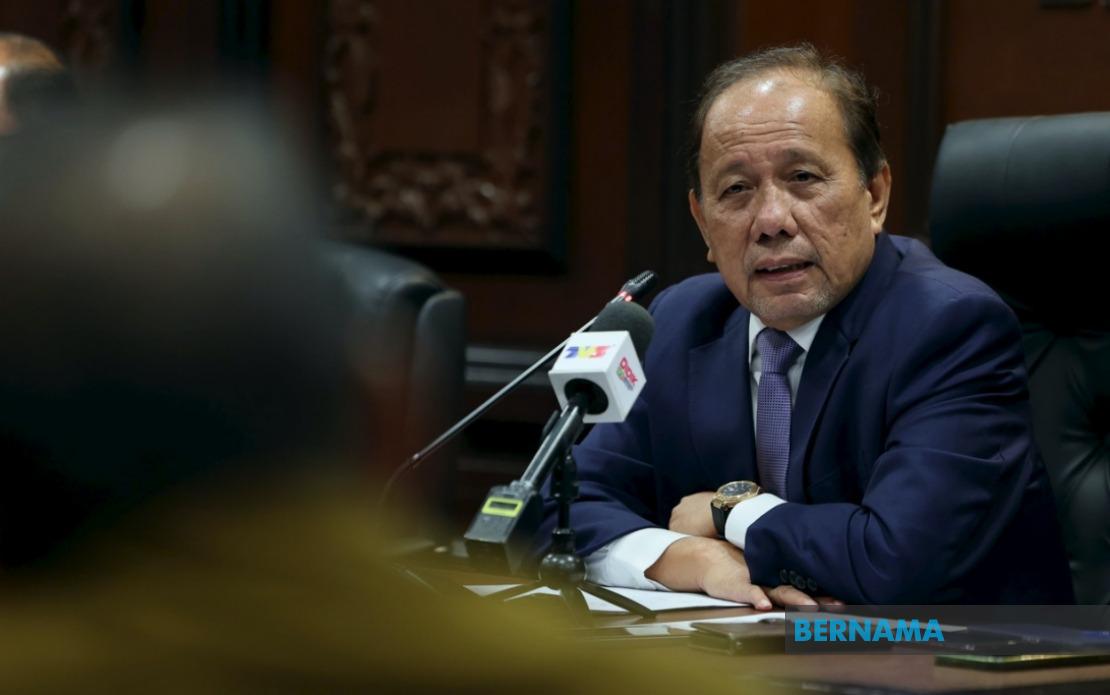
In a significant development regarding accountability and fiscal propriety in Negeri Sembilan, the state's Menteri Besar Datuk Ismail Lasim has singled out former menteri besar Datuk Seri Aminuddin Harun as the sole former Pakatan Harapan state assemblyman to have fully repaid allocations received by his constituency. The revelation underscores emerging divisions within the opposition coalition following the state assembly dissolution in June and raises questions about financial stewardship among PH representatives during their tenure in office.
During remarks made to journalists in Seremban on August 27, Ismail elaborated on the repayment status of allocations distributed to various PH state assemblymen and their respective coordinators representing areas such as Paroi and Labu. He indicated that whilst several of these former representatives commenced returning funds as of June 30, the submissions remain incomplete relative to the total amounts initially disbursed to their constituencies. The Menteri Besar's position reflects growing scrutiny over how opposition lawmakers deployed public resources allocated to their constituencies during their period in office.
The Menteri Besar's Office is presently engaged in a comprehensive audit of allocation records maintained for each former PH assemblyman to establish precise outstanding balances. Ismail acknowledged that the sums extended to individual representatives varied considerably depending on constituency-specific needs and circumstances, making standardised repayment demands impractical. This methodical approach suggests that the state administration intends to pursue recovery efforts based on documented evidence rather than blanket demands, a procedural nuance that may prove consequential for former assemblymen disputing their liability.
Ismail made clear that forthcoming correspondence requesting repayment will reflect these individualised circumstances. Some former representatives may ultimately face demands for full restitution of their allocations, whilst others could be required to return proportionally lesser sums contingent upon their constituencies' documented expenditures and remaining balances. The administration's commitment to completing this review process before issuing formal letters suggests a timeline measured in weeks rather than days, allowing recipients opportunity to prepare comprehensive financial documentation.
Crucially, the Menteri Besar acknowledged that state executive councillors serving until July 31 following the June 5 assembly dissolution retained legitimate entitlement to expend allocations during that final month of their tenures. Aminuddin, who served in this capacity, would have been authorised to utilise allocations through July before formal cessation of office. This distinction carries legal weight, as it establishes a precise threshold for determining whether remaining balances constitute unspent funds requiring return or legitimate expenditures properly incurred within the scope of authority.
The threshold for repayment stems from Ismail's August 26 directive requiring all former PH state assemblymen and state constituency coordinators to repatriate allocations earmarked for the July through September period within a single month following the state assembly's dissolution. This compressed timeframe appears designed to ensure swift recovery of public funds whilst the administrative transition remained relatively fresh and documentation readily accessible. The one-month deadline effectively operates as a mechanism to pressure swift compliance whilst providing reasonable opportunity for representatives to organise financial records.
In response to the Menteri Besar's statements, Nilai assemblyman J. Arul Kumar attempted to reframe the repayment narrative by asserting that pre-dissolution allocations had been directed exclusively toward public welfare initiatives rather than partisan political expenditures. Kumar, serving as Negeri Sembilan DAP chairman, contended that all unspent balances had been voluntarily returned to the Menteri Besar's Office prior to July 10, accompanied by comprehensive financial reports documenting utilisation at the constituency level. This defensive posture suggests that opposition lawmakers anticipate potentially contentious scrutiny of their fiscal stewardship and wish to establish a narrative emphasising propriety.
The situation reflects broader tensions within Malaysian politics regarding the treatment of opposition representatives following electoral transitions and changes in state governance. The recovery of allocations distributed to opposition constituencies raises fundamental questions about whether such funds represent legitimate public expenditure subject to standard accountability mechanisms or constitute contested political assets that incoming administrations are entitled to reclaim. For Malaysian voters and political observers, the episode illuminates the practical vulnerabilities faced by opposition governments when they surrender power, as successor administrations gain control over audit processes and financial oversight mechanisms.
Aminuddin's singular compliance with full repayment requirements carries potentially significant implications for his political positioning within PH and the broader opposition ecosystem. His willingness to liquidate allocations completely may reflect genuine administrative diligence, or alternatively, might position him advantageously for future political advancement by demonstrating exemplary conduct during a period of heightened scrutiny. Conversely, other former assemblymen's apparent reluctance or inability to achieve complete repayment could expose them to reputational damage if the Menteri Besar's Office subsequently publicises detailed deficiency lists identifying specific individuals and outstanding amounts.
For Southeast Asian observers and Malaysian policymakers, this allocation recovery process underscores persistent governance challenges surrounding the transition of political power at the state level. The absence of comprehensive pre-existing protocols for managing opposition representatives' allocations during dissolution periods suggests that different states may handle similar situations inconsistently, creating potential for political manipulation disguised as fiscal accountability. Negeri Sembilan's experience may establish precedents that other states seek to emulate or potentially provide cautionary examples of procedures that provoke legitimate controversy.
Looking forward, the completion of the Menteri Besar's Office audit and subsequent dispatch of individualised repayment demands will determine whether this episode represents a genuine accountability exercise or instead becomes weaponised as a mechanism for constraining opposition political development. The scope and rigour of the audit process, combined with transparency regarding the specific calculations underlying each demand, will prove essential for establishing the legitimacy of recovery efforts among Malaysian political actors and the broader electorate. The allocation controversy ultimately reflects enduring challenges in establishing durable institutional frameworks capable of transcending partisan political divisions to ensure consistent treatment of public resources regardless of which political coalition holds state power.

