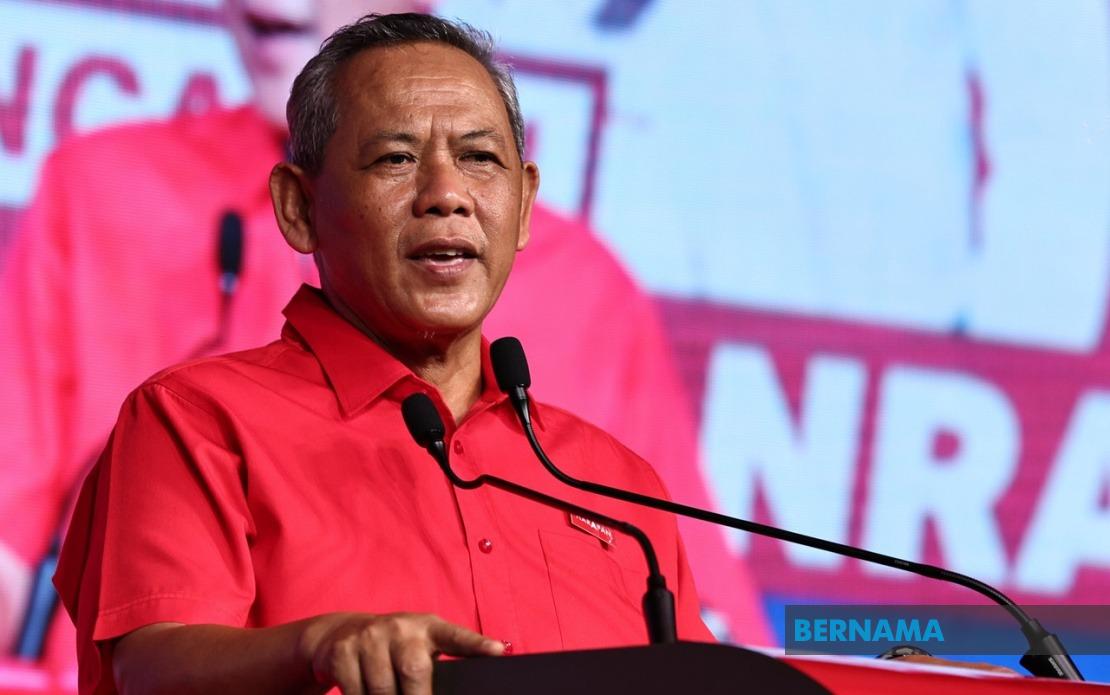
Negeri Sembilan Menteri Besar Datuk Seri Aminuddin Harun has appealed to voters in the state to assess the administration's substantive response to Linggi's recurring flood crisis rather than allowing the matter to become ammunition in the upcoming electoral contest. Speaking after Friday prayers in Seremban on July 17, the Pakatan Harapan candidate for the Linggi state seat stressed that two major flood mitigation projects have already secured approval and are actively progressing through joint state and federal government implementation.
The timing of Aminuddin's remarks reflects growing concern about how the flooding issue has gained traction on social media platforms, with claims circulating that Linggi experiences regular inundation during periods of heavy rainfall in the Seremban area. Rather than dismiss public concern, Aminuddin acknowledged the legitimacy of addressing the problem while simultaneously cautioning against weaponising infrastructure challenges for partisan advantage during an election period.
The two approved projects represent a material commitment of resources that distinguishes governmental action from mere rhetoric, Aminuddin implied. He recognised that such infrastructure undertakings necessarily operate on extended timelines and cannot be compressed into weeks or months, a reality that voters need to understand when evaluating government performance. His statement—"Alhamdulillah, both flood mitigation projects have been approved and are currently being implemented"—indicated that the administration views these projects as substantive wins rather than empty promises.
Aminuddin's position highlights a fundamental tension in Malaysian electoral politics: the challenge of communicating long-term infrastructure progress when voters naturally expect immediate relief from pressing local problems. Flood mitigation requires comprehensive planning, environmental assessment, design phases, tender processes, and construction execution—all of which extend well beyond typical electoral cycles. For voters frustrated by chronic water damage to homes and businesses, multi-year timelines can seem inadequate regardless of technical justification.
The Negeri Sembilan Pakatan Harapan chairman framed the administration's philosophy as rooted in systematic problem-solving through evidence-based planning and infrastructure deployment, contrasting this approach implicitly with what he characterised as opposition tactics of exploiting public sentiment for electoral gain. This positioning reflects a broader strategic choice to compete on deliverables rather than emotional appeals, though such high-ground positioning can sometimes backfire if communities perceive insufficient urgency around their concerns.
Aminuddin's appeal to the "wisdom and maturity" of Negeri Sembilan voters represents a calculated gamble that the electorate will reward the administration's demonstrated track record over opposition alternative offerings. The Pakatan Harapan coalition's strategy centres on its documented achievements in state administration, implicitly acknowledging that this represents stronger ground than trying to match the opposition's likely campaign messaging around unresolved local grievances.
The electoral calendar provides context for Aminuddin's intervention. With nomination day scheduled for July 18 and polling set for August 1, the campaign period compressed the window for political messaging around local concerns like Linggi flooding. Early voting takes place on July 28. This compressed timeframe means that opposition parties can highlight unresolved infrastructure challenges while coalitions like Pakatan Harapan must emphasise ongoing work and future benefits, a difficult sell when residents remain vulnerable to flooding.
The Linggi flooding issue illustrates a broader challenge confronting Malaysian state governments across the peninsula and East Malaysia. Urbanisation and climate variability have intensified flood risk in many constituencies, while the technical and financial requirements of adequate mitigation infrastructure often exceed what individual state administrations can deploy independently. Collaborative federal-state projects, as Aminuddin noted, represent an increasingly common response model, though such arrangements can complicate political accountability if flooding persists despite approved initiatives.
For Malaysian voters and regional observers, Aminuddin's framing raises substantive questions about how to evaluate governmental performance on infrastructure delivery. Approving mitigation projects differs meaningfully from completing them and achieving measurable flood reduction, yet electoral campaigns typically reward announcements more than gradual construction progress. The outcome of Negeri Sembilan's August 1 polling will provide insight into whether voters genuinely prioritise demonstrated action over opposition criticism, or whether unresolved local challenges prove decisive regardless of administration claims of progress.
The 16th Negeri Sembilan state election will test whether infrastructure advocacy and track record emphasis can overcome the frustration of communities experiencing recurring disasters. Aminuddin's pre-election messaging suggests Pakatan Harapan believes the two approved flood projects represent sufficient credential for electoral confidence, but the response from voters in Linggi and other flood-affected constituencies will determine whether this calculation proves strategically sound.

