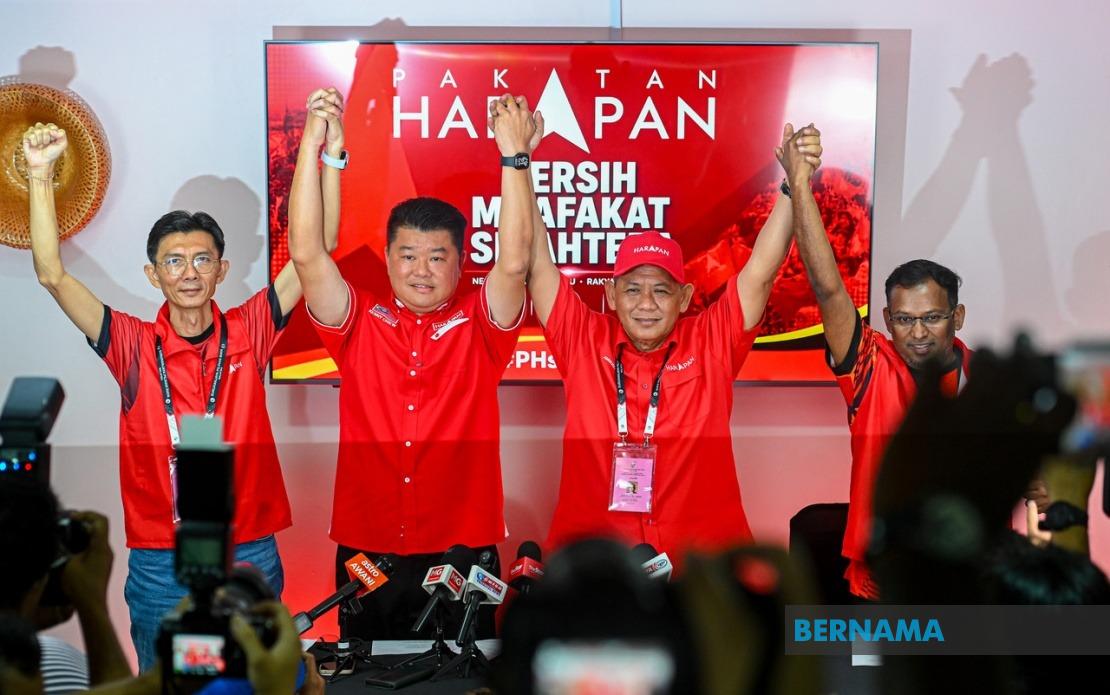
Datuk Seri Aminuddin Harun, the Negeri Sembilan chairman for Pakatan Harapan, firmly rejected suggestions of fractures within the coalition's upper echelons and on-ground campaign structures across Port Dickson's five state constituencies during a press gathering in the parliamentary seat's namesake town on July 20. The Menteri Besar and State PKR chairman characterised such talk as unfounded, emphasising instead that leadership ranks and the election machinery operating beneath them had been functioning smoothly in their collective pursuit of victory for PH-backed candidates seeking to represent Chuah, Lukut, Sri Tanjung, Bagan Pinang and Linggi in the forthcoming state polls.
At the heart of the speculation had been discussion surrounding the reselection of the sitting Chuah representative, Datuk Yew Boon Lye, a matter that had surfaced across social media platforms and implicated Port Dickson PKR deputy division chief Datuk Kenny Chiew Chi Kin in the discourse. Rather than allowing such chatter to fester, Aminuddin publicly addressed the situation by stating that any internal deliberations had been resolved through private channels and constructive dialogue within party structures. This approach sought to prevent the airing of coalition grievances from becoming fodder for broader public consumption or opposition parties seeking to exploit perceived vulnerabilities.
The resolution of this matter was cemented, according to Aminuddin, through Chiew's explicit commitment to lend his organisational weight and political capital to all PH candidates contesting across the state election, effectively signalling party unity regardless of individual nomination outcomes. Aminuddin's framing of Chiew's role highlighted a recurring challenge within multi-party coalitions: the management of disappointed office-seekers whose aspirations for candidacy have been deferred or denied. By publicly acknowledging Chiew's service record and his demonstrated dedication to strengthening the Port Dickson PKR division despite electoral disappointment, Aminuddin attempted to transform a potential liability into evidence of internal discipline and loyalty.
The menteri besar's remarks underscored a broader theme in Malaysian coalition politics whereby elected leaders must navigate the delicate balance between transparency and damage control. Aminuddin attributed the emergence of such speculative narratives to deliberate efforts by unnamed actors intent on casting Pakatan Harapan in an unfavourable light. This characterisation reflected a common defensive posture adopted by ruling coalition representatives when confronted with reporting or discussion of internal disagreements, effectively positioning critics or those raising concerns as malevolent rather than acting from legitimate political interest.
For Malaysian observers and regional political analysts, the Port Dickson situation illustrates the persistent structural tensions that emerge within coalition arrangements, particularly in multi-ethnic and multi-party frameworks where disparate organisations must reconcile competing interests and aspirations. The Port Dickson constituency encompasses territories where PKR holds significant ground presence, yet the nomination process for Chuah—a seat the party had successfully defended—created friction that required explicit public management. Aminuddin's position as both menteri besar and PH chairman positioned him as the coalition's supreme arbiter in Negeri Sembilan, lending his reassurances considerable weight among party cadres and supporters who might harbour concerns about internal cohesion.
Yew Boon Lye's retention of his candidacy comes against the backdrop of his 2023 state election performance, when he had secured the Chuah seat with a majority of 6,298 votes against Perikatan Nasional challenger Tang Jay Son. In the current electoral cycle, Yew faces a fresh contest against Barisan Nasional's Pau Jeou Ching, rendering his renomination a strategic calculation about electability and seat defence rather than a mere formality. The decision to retain him thus reflected confidence in his capacity to again fend off opposition challengers, though the deliberation process and its public resonance had created a minor management challenge for coalition headquarters.
The specific geography of Port Dickson's five state seats—Chuah, Lukut, Sri Tanjung, Bagan Pinang and Linggi—represents a significant concentration of Pakatan Harapan's territorial holdings within Negeri Sembilan. Aminuddin's own candidacy in Linggi places him directly in the electoral arena, intensifying his personal stake in the coalition's aggregate performance within the parliamentary constituency. Should PH succeed in retaining or expanding its footprint across these five seats, it would substantially affirm both Aminuddin's leadership and the coalition's viability in the state, whereas a deterioration would invite questions about internal effectiveness and voter confidence.
The electoral calendar compounds the urgency of presenting a unified front. Early voting had been scheduled for July 28, with the main polling day set for August 1, providing only a narrow window for Pakatan Harapan to solidify campaign messaging and neutralise any lingering perceptions of internal disunity. In Malaysian electoral culture, where constituency-level organising and grassroots mobilisation remain decisive, the signals sent by party headquarters about solidarity and commitment can meaningfully influence volunteer enthusiasm and voter turnout calculations at the ward level.
For the broader Southeast Asian context, Negeri Sembilan's election represents a test of whether the Pakatan Harapan coalition, which rode to federal power in 2018 before fragmenting and reconstituting, can sustain cohesion across state-level contests. The Port Dickson episode, though contained through Aminuddin's intervention, underscores the ongoing work required to keep coalition mechanics functioning smoothly. The success or failure of efforts to project unity while managing genuine disagreements about candidacy and representation will carry implications not only for Negeri Sembilan's political trajectory but also for the coalition's broader durability as a governing force in Malaysian politics.

