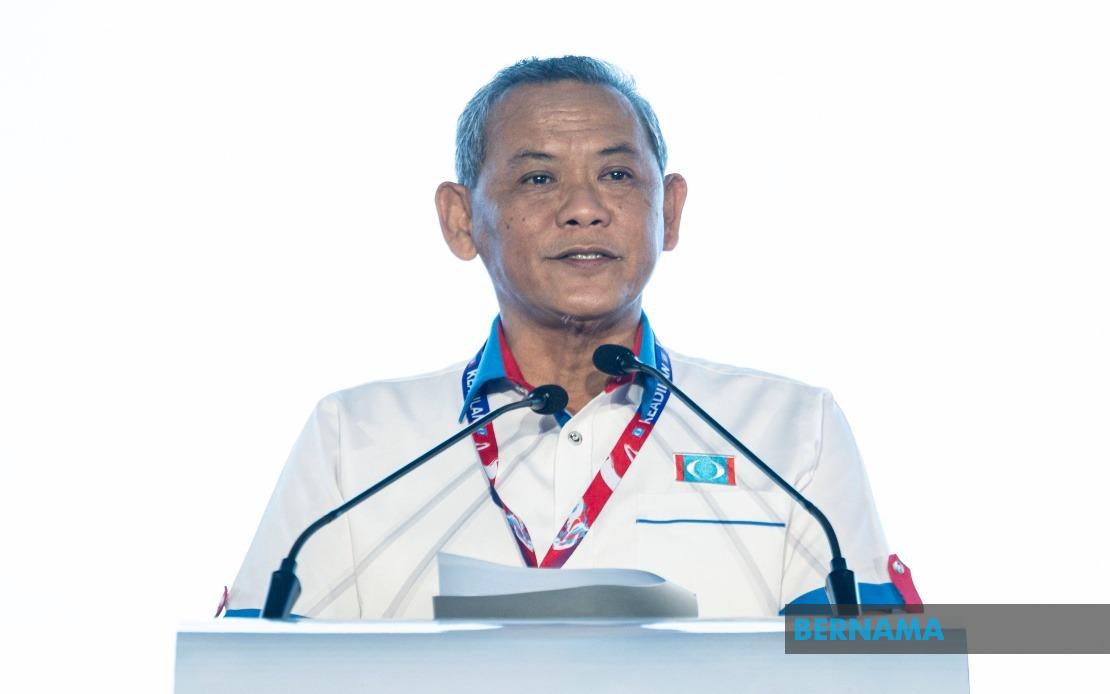
Former Negeri Sembilan Menteri Besar Datuk Seri Aminuddin Harun has signalled his readiness to step aside as chairman of Parti Keadilan Rakyat's (PKR) Negeri Sembilan State Leadership Council following the party's disappointing performance in the recent state election. Speaking during the closing session of PKR's National Congress at Melaka International Trade Centre on August 16, Aminuddin acknowledged mounting pressure from within the party hierarchy to accept accountability for what many consider a significant electoral setback in the state.
The former menteri besar's announcement comes in response to explicit demands from six PKR branch leaders in Negeri Sembilan, who have publicly called on the party establishment to conduct a thorough reassessment of its direction and leadership following the dismal results. Aminuddin's public acceptance of these calls represents a notable shift in tone, moving beyond defensive posturing to embrace a more candid acknowledgement of the party's struggles in a state that was once considered a relatively stable base for PKR within the peninsula.
In the August 1 state election, PKR's performance fell short of expectations, retaining only two of the fifteen constituencies it contested. The two seats retained were Chuah and Sri Tanjung, representing a net loss that has prompted serious introspection within the party machinery. This outcome stands in sharp contrast to PKR's historical positioning in Negeri Sembilan and raises questions about shifting voter preferences and internal party dynamics in the state.
Aminuddin himself faced a personal electoral rebuff when he contested the Linggi state seat, losing to Barisan Nasional incumbent Datuk Mohd Faizal Ramli by a margin of 2,976 votes in a three-way contest. Aminuddin garnered 6,163 votes against Mohd Faizal's 9,139 votes, with Bersatu candidate Datuk Zamri Md Said capturing 391 votes. The relatively tight margin between the top two contenders suggests that the three-cornered contest fragmented the opposition vote significantly, a dynamic that mirrors patterns observed across several Malaysian constituencies where multi-party competition has benefited incumbents.
During his address, Aminuddin deliberately framed his potential resignation not as capitulation but as an acceptance of personal accountability. He emphasised that his willingness to step down stems from a principled stance on leadership responsibility rather than any attempt to evade consequences. His comments suggest an attempt to distinguish between accepting individual accountability and the broader strategic questions facing PKR as a political entity navigating an increasingly complex Malaysian political landscape.
Crucially, Aminuddin made clear that his decision ultimately rests with PKR's national leadership rather than his own discretion. By deferring to the party's judgement, he has positioned himself within established norms of party hierarchy while simultaneously signalling that he will not obstruct whatever decision the central leadership makes regarding his future role. This approach allows him to demonstrate accountability while maintaining flexibility regarding his ultimate political future within the party structure.
The Negeri Sembilan election results carry particular significance for PKR's broader strategic positioning in the peninsula. The state has traditionally represented mixed fortunes for the party, and the recent losses suggest that voter sentiment may be shifting toward established coalitional arrangements represented by Barisan Nasional and other established parties. For Malaysian analysts and political observers, these results raise broader questions about opposition consolidation and the mechanics of vote distribution among competing parties that theoretically share overlapping voter bases.
Aminuddin's framing of defeat as a catalyst for rebuilding rather than a cause for retreat hints at the longer-term strategic thinking within PKR circles. His emphasis that the party should transform electoral losses into opportunities for institutional renewal suggests a maturation in how opposition figures are responding to setbacks, moving beyond immediate recriminations toward systemic examination. This approach reflects broader trends in Malaysian opposition politics where parties are increasingly attempting to extract lessons from electoral performance data and voter feedback.
The timing of this announcement during PKR's National Congress provides a platform for broader party discussions about strategic direction and leadership renewal. By addressing the issue at a major party gathering, Aminuddin has ensured that questions about accountability and party reform remain front and centre in internal deliberations. This visibility may also signal to other regional leaders within PKR that accepting responsibility for electoral underperformance is becoming an expected norm rather than an exception.
For Negeri Sembilan's political trajectory, the potential leadership transition within PKR could reshape how the party approaches state-level competition and coalition dynamics. The question of who might succeed Aminuddin in the state leadership position carries implications for how PKR positions itself relative to other opposition parties and potential governing coalitions in the state. These considerations extend beyond personality-driven politics to encompass genuine strategic choices about party positioning and electoral competitiveness.
The broader context of Malaysian electoral politics suggests that episodes like this one, while appearing routine on the surface, reflect deeper transformations in how opposition parties are responding to competitive pressures and voter expectations regarding accountability. Aminuddin's willingness to acknowledge shortcomings and accept responsibility contrasts with historical patterns in Malaysian politics where electoral defeats frequently prompted defensive responses or blame-shifting exercises.
Looking ahead, the resolution of Aminuddin's position and the subsequent restructuring of PKR's Negeri Sembilan leadership will offer insights into the party's capacity for institutional reform and adaptive governance. Whether the incoming leadership can reverse the party's electoral trajectory or whether the recent results signal broader structural challenges facing PKR in the state remains an open question that will likely preoccupy party strategists and observers of Malaysian opposition politics in coming months.

