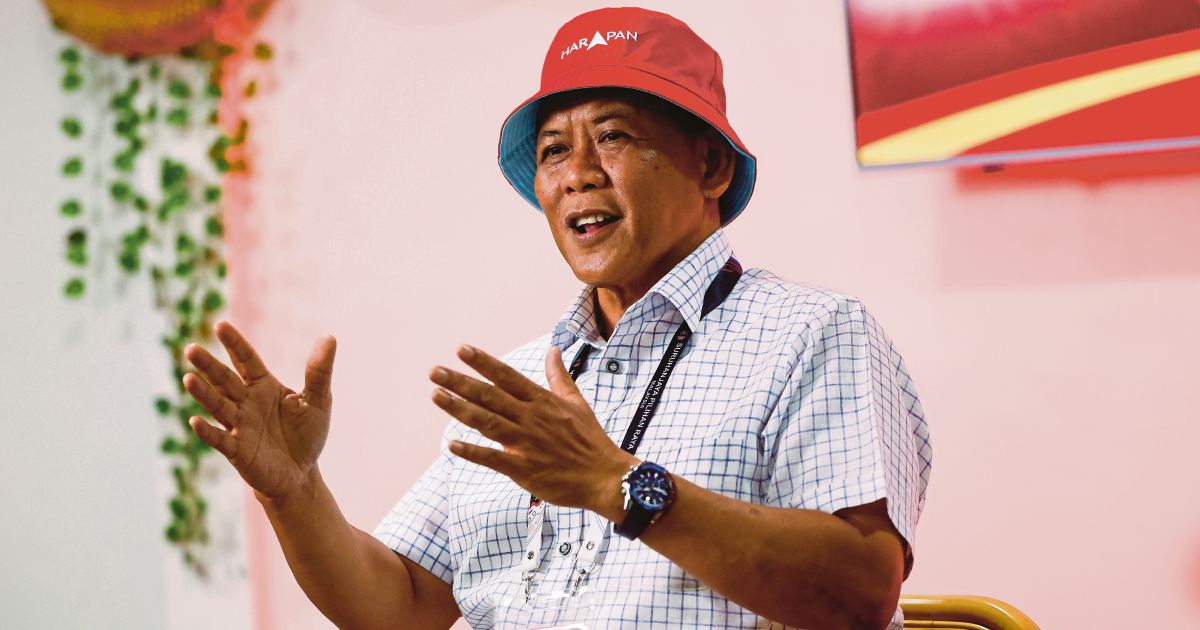
Datuk Seri Aminuddin Harun, the caretaker Menteri Besar of Negri Sembilan, has expressed confidence that the state administration's accomplishments over its tenure will persuade Linggi voters to back his candidacy in tomorrow's 16th state election. Speaking in Port Dickson, Aminuddin highlighted the importance of demonstrating tangible progress to constituents as he pursues a fresh mandate.
The electoral campaign in Linggi represents a crucial test for the incumbent administration's legitimacy with voters at the grassroots level. By positioning the election as a referendum on governance performance, Aminuddin is employing a strategy that emphasizes continuity and proven delivery rather than proposing sweeping new pledges. This approach suggests confidence in the administration's stewardship but also reflects an understanding that undecided voters are likely to evaluate candidates on demonstrated results.
Negri Sembilan's development landscape has undergone significant transformation in recent years, with infrastructure projects, social initiatives, and economic programmes forming the backbone of the state's agenda. The Menteri Besar's decision to foreground these achievements indicates a deliberate choice to frame the election around questions of competence and administrative effectiveness. For Malaysian voters increasingly concerned with practical governance outcomes—from road conditions to healthcare access and business-friendly policies—such messaging can resonate powerfully.
The Linggi constituency itself holds particular significance within Negri Sembilan's political calculus. As a state legislative seat encompassing diverse communities, the constituency's voting patterns often reflect broader sentiment across the state. A strong showing here would provide momentum heading into the election results, while a disappointing performance could signal erosion of support in previously reliable areas. This dynamic explains why Aminuddin has chosen to concentrate campaign efforts in the constituency rather than spreading resources thinly across multiple locations.
The caretaker status places specific constraints on Aminuddin's campaign messaging. Operating within the guidelines governing pre-election periods, the administration must balance aggressive advocacy for re-election with maintaining neutral, non-partisan governance. This creates a narrow channel for promoting the government's record while avoiding perceptions of misusing state resources or authority for electoral advantage—a constant tension in Malaysian electoral politics.
Voter sentiment across Negri Sembilan has likely been shaped by economic conditions, service delivery experiences, and broader state-federal dynamics. The state's position as a relatively prosperous region between Selangor and Melaka gives it particular importance in Malaysia's political geography. Economic performance, employment opportunities, and quality of public services therefore assume outsized significance when voters evaluate incumbent administrations during election season.
Aminuddin's confidence appears rooted in measurable deliverables: completed infrastructure projects, budget allocations to education and healthcare, industrial development initiatives, and administrative reforms. Whether voters will view these achievements as sufficiently impressive remains uncertain, particularly if opposition parties effectively articulate alternative visions or highlight unresolved grievances. The election outcome will reveal whether voters prioritize demonstrable progress or seek change despite the administration's track record.
The timing of the 16th state election falls within a broader cycle of electoral contests across Malaysia, where voters are increasingly sophisticated in evaluating governance performance and making differentiated choices between state and federal levels. Negri Sembilan voters may simultaneously reward or penalize the state administration while maintaining distinct voting preferences for federal elections, reflecting complex and nuanced political calculus among the electorate.
For the broader Southeast Asian context, Negri Sembilan's election offers insights into how established administrations navigate re-election campaigns in competitive democratic systems. The emphasis on concrete achievements rather than populist promises reflects a maturation of electoral discourse in Malaysia, where informed voters increasingly demand evidence-based governance narratives. This trend has implications for how governments across the region approach accountability and public communication.

