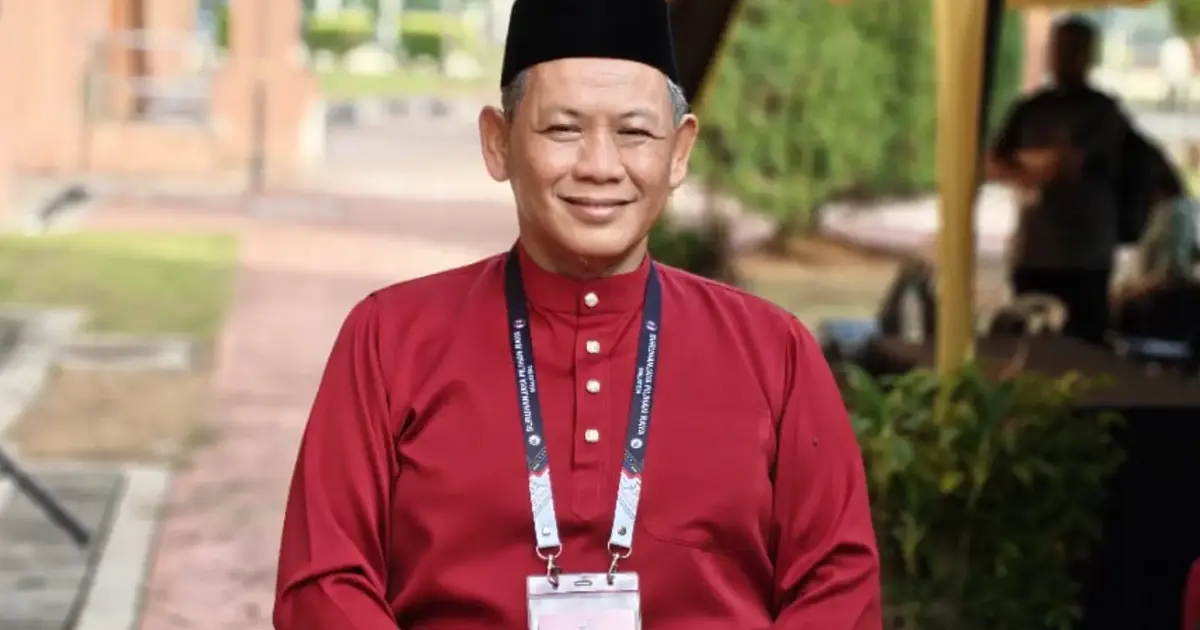
The Linggi parliamentary constituency in Negeri Sembilan is shaping up as a significant battleground in Malaysia's fractious federal politics, with the state's chief minister Aminuddin wading into a closely contested three-way race against the incumbent federal representative and an emerging challenge from within the Malay-led coalition structure. Aminuddin's entry into the fray underscores the intensifying political realignments occurring across the peninsula as various factions manoeuvre for positioning ahead of anticipated electoral contests.
The contest pits Aminuddin against Faizal Ramli, who holds the Linggi seat after securing it in the 2023 general election under the Barisan Nasional banner. Faizal's victory in that poll marked a significant statement in the Malay-majority constituency, reflecting continued support for the traditional Umno-BN framework among the largely Bumiputera electorate. His successful defence of the seat demonstrated the persistent appeal of established political machinery in constituencies where communal concerns and Umno's historical roots remain influential.
Adding further complexity to the dynamics is the presence of a Bersatu candidate in the running. This triangulation introduces a new variable into Linggi's political equation, particularly given Bersatu's trajectory as a splinter formation that has attempted to position itself as an alternative voice within Malay-Muslim politics. The party's intervention suggests strategic calculations about where it can make electoral headway, and Linggi's composition presents what party strategists may perceive as an opportunity to challenge both the reigning coalition and opposition narratives.
Aminuddin's decision to contest the seat is noteworthy given his current role as Menteri Besar, Malaysia's subnational executive positions typically commanding substantial political capital and administrative apparatus that can be mobilised during campaigns. His profile as a state leader contesting a federal parliamentary seat demonstrates how Malaysian politics frequently interweaves state and federal tiers, with senior figures leveraging their positions across both levels. This approach also reflects broader patterns of political elites diversifying their portfolios across multiple electoral tiers to maximise influence and fallback options.
The Linggi constituency itself carries historical significance within Malaysian politics. As an Umno stronghold, the seat represents core territory within the party's traditional support base, and any challenge to that dominance carries broader implications for Umno's hold on its foundational constituencies. The three-way contest therefore becomes emblematic of pressures facing Umno at the grassroots level, where both external opposition and intra-coalition fragmentation present simultaneous challenges.
Faizal's incumbent status grants him certain organisational advantages, including the machinery of parliament-based resources and the credibility of having already won the seat once under contemporary circumstances. However, incumbency can also attract challengers sensing vulnerability or opportunity, and his position may face pressure from multiple directions simultaneously. The necessity of defending against both an experienced state-level politician in Aminuddin and an alternative coalition voice from Bersatu requires careful management of his political messaging and ground operations.
For Aminuddin, the move represents an attempt to expand his political sphere beyond Negeri Sembilan's boundaries into the federal arena. Success would enhance his national profile and provide entrée into federal-level politics, while failure could potentially undermine his state-level standing if perceived as overreach or miscalculation. The gambit therefore carries considerable stakes for his political trajectory, and the campaign will likely consume substantial energy and resources that might otherwise be devoted to state administration.
The Bersatu candidacy warrants scrutiny in terms of party strategy and the broader competition within Malay-Muslim political space. As a party that has repositioned itself multiple times in recent years, Bersatu's presence in such contests reflects its ongoing struggle to define a viable electoral niche. Whether the party can translate institutional existence into genuine electoral traction remains an open question, and Linggi will serve as a test case for Bersatu's capacity to make inroads in constituencies where traditional players remain entrenched.
Regionally, the Linggi contest carries implications for how Negeri Sembilan's political configuration aligns with broader peninsular trends. The state occupies a transitional position both geographically and politically, and shifts in its electoral patterns often presage wider changes in Malaysian electoral behaviour. A strongly contested Linggi race reflects heightened political competition across Negeri Sembilan more broadly, suggesting that no constituency can be taken for granted regardless of historical voting patterns.
The campaign dynamics will likely emphasise local developmental issues, communal representation, and the competing visions that each candidate brings to federal-level politics. Aminuddin's messaging will probably highlight his executive experience and state-level achievements as evidence of effective governance, while Faizal may emphasise delivery and continuity, and the Bersatu candidate will attempt to position itself as representing a fresh alternative to established political frameworks. These narratives will unfold against the backdrop of broader national political divisions and policy debates.
For Malaysian observers, the Linggi race represents a microcosm of contemporary political competition in the country. The three-way contest reflects the fragmentation of previously consolidated political blocs, the emergence of leadership competition across state and federal tiers, and the persistent salience of identity-based politics within Malaysia's electoral system. How this particular contest resolves will provide insights into broader trends shaping the Malaysian political landscape.

