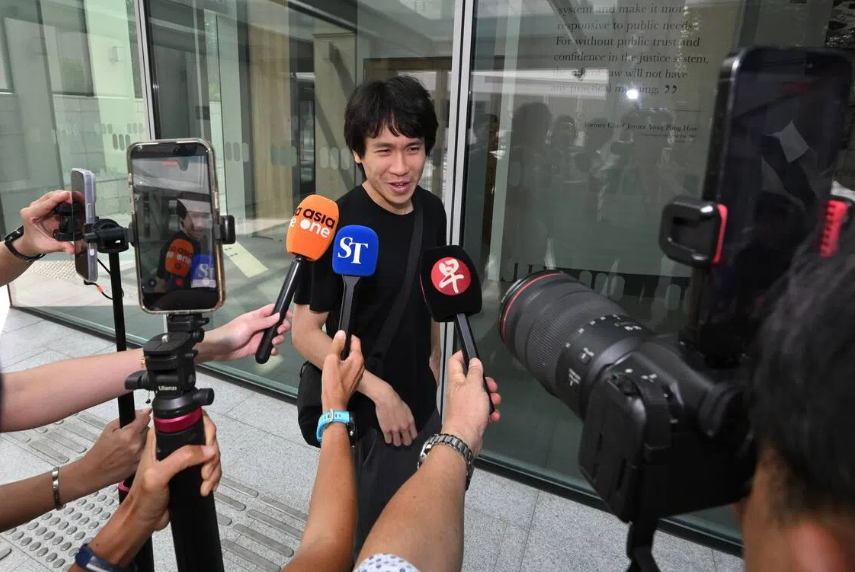
Former child actor Amos Yee returned to Singapore's District Court in late August facing four fresh charges that bring his total allegations to seven, marking an escalation in legal action against the outspoken online commentator. The 27-year-old Singaporean has become increasingly embroiled in judicial proceedings centring on allegations of inciting communal tensions and publishing deeply controversial statements regarding child protection laws.
The new charges stem from a series of online posts and videos created over the past several months. Yee allegedly attempted to deliberately stoke racial division through blog entries published in mid-April, in which he claimed that Malay and Indian residents suffered systematic disadvantage under Chinese majority rule. More significantly, these posts reportedly called for members of these communities to organise demonstrations against the Government, crossing a legal threshold that Singapore's authorities treat with considerable seriousness. The city-state's careful management of inter-ethnic relations means that accusations of deliberately fomenting communal disharmony carry substantial penalties under local law.
Further allegations involve a video uploaded in late May where Yee purportedly made similar claims about discrimination facing Muslim-Malays, suggesting they endured systematic prejudice from the Chinese population. This pattern of increasingly specific racial allegations appears central to the prosecution's case, with authorities treating the videos and posts as part of a coordinated effort to divide along ethnic lines rather than isolated instances of provocative speech.
Perhaps most alarming to Singapore's legal and social establishment are charges under the Protection from Harassment Act related to multiple videos from 2021 in which Yee allegedly advocated for decriminalising paedophilia. According to court documents, he made statements suggesting that children could consent to sexual activity and called for laws criminalising child abuse material to be abolished. A subsequent post on June 30 reportedly reinforced these contentions. These particular allegations have drawn particular concern from authorities vigilant about normalising child exploitation regardless of context or claimed intent.
The charges carry substantial potential consequences. Conviction on the racial harmony count could result in imprisonment for up to three years, fines, or both, reflecting the gravity with which Singapore views deliberate communal incitement. Each harassment charge under POHA carries a potential fine reaching S$5,000. The cumulative weight of these penalties suggests prosecutors are treating Yee's online activity as systematic rather than isolated lapses in judgment.
Court proceedings introduced significant restrictions on Yee's future conduct. He received bail set at S$15,000 with conditions explicitly prohibiting him from posting online content either expressing views on paedophilia or making statements that could inflame racial tensions. These conditions essentially restrict core aspects of his previous online activity, requiring him to fundamentally alter his public behaviour pending trial. Such bail conditions represent an intermediate form of control between freedom and detention.
The case also intersects with Singapore's enforcement of content moderation under domestic law. The social media platform X complied with authorities by removing Yee's video following a police disabling direction issued under the Online Criminal Harms Act. Additionally, he received formal stop communication directions requiring removal of posts from his blog, representing a government-mandated takedown separate from criminal prosecution. This multi-layered enforcement reflects Singapore's systematic approach to controlling online speech deemed harmful.
Yee simultaneously faces three additional charges under the Enlistment Act, relating to mandatory national service obligations that form a cornerstone of Singapore's security system. He allegedly failed to report for pre-enlistment medical screening and departed Singapore without valid exit permits during two separate periods spanning late 2015 through early 2016 and again from December 2016 through March 2026. Enlistment violations can attract penalties of up to S$10,000 in fines, three-year prison sentences, or both—penalties that underscore how seriously Singapore treats compliance with national service requirements.
For Malaysian and broader Southeast Asian observers, this case illuminates the significant differences in how regional governments approach online speech and communal harmony. While Malaysia also maintains laws addressing sedition and racial incitement, Singapore's enforcement appears notably stricter and more comprehensive, extending to private platforms through government directions. The case demonstrates how Singapore's tightly regulated media environment extends into digital spaces in ways that reflect the city-state's prioritisation of social stability over permissive speech norms.
The strategic deployment of multiple legal frameworks—from racial harmony statutes to harassment acts to enlistment law—suggests prosecutors view Yee's conduct as constituting a broader challenge to state authority and social order rather than a single transgression. By charging across different legal domains, authorities have constructed a more robust case structure while simultaneously demonstrating that various state instruments can be mobilised against individuals whose conduct challenges official boundaries.
Yee's next scheduled court appearance on September 18 will constitute a pre-trial conference where procedural and evidentiary matters will be addressed. The duration and complexity of these proceedings remain uncertain, though the multiplicity of charges suggests substantial litigation ahead. His case will provide a significant test of how Singapore's courts balance free speech principles against communal harmony concerns in an increasingly digital age where content spreads instantaneously across borders.
For digital rights advocates across Asia, this prosecution represents a cautionary example of how online speech remains subject to territorial jurisdiction and domestic law regardless of the borderless nature of the internet. The case raises broader questions about where jurisdictions should draw lines between protecting vulnerable populations—particularly children—and preserving space for controversial political commentary that challenges official narratives about social harmony and interethnic relations.

