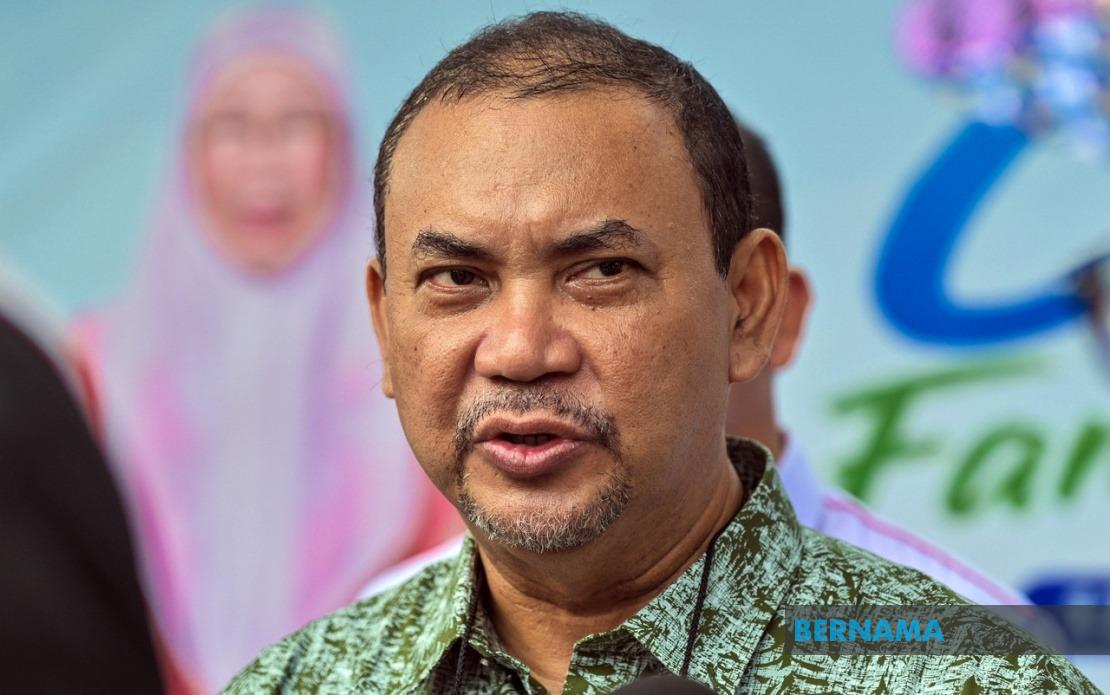
Datuk Azman Abidin, recently appointed as Ampang Parliamentary Constituency Coordinator by Prime Minister Datuk Seri Anwar Ibrahim, has committed himself to improving the way government assistance reaches residents in the district. In a statement released through social media, the Prime Minister's Political Secretary outlined plans to restructure welfare delivery mechanisms to ensure that support programmes function with greater coordination, clarity and responsiveness to community needs.
The coordinator's appointment signals the government's intention to strengthen its grassroots engagement in one of the country's significant urban constituencies. Ampang, which encompasses both established residential areas and rapidly developing neighbourhoods in the eastern Klang Valley, has diverse demographic needs ranging from lower-income families to emerging middle-class residents. By designating a dedicated coordinator with direct access to the Prime Minister's office, the administration demonstrates its focus on personalising service delivery at the constituency level.
Azman's strategy involves establishing a formal channel through the Office of the Prime Minister's Political Secretary, where residents can submit welfare applications directly. This centralised entry point aims to eliminate bureaucratic delays and ensure that requests receive prompt evaluation and processing. The approach reflects a broader government philosophy of making public services more accessible and reducing the friction that often characterises citizen interactions with government programmes.
Crucially, the coordinator's role extends beyond simply processing applications. His framework incorporates collaboration with the Implementation Coordination Unit under the Prime Minister's Department, positioning him as a bridge between community needs and federal government resources. This institutional arrangement allows welfare initiatives to benefit from centralised oversight while maintaining local accountability through direct engagement with constituency stakeholders.
The commitment also encompasses systematic coordination with state assemblymen representing subdivisions within Ampang parliamentary constituency, acknowledging the multi-layered governance structure that characterises Malaysian administration. By ensuring dialogue between federal and state representatives, the coordinator's office can identify gaps in assistance and avoid programme duplication. This intergovernmental cooperation is particularly important in urban areas like Ampang, where residents may qualify for support from multiple sources.
Engagement with community leaders and civil society organisations forms another pillar of Azman's strategy. These stakeholders often possess invaluable ground-level knowledge about pressing community issues and vulnerable populations that formal government databases might overlook. By building these relationships, the coordinator can ensure that welfare initiatives respond to actual needs rather than predetermined bureaucratic categories, making assistance more meaningful and impactful.
The emphasis on professionalism, integrity and accountability in the coordinator's statement carries significant weight in the Malaysian context, where public trust in government institutions remains a sensitive issue. By explicitly committing to these principles, Azman positions his office as subject to public scrutiny and professional standards. This framing invites constituents to expect consistent, fair treatment and provides a basis for legitimate complaints if services fall short.
For Ampang residents, the practical implication is the creation of a single point of contact for welfare concerns, potentially reducing the current experience where individuals must navigate multiple agencies and departments to access support. This simplified pathway could prove transformative for elderly residents, low-income families and individuals facing temporary hardship who often lack the administrative sophistication to traverse complex government systems.
The appointment also reflects evolving governance trends across Southeast Asia, where political leaders increasingly recognise that programme effectiveness depends on streamlined delivery mechanisms. Malaysia's experience with various welfare initiatives, from targeted food assistance to housing support, has demonstrated that coordination failures and information asymmetries often undermine even well-funded programmes. By creating dedicated coordination positions, the government addresses these operational challenges.
Moreover, this initiative carries implications beyond Ampang itself. As a visible demonstration of the government's commitment to organised constituent service, the coordinator's office may become a model that other constituencies seek to replicate. If successful in improving assistance delivery and community satisfaction, this approach could influence broader administrative reforms across Malaysia's federal structure.
The timing of this appointment also deserves attention, coming as it does during a period when Malaysian voters increasingly expect direct responsiveness from elected leaders and their representatives. By establishing a formal mechanism for welfare engagement, the government signals its intention to strengthen bonds with constituents beyond the election cycle, potentially reshaping expectations about political accountability and service quality.
For constituents in Ampang, the immediate value lies in having an accessible, recognisable point of contact within the Prime Minister's office. This tangible connection between local concerns and the highest levels of government administration carries both practical and symbolic importance, reinforcing the principle that no resident's welfare need falls beneath the government's notice or capacity to address.

