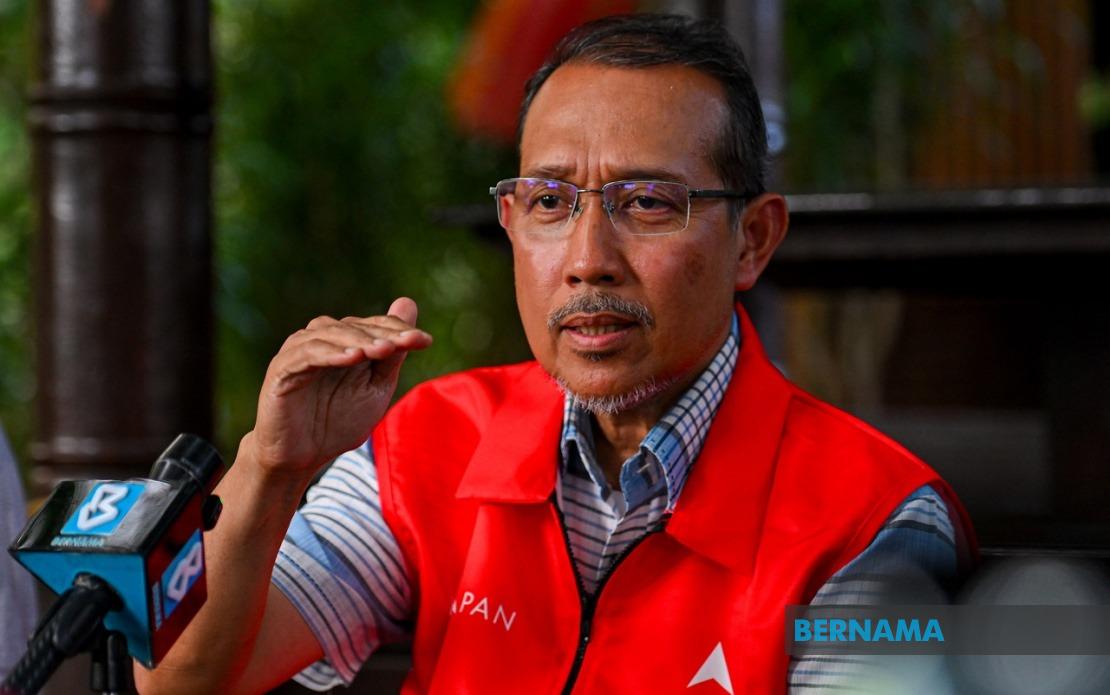
Datuk Muhammad Nazri Kassim, the Pakatan Harapan standard-bearer for the Ampangan state seat, is campaigning on a platform centred on infrastructure renewal and economic revitalisation. Speaking during campaign activities in Seremban, the PH candidate outlined his vision to elevate the constituency into a cleaner, safer, and more vibrant residential and commercial area should voters grant him the mandate in the 16th Negeri Sembilan state election scheduled for August 1.
Addressing the persistent challenge of flooding that has plagued the area in the past, Muhammad Nazri identified comprehensive infrastructure maintenance as a cornerstone of his agenda. He emphasised that systematic upkeep of roads, drainage systems, ditches, and river channels would serve as a crucial first line of defence against inundation. The severe floods of 2021 remain a defining concern for many Ampangan residents, and the candidate has made preventing a recurrence of such devastating incidents a central plank of his platform. His approach reflects a growing recognition among political leaders in Negeri Sembilan that reactive flood response must give way to proactive river and drainage management.
Muhammad Nazri highlighted the effectiveness of collaborative river maintenance programmes that the state government has implemented over the past three to four years. He credited these initiatives with substantially reducing the frequency and severity of flooding events, creating a period of relative stability that residents have come to expect. However, his argument extends beyond merely preventing disaster—he positions improved river conditions as a gateway to broader community benefits. By maintaining clean waterways with attractive landscaping and accessible banks, the constituency can unlock recreational potential that currently remains underdeveloped.
The candidate envisions Ampangan's rivers becoming focal points for leisure activities such as jogging paths, cycling routes, and organised sports programmes. This dual-purpose approach to infrastructure—simultaneously serving flood prevention and community wellbeing—reflects contemporary urban planning principles that are gaining traction across Malaysian cities. Rather than treating rivers solely as drainage systems, Muhammad Nazri's vision treats them as community assets that enhance quality of life while serving essential protective functions.
Central to his economic development strategy is the repositioning of Ampangan as a thriving local commercial centre. He has identified the Benteng area as a particular focus for revitalisation, leveraging the constituency's strategic location within the heart of Seremban. This positioning is significant: Ampangan sits within the Seremban parliamentary constituency and, with 21,336 registered voters, commands enough population density to support meaningful commercial activity. Muhammad Nazri argues that by upgrading the physical environment—through cleanliness, attractive landscaping, and well-maintained public spaces—Ampangan can become a magnet for visitors and shoppers, thereby creating income-generating opportunities for small traders and informal business operators.
The candidate's economic vision particularly emphasises the potential for small business development. He contends that an improved, welcoming township environment directly correlates with entrepreneurial activity, allowing residents to establish viable income streams through retail, food services, and other local enterprises. This focus on grassroots economic empowerment resonates with many Malaysian constituencies where informal traders and small proprietors form a significant portion of the voter base. By framing infrastructure improvements and town beautification as enablers of livelihood creation, rather than as mere aesthetic exercises, Muhammad Nazri connects his development agenda to the concrete financial concerns of ordinary residents.
His campaign methodology reflects a deliberate strategic choice to prioritise direct engagement with voters. Rather than relying solely on rally speeches and media appearances, Muhammad Nazri has adopted a labour-intensive house-to-house approach, conducting face-to-face conversations in neighbourhoods throughout the constituency. This strategy allows him to identify specific grievances and local concerns that might not surface in broader public forums. Such personalised campaigning yields valuable intelligence about constituent priorities and enables a candidate to tailor his policy messaging to address the actual—rather than assumed—needs of voters.
The candidate argues that this grassroots engagement methodology produces superior policy outcomes. By hearing directly from residents about their experiences and frustrations, he claims to develop a more nuanced and accurate understanding of local challenges. This empirical approach to policy formulation contrasts with top-down governance models and suggests a commitment to responsive, locally-attuned administration. For voters sceptical of political promises, Muhammad Nazri's demonstration of willingness to listen represents a form of soft political capital that accumulates through repeated personal interactions.
The electoral contest in Ampangan shapes up as a three-way race, with Muhammad Nazri facing competition from Datuk Dr Mohamad Rafie Malek of Perikatan Nasional and Noor'azah Harun of Parti Pribumi Bersatu Malaysia. This triangular configuration suggests fragmentation among non-PH voters, potentially favouring whichever candidate successfully consolidates support within their own coalition. Muhammad Nazri's public events have featured Prime Minister Datuk Seri Anwar Ibrahim, who also chairs Pakatan Harapan, indicating mobilisation of national-level party resources to secure the seat.
With early voting scheduled for July 28 and polling day set for August 1, the campaign timeline remains compressed. For a constituency of roughly 21,000 registered voters, the concentration of campaign activity in late July suggests that parties are employing intensive get-out-the-vote operations during this final phase. Muhammad Nazri's emphasis on infrastructure delivery and economic opportunity appeals to pragmatic voters concerned with tangible improvements to daily life rather than ideological positioning. His campaign exemplifies how state-level elections in Malaysia increasingly focus on local governance capability and constituency-specific development promises rather than broader national political narratives.

