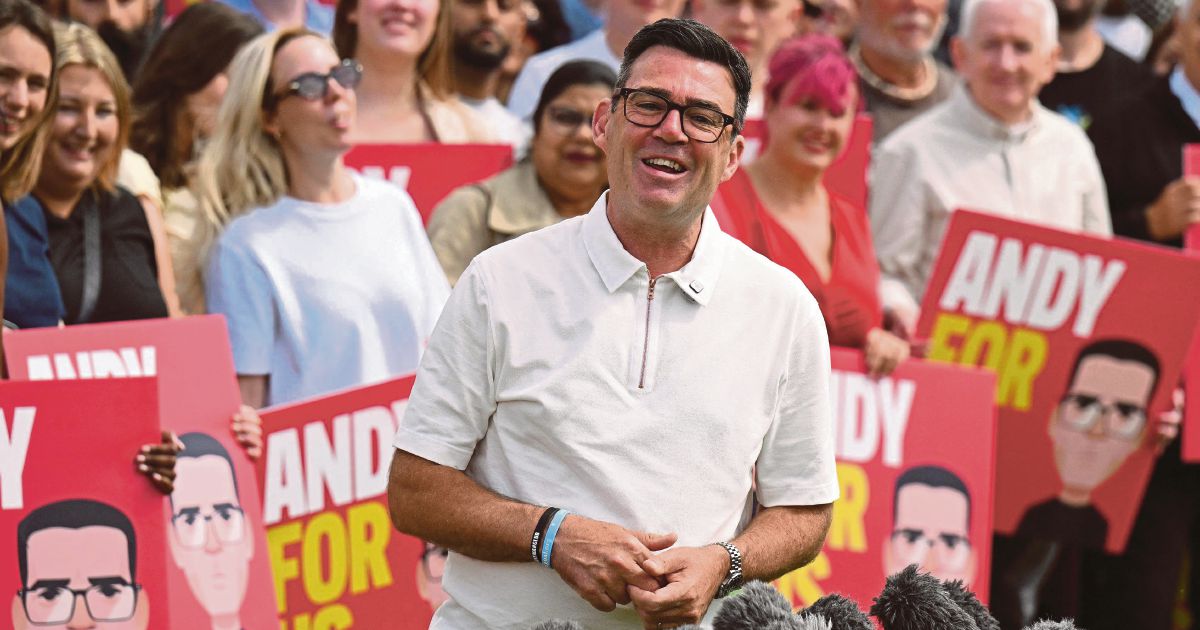
Andy Burnham, the politician whose career in England's industrial heartland has earned him the sobriquet 'King of the North', stepped into Number 10 Downing Street as Britain's seventh prime minister in just ten years. His appointment marks a significant moment for the United Kingdom, where the rapid succession of leadership has reflected deep political turbulence and an electorate increasingly frustrated with governmental instability.
Burnham's ascension to the premiership signals a potential shift in direction for British governance. Having built his political reputation through years of service representing northern England, he arrives at the top office carrying promises of systemic overhaul. His campaign messaging centres on what he describes as the need to "rewire" the nation—a deliberate choice of metaphor suggesting not incremental adjustment but fundamental restructuring of how the country addresses its core challenges.
The cost-of-living crisis remains perhaps the most pressing concern facing British households as Burnham assumes office. Families across the United Kingdom have grappled with surging energy bills, elevated food prices, and stagnant wages that have failed to keep pace with inflation. These economic pressures have created widespread anxiety, particularly among working families who find themselves choosing between heating their homes and purchasing adequate food. Burnham's emphasis on this issue reflects an understanding that political legitimacy increasingly depends on tangible improvements in household finances and material conditions.
Beyond immediate economic hardship, Burnham has also placed failing public services at the centre of his policy agenda. The National Health Service, burdened by record waiting lists and chronic staff shortages, has become emblematic of institutional decline. Schools similarly report deteriorating conditions, social care systems struggle under unsustainable demand, and public transport networks in many regions lag behind continental European standards. These service failures have created a feedback loop of public dissatisfaction that successive governments have struggled to address effectively.
Burnham's background in the northern regions provides him with distinct advantages in framing this agenda. His years leading Manchester and working across the North have given him practical experience with the particular challenges facing post-industrial communities—areas where decades of industrial decline have not been offset by investment in alternative economic foundations. This regional perspective potentially positions him differently from predecessors who drew their political experience primarily from London and the Southeast.
The rapid turnover of prime ministers that preceded Burnham's appointment has itself become a political liability for British governance. The public has repeatedly witnessed leadership changes that appear to resolve little, suggesting instead that Westminster's internal dynamics often matter more than the concerns of voters. Each transition has been accompanied by assurances of fresh direction, yet persistent structural problems have remained. Burnham's promise to "rewire" the nation thus carries implicit acknowledgment that conventional adjustments have failed and more substantial reform is necessary.
For Malaysian observers and Southeast Asian policymakers, the British experience offers cautionary lessons about political instability and its economic consequences. A decade of seven different prime ministers reflects institutional stress and voter disaffection that undermines investor confidence and long-term planning. British businesses have faced uncertainty about policy direction precisely when strategic clarity would benefit economic performance. The Asian region, where political continuity has often been valued, presents a different governance model, though not without its own challenges around accountability and responsiveness.
Burnham's elevation also reflects broader demographic and political shifts within British politics. The strengthening of voices from England's industrial North suggests that London-dominated governance has faced limits. Regional inequality—the persistent gap between prosperity in the Southeast and stagnation elsewhere—has become a central political issue. Burnham's appointment may represent an attempt to address this imbalance, though whether any single leader can effectively "rewire" entrenched economic structures remains an open question.
The new premier inherits an institution facing questions about its future role and relevance. Constitutional debates about Scottish independence, Welsh devolution, and Northern Ireland's status all remain unresolved. His government will need to navigate these fundamental questions about the United Kingdom's internal structure while simultaneously addressing the immediate concerns of citizens struggling with everyday costs and service quality.
Burnham's specific policy proposals for tackling the cost-of-living crisis and service failures will define the early trajectory of his premiership. Whether his background in regional leadership translates into effective national government remains to be demonstrated. The British electorate, having cycled through six predecessors in the previous decade, approaches his tenure with neither the goodwill of novelty nor great confidence that systemic problems will yield to yet another reshuffled leadership.
The international dimension of Burnham's premiership also warrants consideration. Britain's relationship with the European Union following Brexit remains contentious, while relationships with allies including Australia, Japan, and Southeast Asian nations continue to be recalibrated. A government focused on domestic "rewiring" may have limited bandwidth for the complex diplomatic engagement these relationships require. Burnham's previous experience in regional, rather than international, politics may present challenges in managing Britain's global role during a period of significant geopolitical transition.

