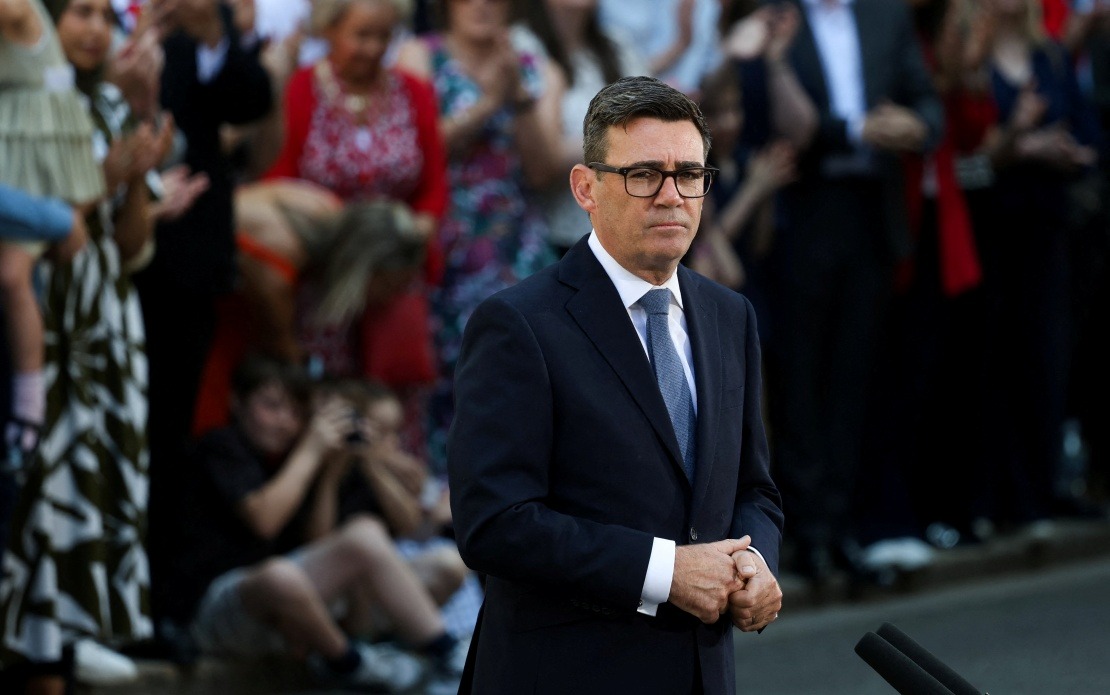
Andy Burnham has officially become the United Kingdom's new Prime Minister after Keir Starmer stepped down from the position on Monday. The transition took place at Buckingham Palace, where King Charles III formally requested Burnham to form a government. The change marks a significant moment in British politics, with the Labour leadership passing to a figure who has established himself as a prominent voice within the party and as a noted administrator at regional level.
Starmer's departure came after he made a final address outside 10 Downing Street, the official residence and workplace of the British Prime Minister. In his parting remarks, the outgoing leader struck an optimistic note, declaring that his work was complete. He extended warm wishes to Burnham, expressing confidence in his successor's ability to lead the nation forward. Starmer also took the opportunity to acknowledge the contributions of Downing Street staff and expressed gratitude to his wife Victoria for her steadfast support throughout his tenure.
Buckingham Palace confirmed the constitutional procedures in an official statement, noting that "Sir Keir Starmer MP had an audience of The King this morning and tendered his resignation as Prime Minister and First Lord of the Treasury which His Majesty was graciously pleased to accept." This formal announcement signals the completion of one phase of Labour governance and the beginning of another under new leadership.
Burnham's ascension to the premiership represents a shift in the party's direction, though both leaders operate within the same Labour framework. His background as a regional administrator has shaped his political approach, and his elevation suggests the party may be recalibrating its priorities or responding to internal or electoral pressures. The timing of this transition underscores the fluid nature of British parliamentary politics, where Prime Ministers can be replaced without a general election if their party maintains parliamentary confidence.
For Malaysian observers, this development demonstrates the mechanics of Westminster-style democracy in action. Unlike systems with fixed presidential terms, the British model allows for leadership changes within a parliamentary majority, a principle that has resonance in other Commonwealth nations including Malaysia. The peaceful transfer of power at Buckingham Palace reflects the institutional stability that characterises the United Kingdom's constitutional framework, where tradition and procedure guide even significant political transitions.
Burnham was expected to proceed directly to 10 Downing Street following his audience with the King to deliver his inaugural address as Prime Minister. This speech would typically set the tone for his administration, outlining priorities and establishing his political vision. The transition from Starmer's tenure to Burnham's leadership will be watched closely by international observers, particularly given Britain's ongoing negotiations on trade, security, and diplomatic relationships across Europe and globally.
The Labour Party's decision to transition leadership reflects broader considerations about party direction and electoral viability. Burnham brings a different profile to the office, with roots in regional governance that may influence how his administration approaches devolution, local government relations, and regional economic development. These policy orientations could have implications for how the United Kingdom engages with other nations on matters of constitutional governance and administrative decentralisation.
From a Southeast Asian perspective, British leadership changes carry significance for regional trade relationships and security partnerships. The United Kingdom maintains various bilateral and multilateral engagements across the Indo-Pacific, and transitions in London's political leadership can affect the continuity and emphasis of these relationships. Burnham's approach to foreign policy and international engagement will be closely monitored by nations including Malaysia that have established working relationships with British government institutions and hold interests in areas where UK influence remains relevant.
The formal machinery of constitutional transition operated smoothly, with all procedures followed according to long-established precedent. The King's role in formally accepting the resignation and requesting the formation of a new government highlights the constitutional monarchy's continuing importance in British governance, even as executive power rests with the Prime Minister and cabinet. This balance between ceremonial authority and practical governance represents a distinctive feature of the Westminster system that continues to influence political structures across the Commonwealth.

