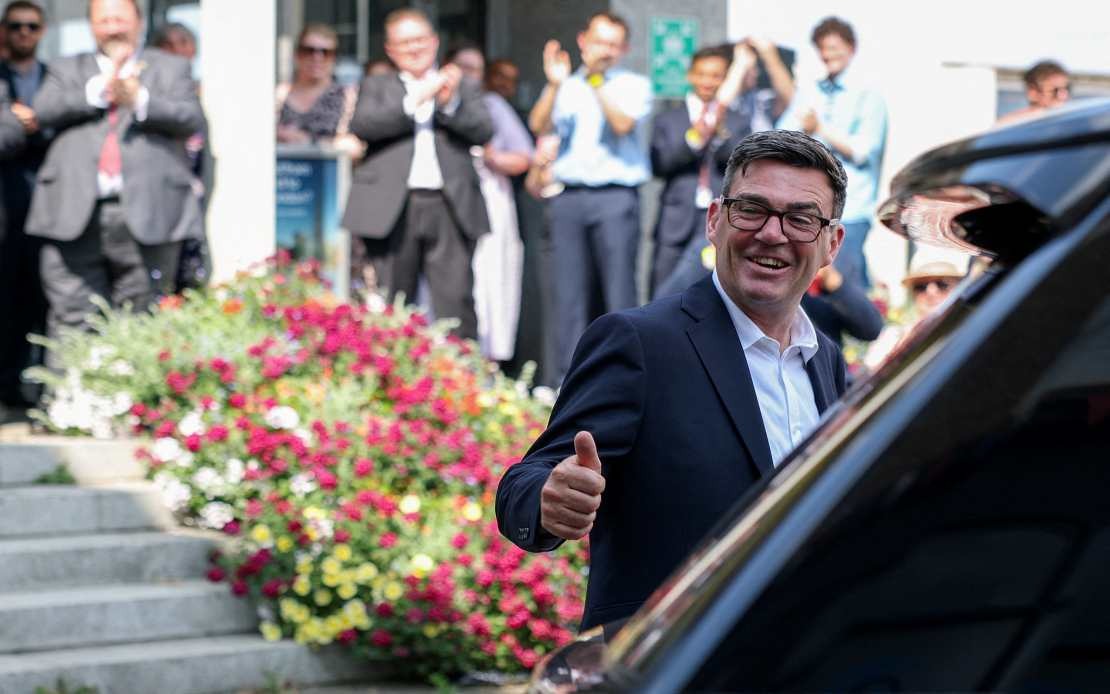
Andy Burnham's elevation to the office of Prime Minister marks a significant moment in British politics, coming at a time when the nation grapples with persistent economic pressures and institutional fatigue. Taking charge on Monday following his audience with King Charles III, Burnham inherits a government struggling to rebuild public trust after a turbulent decade of leadership changes. In his inaugural address from Number 10, the new premier plans to frame his tenure as an opportunity for reflection and decisive action, positioning his administration as capable of confronting Britain's deep-seated challenges with honesty and competence.
The rapid ascension of Burnham to Labour's top job—unopposed and within weeks of his return to Parliament—represents an unusual path to the premiership. Despite this compressed timeline, his appointment reflects a broader party consensus around his ability to restore institutional credibility. His speech will deliberately emphasise the instability plaguing recent British governance, with seven prime ministers cycling through office over the past decade. This repetitive leadership crisis has left the electorate weary and sceptical of politicians' capacity for sustained vision. Burnham's message centres on the notion that lasting relief must accompany political constancy, translating abstract promises of stability into tangible improvements citizens can experience in their daily lives.
Central to Burnham's platform is an effort to ease the cost-of-living burden that has weighted down British households since 2022. Rather than pursuing sweeping structural reforms, his administration appears focused on immediate interventions designed to provide what he terms "breathing room"—a modest but meaningful respite from the financial squeeze ordinary families face. This rhetorical framing acknowledges public exhaustion with grand promises while positioning incremental relief as a genuine achievement. The incoming prime minister has signalled that his first week will feature announcements targeting household expenses, though the specifics remain carefully guarded as officials prepare public announcements.
One contentious area likely to define Burnham's early tenure involves energy policy, particularly the future of North Sea oil and gas exploration. Reports indicate his government is considering expansions to drilling licences in the offshore sector, a move justified on grounds of energy affordability and security. This represents a notable departure from Labour's 2024 manifesto commitments, which explicitly ruled out new drilling authorisations. Environmental advocacy groups have mounted preemptive campaigns against such reversals, arguing that expanded fossil fuel production will neither substantially reduce energy bills for consumers nor align with climate obligations Britain has undertaken. The tension between electoral promises and governing pressures will test Burnham's early credibility.
Thames Water, the UK's largest water supplier, presents another immediate challenge demanding cabinet-level attention. The company's £20 billion debt burden threatens systemic failure, with creditors exploring restructuring options and government intervention. Burnham has previously indicated openness to expanding public ownership of essential infrastructure, potentially providing a pathway toward temporary nationalisation if commercial rescue attempts founder. Thames Water's main creditors have signalled willingness to engage with the new administration on rescue mechanisms, creating space for negotiation before triggering formal special administration procedures. This issue encapsulates broader questions about the proper role of state involvement in maintaining critical services for citizens.
Burnham's commitment to devolution constitutes perhaps his most distinctive policy contribution, reflecting his experience managing Greater Manchester. The pledge to redistribute power outward from Westminster toward regional and local authorities signals a philosophical break from centralised governance. This approach resonates particularly in England's neglected regions, where devolution advocates argue genuine economic development requires decision-making authority vested closer to communities. For Malaysian readers observing Westminster systems, Burnham's federalisation impulses offer interesting parallels to ongoing debates about centre-state resource allocation and governance distribution.
The abandonment of Keir Starmer's digital identification scheme illustrates Burnham's willingness to reverse predecessor policies when political dividends appear attractive. The digital ID programme, touted as modernising security infrastructure, faced considerable public and parliamentary scepticism about privacy implications and implementation costs. By scrapping it and redirecting resources toward cost-of-living interventions, Burnham signals attentiveness to immediate public concerns over technological futures. This prioritisation suggests his administration will favour tactical economic measures over transformative institutional reforms, at least in the near term.
Burnham's first cabinet appointments will carry significant symbolic weight, particularly the selection of Chancellor. The reported contest between Energy Secretary Ed Miliband and Home Secretary Shabana Mahmood reflects different governing visions. Miliband, inheriting his party's climate and energy portfolio, would emphasise transition policy alongside fiscal matters. Mahmood, with her security background, might prioritise conservative economic management and public order. Either choice signals priorities that extend well beyond the premiership's first hundred days. The chancellor role traditionally constrains prime ministerial ambitions through fiscal realities, making this appointment consequential for understanding how Burnham will operationalise his promises.
For Southeast Asian observers, the British transition offers instructive lessons about political fatigue and institutional legitimacy. The rapid cycling of prime ministers eroded public confidence in governance itself, creating conditions where any successor enjoys temporary benefit-of-doubt. Burnham's advantage partly derives from general relief that leadership instability might finally stabilise, rather than from overwhelming enthusiasm for his specific vision. This dynamic suggests that demonstrated competence and consistency may matter more than bold policy innovation in restoring democratic health. The coming months will reveal whether Burnham can convert initial goodwill into durable political capital through concrete delivery on his promises.
The broader implications of Burnham's premiership extend to Britain's international standing and regional relationships. A government focused on internal economic stabilisation and devolutionary power-sharing might alter the UK's diplomatic posture in subtle ways. The decision points regarding North Sea energy exploration, water infrastructure management, and constitutional redistribution will also influence investor confidence and regulatory predictability. For Malaysian businesses and policymakers tracking UK developments, Burnham's administration represents both continuity with Labour's fundamental orientation and potential divergence on specific implementation approaches. Stability and the quality of economic governance matter considerably to external stakeholders assessing the UK as an operating environment.

