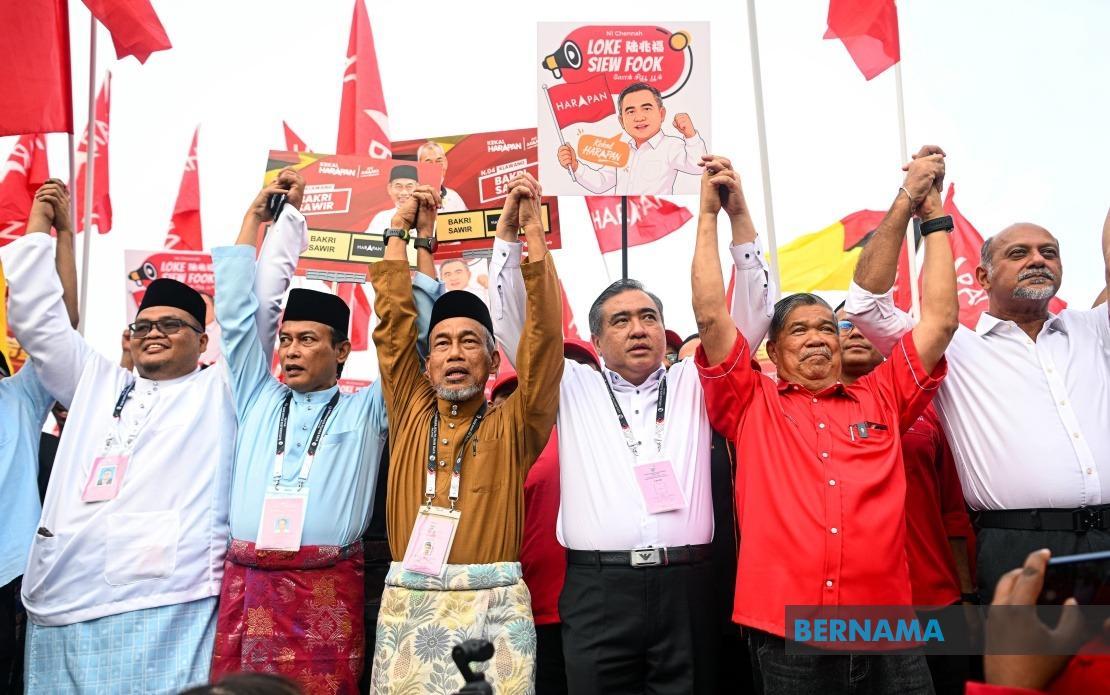
Transport Minister Anthony Loke is set to defend his Chennah state seat in the 16th Negeri Sembilan state election, having consolidated his position since first winning the constituency in 2013. The DAP secretary-general will now face a direct contest with Siow Kong Choon, the MCA Youth chief who will represent Barisan Nasional, following the close of nominations in Jelebu on Thursday morning. The race shapes up as a two-way battle between the ruling Pakatan Harapan coalition and the traditional opposition alliance, with neither candidate facing a challenge from other political camps.
The announcement came after the nomination process concluded at the nomination centre at Dewan Besar Kuala Klawang, with Jelebu Parliamentary returning officer Abdul Rahim A Aziz confirming the contest structure. Loke filed his nomination papers at 9.05 am, just minutes before Siow submitted his credentials at 9.09 am, establishing the parameters for what analysts expect to be a keenly contested race in one of Negeri Sembilan's more prominent constituencies. The straightforward nature of the contest reflects the state's broader political alignment, where the DAP has maintained significant influence following the 2023 state election.
Look back at the previous state election provides crucial context for understanding Loke's current position. In 2023, he secured 5,888 votes, defeating Perikatan Nasional candidate Rosmadi Arif by a commanding margin of 2,200 votes. This substantial victory suggested strong support among Chennah voters and demonstrated the DAP's capacity to hold ground even as political pressures mounted elsewhere in Malaysia. However, the emergence of a BN challenger this time signals a strategic shift by the opposition alliance, which may be attempting to recapture ground it lost in the previous contest.
The decision by MCA to field Siow Kong Choon represents a deliberate attempt by Barisan Nasional to mount a competitive challenge in a seat that has eluded the traditional ruling coalition since 2013. As MCA Youth chief, Siow brings organisational connections and a generational perspective that BN likely hopes will resonate with voters seeking change. The choice also underscores Barisan Nasional's commitment to contesting significantly in Negeri Sembilan, where its performance has deteriorated over successive electoral cycles. MCA's participation signals the coalition's intent to revitalise its presence in the state after years of declining influence.
Anthony Loke's dual role as both state assemblyman and federal Transport Minister adds another dimension to his candidacy. As a cabinet minister in the Anwar Ibrahim administration, Loke carries both the credibility of serving in government and the potential burden of being associated with federal policies that may or may not resonate with local voters. His position as DAP secretary-general further amplifies his significance, making his performance in Chennah symbolically important for the party's broader standing in Negeri Sembilan and the peninsula more widely. The Transport Ministry portfolio also gives him leverage to highlight infrastructural developments and policy initiatives that might benefit the constituency.
Negeri Sembilan's political landscape has undergone significant transformation in recent years, with power oscillating between different coalition alignments. The state holds particular importance because it often serves as a barometer for broader peninsular sentiment, and its relatively small number of seats means individual performances carry disproportionate weight. The Chennah contest therefore carries implications extending beyond the immediate constituency, potentially influencing perceptions about Pakatan Harapan's capacity to retain support in traditional strongholds. A successful defence by Loke would reinforce the ruling coalition's narrative of stability, while any significant swing would suggest gathering momentum for the opposition.
The electoral calendar structures the campaign into distinct phases, with early voting scheduled for July 28 and polling day set for August 1. This compressed timeframe compresses the campaigning period and places emphasis on existing voter sentiment and ground organisation capabilities. Both camps will need to mobilise supporters efficiently, particularly given that early voting represents an increasing proportion of total ballots cast in Malaysian elections. The schedule also means that campaign momentum will build rapidly, with little time for extended deliberation or major shifts in voter perception.
For Malaysian voters and political observers, this race exemplifies the broader dynamics playing out across the country as the ruling coalition seeks to consolidate its position while opposition parties attempt to rebuild credibility. The straight fight between DAP and MCA eliminates the complicating factor of three-way contests that have characterised many recent Malaysian elections, potentially making the outcome a clearer indicator of voter preference between these two political formations. The absence of Perikatan Nasional in this particular contest marks a departure from 2023 and suggests either strategic repositioning by the Islamist-influenced alliance or acknowledgement that Chennah represents unfavourable terrain for their candidacy.
Broader implications for the Negeri Sembilan state assembly underscore why individual seats matter in Malaysian politics. With relatively few state seats compared to larger states, the balance of power in Negeri Sembilan can shift dramatically based on the outcomes in a handful of constituencies. Should the pattern hold where Loke successfully retains Chennah, Pakatan Harapan would maintain its presence in the state legislature. Conversely, a Barisan Nasional victory would signal potential momentum for the coalition to rebuild its presence in a state where its influence had waned considerably. The ripple effects of such contests extend to federal politics, where state-level performances influence coalition dynamics and policy direction.
The contest also reflects generational change within Malaysian politics, with both candidates representing relatively newer political formations compared to some traditional heavyweights. Loke's rise within DAP and subsequent elevation to federal ministerial rank exemplifies the party's evolution from regional player to coalition partner in national government. Siow Kong Choon's emergence as MCA Youth chief and now as a direct challenger to a sitting minister represents the younger generation of MCA figures attempting to revitalise the party's electoral prospects. The Chennah race therefore encapsulates broader questions about whether DAP and its Pakatan partners can sustain voter support, and whether Barisan Nasional can arrest its decline through dynamic new candidates and messaging.

