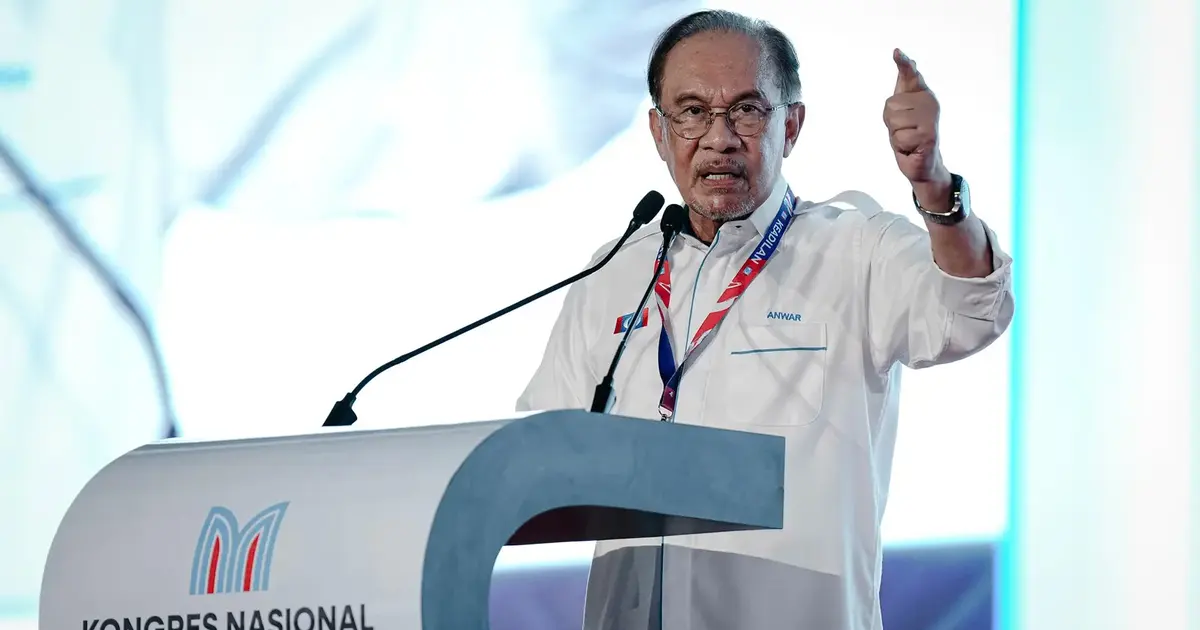
Prime Minister Anwar Ibrahim has declared a fresh allocation of RM1 million for every parliamentary constituency across the country, a move aimed at addressing widespread concerns about equitable distribution of development resources. The announcement comes at a moment of heightened political scrutiny regarding whether the federal government has been channelling infrastructure and development funds fairly to all regions, regardless of which political coalition controls them.
Anwar explicitly refuted suggestions that his administration had been restricting or delaying development expenditure to parliamentary constituencies governed by opposition parties. Such allegations have circulated periodically within Malaysian political discourse, particularly during periods when state governments led by opposition coalitions have questioned the pace of federal fund disbursement to their regions. The prime minister's firm denial underscores the government's position that resource allocation decisions follow established criteria and procedures rather than partisan considerations.
The RM1 million per constituency translates into a substantial aggregate investment across Malaysia's 222 parliamentary divisions. This unified funding approach signals an intention to demonstrate commitment to nationwide development, extending benefits beyond constituencies where the ruling coalition enjoys political dominance. For Malaysian observers, the timing of this announcement reflects broader ongoing tensions within the country's federal structure regarding how central government resources should be distributed when different political parties control state and federal levels.
The controversy over development fund allocation has proven particularly contentious in Malaysia's federal system, where state governments and federal authorities may operate under opposing political leadership. Concerns about resource equity have been especially pronounced in states like Selangor, Penang, and Kelantan, which have experienced periods of non-Barisan Nasional or non-Perikatan Nasional governance. When state-level opposition parties control these regions, questions naturally arise about whether available federal resources flow to them at the same pace as to allied constituencies.
Anwar's statement addresses these persistent questions by asserting that development funding operates through transparent mechanisms. The administration appears intent on countering perceptions of political bias in resource distribution, particularly as the government seeks to maintain broad-based political support ahead of future electoral cycles. By announcing uniform allocations across all parliamentary divisions, the prime minister projects an image of even-handed governance that transcends party affiliation.
The additional RM1 million per constituency funding represents a tangible investment that will reach opposition-held areas directly, potentially serving to defuse claims of financial discrimination. Parliamentary constituencies cut across state boundaries and vary widely in terms of urban-rural composition, infrastructure maturity, and demographic needs. Distributing identical amounts to each constituency therefore requires careful planning to ensure funds address locality-specific challenges effectively.
From a governance perspective, this announcement raises important questions about how supplementary allocations will complement existing development frameworks. Malaysia's budgeting system includes various federal funding channels, including the Annual Development Budget administered through individual ministries and state-level discretionary funds. Understanding how the new RM1 million allocation integrates with existing mechanisms will determine its actual impact on service delivery and infrastructure development at the grassroots level.
For state governments led by opposition parties, the timing offers a degree of relief, though questions will persist about implementation. Opposition-led administrations in both peninsular Malaysia and East Malaysia have historically raised concerns about access to federal resources, sometimes claiming inadequate support for local infrastructure projects. Direct parliamentary constituency funding that bypasses state intermediaries could theoretically provide greater autonomy to federal resources, though it might also complicate coordination with state-level development planning.
The announcement also carries implications for how different tiers of government coordinate development agendas. When multiple funding channels operate simultaneously—state allocations, federal ministry budgets, parliamentary constituency grants, and dedicated development funds—ensuring coherent planning and avoiding duplication becomes increasingly complex. Local authorities and project managers must navigate these overlapping systems to maximise benefits for constituents.
Anwar's rejection of allegations regarding selective fund withholding reflects deeper anxieties within Malaysia's political system about whether federal institutions can operate impartially across party lines. Trust in institutional neutrality remains a persistent challenge in Malaysian governance, particularly given the country's history of intense political competition. By making an explicit announcement about equal allocations, the prime minister signals awareness of these concerns, even if sceptics may question whether political reality matches rhetorical commitment.
Moving forward, the actual distribution and utilization of these constituency-level funds will merit close scrutiny from multiple stakeholders. Opposition parliamentarians and civil society observers will likely monitor whether allocated resources reach intended constituencies promptly and whether implementation reflects genuine commitment to equitable development. For Malaysian taxpayers and voters across the political spectrum, the practical outcomes will ultimately matter more than the announcement itself.

