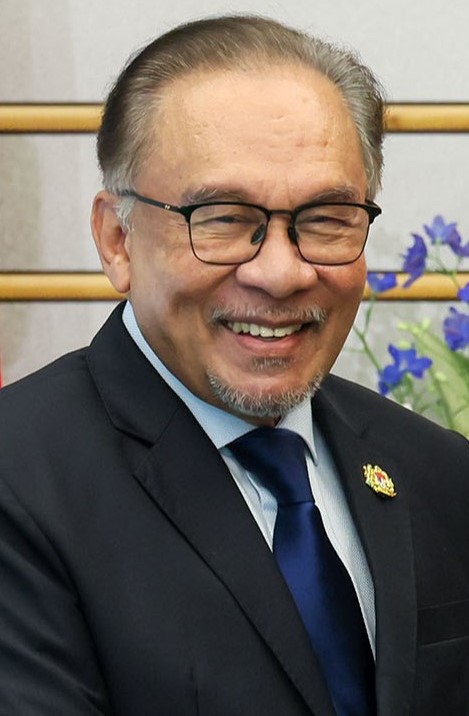
Prime Minister Anwar Ibrahim has reaffirmed the importance of maintaining constructive working relations between Johor and the federal government through a formal meeting with Johor Regent Tunku Mahkota Johor in Kuala Lumpur. The engagement signals continued political alignment at a time when state-federal coordination remains crucial for the country's developmental agenda and economic stability across peninsular Malaysia's most economically vibrant state.
The bilateral discussion underscores the need for seamless collaboration between two distinct tiers of government that share jurisdiction over critical portfolios including infrastructure development, economic planning, and public service delivery. Johor, as Malaysia's second-largest economy and a significant contributor to federal revenue, holds particular strategic importance in the nation's broader governance framework. The meeting demonstrates recognition that administrative friction between state capitals and Putrajaya can undermine policy implementation and diminish public confidence in institutional effectiveness.
The explicit commitment to preserve good relations carries tangible implications for Johor's residents and investors operating within its jurisdiction. When state and federal authorities function in genuine partnership rather than adversarial positioning, development projects advance more smoothly, regulatory clarity improves, and the business environment strengthens. Johor's position as a manufacturing and logistics hub makes seamless government coordination especially vital for maintaining investor confidence and competitive advantage within the region.
Anwar's decision to formally seek audience with the Johor Regent reflects diplomatic protocol and political pragmatism. The Regent, as constitutional head of state and symbol of Johor's hereditary institution, carries considerable symbolic and practical weight in state governance. Such personal engagement at the highest levels signals that the federal administration views the relationship as sufficiently important to warrant direct prime ministerial attention rather than delegation to subordinate officials.
This development carries broader implications for Malaysia's federal architecture. The country has experienced periodic tensions between state and federal authorities, particularly when different political coalitions control respective governments. The harmonious tone adopted here suggests efforts to transcend partisan divisions and focus on governance outcomes that benefit citizens. For a federation managing thirteen diverse states and three federal territories, such demonstrated cooperation serves as a model for institutional restraint and collaborative federalism.
Johor's political landscape has evolved considerably in recent years, with significant shifts in state leadership and shifting electoral dynamics. The state government's willingness to engage constructively with the current federal administration reflects pragmatic recognition that productive relations serve developmental interests better than confrontation. This calculus appears to be shared by both parties involved in the Kuala Lumpur meeting.
The emphasis on preserving relations rather than merely maintaining them suggests proactive commitment to deepen existing cooperation. Infrastructure projects spanning state and federal responsibilities—from transportation networks to special economic zones—depend on sustained political will from both administrations. The Johor Regent and Prime Minister's conversation likely touched upon specific initiatives requiring coordinated effort, though detailed outcomes remain undisclosed.
Regional considerations add additional weight to state-federal harmony in Johor. The state's geographical proximity to Singapore creates economic interdependencies and cross-border dynamics that demand coordinated policy responses. Federal-state alignment strengthens Malaysia's negotiating position in bilateral dealings with Singapore and enables more sophisticated management of shared resources, particularly water supply agreements that have proven periodically contentious.
The meeting also reflects international economic pressures facing Malaysia's states. As global supply chains shift and foreign investors reassess regional positioning, states compete vigorously for capital and manufacturing relocations. Johor's competitive advantage is enhanced when federal support complements state-level industrial policies. The Regent and Prime Minister's dialogue likely encompassed strategies for attracting foreign direct investment and nurturing emerging industries within the state.
Anwar's overture demonstrates understanding that prime ministerial capital spent on relationship-building with state leaders generates returns through improved implementation capacity and reduced administrative friction. In Malaysian politics, personal relationships between senior leaders often determine whether formal mechanisms function effectively or become paralyzed by institutional rivalry. This calculated engagement invests in the human relationships that ultimately determine whether federalism functions smoothly.
Looking forward, the commitment to preserve good relations provides foundation for addressing inevitable disagreements constructively. State and federal governments will inevitably encounter disputes over revenue distribution, regulatory jurisdiction, and policy priorities. When leaders have established personal rapport and demonstrated commitment to partnership, such disagreements become manageable technical issues rather than political confrontations.
For Malaysian investors and businesses operating in Johor, this visible alignment between state and federal leadership offers reassurance that the institutional environment supports long-term commercial planning. Government predictability and reduced inter-governmental friction translate directly into lower business uncertainty and improved investor returns. The symbolic value of the Kuala Lumpur meeting extends well beyond political rhetoric into practical commercial confidence.
The conversation between Anwar and the Johor Regent exemplifies mature federalism where elected and hereditary leaders recognize that governance effectiveness ultimately depends on institutional cooperation transcending partisan divisions. Whether this commitment endures through inevitable future disagreements will reveal whether the stated commitment reflects genuine philosophical alignment or temporary political convenience.