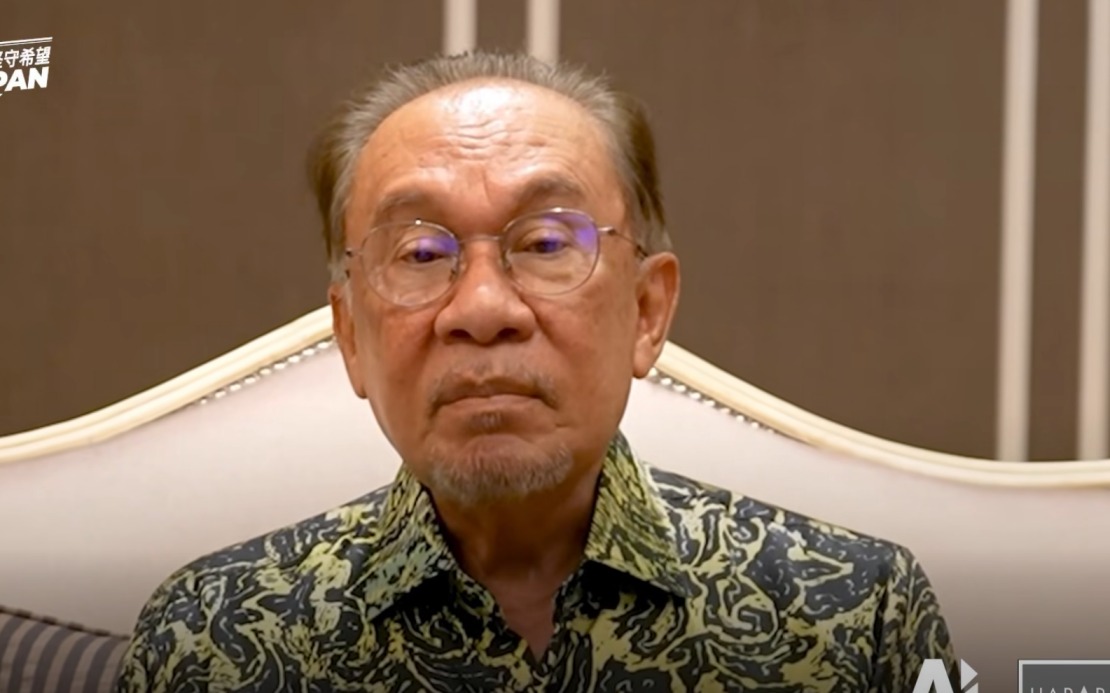
Prime Minister Datuk Seri Anwar Ibrahim has made a direct appeal to members of the Malaysian Armed Forces and Royal Malaysia Police, along with their spouses, to throw their support behind the Pakatan Harapan candidate in the upcoming Negeri Sembilan State Election. The appeal came through a Facebook video posted as early voting commenced, targeting the security personnel who will cast their ballots before the general election day scheduled for August 1.
Anwar's message centred on the government's commitment to improving conditions for military and law enforcement officers, framing electoral support as an investment in continued welfare enhancement. He emphasized that his administration, working alongside Cabinet Ministers, had prioritized addressing the material needs of security personnel across multiple dimensions. The Prime Minister positioned the vote as both a recognition of past efforts and a mandate for future improvements in the quality of life for these uniformed services.
The welfare improvements cited by Anwar encompassed several concrete areas that directly affect military and police families. These included salary adjustments, foundational facilities at barracks and stations, housing assistance programs, and educational provisions for dependent children. Healthcare services for elderly parents of serving personnel were also highlighted as a government priority, reflecting the multigenerational considerations embedded in the administration's policy framework.
Beyond standard employment benefits, Anwar referenced two specific assistance schemes aimed at lower-income households: Sumbangan Tunai Rahmah and Sumbangan Asas Rahmah. These cash assistance programs represent broader social safety net initiatives that extend to security force families, particularly those in junior ranks where household incomes remain modest. By invoking these programs, the Prime Minister connected individual welfare improvements to the government's wider social spending agenda.
The timing of this appeal carries strategic significance within Malaysia's electoral calendar. Early voting mechanisms exist specifically to accommodate personnel in essential services who cannot afford to leave their posts during regular polling hours. In Negeri Sembilan, the scale of this early voting bloc is substantial: approximately 16,884 military personnel and their spouses, along with 5,455 police officers, will utilize 38 early voting centres distributed across the state. This represents a potentially decisive voter cohort, particularly in a state election where margins often prove narrow.
Anwar framed the election as more than a routine state-level exercise, suggesting that voter choices would shape not only Negeri Sembilan's future direction but also serve as a broader statement of confidence in the federal government's approach to governance. This rhetorical strategy attempts to bind local electoral outcomes to national policy legitimacy, arguing that security personnel support validates the administration's record on welfare and service delivery. The Prime Minister positioned the vote as a partnership between government and the uniformed services, invoking shared commitment to national dignity and citizen welfare.
The messaging strategy reflects calculated recognition of security forces' political importance in Malaysian electoral politics. These voters constitute organized, mobilized groups with institutional coherence and often display higher turnout rates than civilian populations. Their concentrated early voting creates a discrete opportunity for targeted appeals unavailable during mainstream campaigning. Moreover, their economic vulnerability to policy changes—given dependence on government salaries and benefits—makes welfare messaging particularly resonant with this demographic.
The August 1 polling date for the 16th Negeri Sembilan State Election follows standard procedures, though the emphasis on early voting demonstrates how tactical campaigns now deploy administrative convenience mechanisms for political advantage. By concentrating messaging on security personnel during their designated voting windows, parties can communicate with high-probability voters when they are most engaged with the electoral process. This represents a refinement of campaign strategy that exploits the structured nature of early voting mechanisms.
For Negeri Sembilan voters broadly, the election carries implications beyond state administration, as regional electoral outcomes often influence perceptions of federal government popularity and policy effectiveness. A strong Pakatan Harapan performance would validate the coalition's welfare-focused messaging, while security force voting patterns might indicate whether targeted welfare initiatives successfully translate into political loyalty. The state's economic importance—as part of Malaysia's central region and host to significant manufacturing and service sectors—means its governance affects regional competitiveness and investment climate.
The appeal also reflects ongoing competition for military and police allegiance across Malaysia's political spectrum. While security forces traditionally maintained formal neutrality in electoral matters, their voting behaviour increasingly influences party strategies. By explicitly addressing their welfare concerns, Anwar signals that Pakatan Harapan prioritizes security personnel interests, potentially contrasting this positioning with opposition narratives. This represents a shift toward more direct engagement with institutional voters who previously received less targeted campaign attention.
For Southeast Asian context, Malaysia's approach to security force electoral engagement reflects broader regional patterns where militaries and police occupy significant political space. The explicit welfare messaging demonstrates how governments throughout the region deploy material incentives to secure institutional voter blocs. Negeri Sembilan's election thus serves as a microcosm of contemporary Malaysian electoral dynamics, where targeted appeals to organized constituencies combine with broader policy narratives about national direction and governmental effectiveness.

