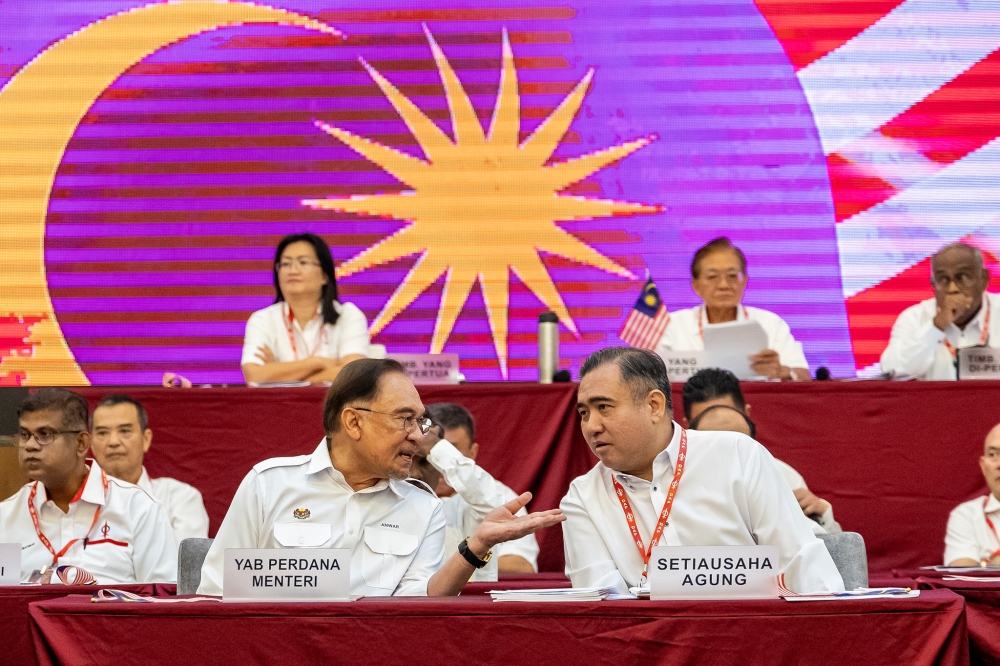
Prime Minister Datuk Seri Anwar Ibrahim has made a personal appeal to the Melaka chapter of the Democratic Action Party (DAP) to reverse its recent decision to exit the state government, stressing the importance of maintaining coalition cohesion during this critical phase of governance. Speaking in Port Dickson on July 14, Anwar emphasised that the party should remain engaged in the administration and continue its work until the next state election is conducted, rather than abandoning its responsibilities at this juncture.
The intervention by Malaysia's top political leader underscores the broader tensions within the Pakatan Harapan (PH) coalition, which has been grappling with internal friction across various state administrations. Melaka, a strategically important southern state with historical and economic significance, has become a focal point for these coalition strains. The DAP's decision to leave the government signals deeper discontent within the party's ranks, possibly stemming from resource allocation disputes, representational concerns, or disagreements over policy direction at the state level.
Anwar's appeal carries considerable weight within the coalition framework, as the Prime Minister remains the principal architect of the PH alliance and the face of the federal government. His direct intervention suggests that party leadership views the Melaka situation not merely as a localised disagreement but as a matter that could have ripple effects across other coalition-governed states. The timing of this plea is particularly significant, as maintaining political stability becomes increasingly important ahead of potential electoral contests that could reshape Malaysia's political landscape.
The Melaka DAP's contemplated departure raises questions about the root causes of dissatisfaction within the party structure. Whether centring on portfolio allocation, development projects, or perceived marginalisation within decision-making processes, such grievances reflect broader challenges facing coalition governments in Malaysia. Multi-party administrations require delicate balance and equitable power-sharing arrangements to function smoothly, and the Melaka case demonstrates how quickly friction can escalate if underlying concerns are not adequately addressed.
For Malaysian observers, this episode illustrates the persistent vulnerability of coalition politics in the country. Unlike stable two-party systems, Malaysia's complex racial and religious demographics encourage multi-ethnic party representation, which in turn necessitates power-sharing arrangements at state and federal levels. These arrangements, while promoting representation, can become contentious when parties feel shortchanged in the distribution of ministerial positions, budgetary allocations, or developmental initiatives. The DAP's considerations in Melaka must be understood within this broader structural context.
Anwar's intervention also reflects the Prime Minister's political acumen and his understanding that coalition stability is fundamental to his government's survival and effectiveness. The federal government depends on legislative support from various coalition partners, and any fracturing at state level can create narrative momentum against the administration. By personally engaging with the Melaka DAP leadership, Anwar demonstrates his willingness to invest political capital in conflict resolution, though this approach also highlights how significantly state-level disputes can threaten national governance structures.
The economic and developmental dimensions of state governance in Melaka add another layer to this dispute. As a state with strategic port facilities, historical tourism appeal, and a significant commercial sector, Melaka's governance directly impacts regional economic performance. Political instability or reduced administrative effectiveness resulting from coalition tensions could compromise the state's development trajectory and potentially affect investor confidence. This economic angle suggests that resolving the DAP's concerns benefits not just the coalition but the broader community dependent on stable, focused state administration.
Southeast Asian and regional observers might note that Malaysia's coalition politics challenges reflect patterns seen elsewhere in the region. Thailand's various coalition experiments, Indonesian party dynamics, and the Philippines' political volatility all demonstrate how multi-party governance can strain under competing interests and inadequate institutional frameworks for mediation. In this context, Malaysia's parliamentary traditions and established party structures provide some cushion, but they do not eliminate fundamental tensions between coalition partners with divergent interests and bases.
The coming weeks will be crucial for determining whether Anwar's appeal succeeds in convincing the Melaka DAP to reconsider. Should the party persist with its withdrawal, it would signal that internal party concerns override the national coalition's interests—a potentially worrying precedent for other states where similar grievances might bubble to the surface. Conversely, if the DAP agrees to remain, it will likely require some concrete concessions or reassurances from other coalition partners regarding resource allocation or representation.
Looking ahead, this situation underscores the need for more robust mechanisms within the PH coalition for addressing inter-party disputes before they escalate to public withdrawal announcements. Regular consultation frameworks, formal dispute resolution procedures, and transparent guidelines for portfolio and resource allocation could prevent similar crises. The Melaka case serves as a critical test of the coalition's ability to manage its internal dynamics constructively while maintaining coherent governance at state and federal levels.
The broader implications extend to Malaysia's democratic stability and governance quality. When coalitions function smoothly, they can deliver responsive, representative administration. When they fracture, the result is often legislative gridlock, delayed decision-making, and reduced public confidence in government institutions. Anwar's efforts to keep the Melaka DAP within the coalition fold reflect recognition that governance effectiveness depends not just on individual party performance but on sustained cooperative partnerships that transcend partisan interests in favour of collective responsibility.

