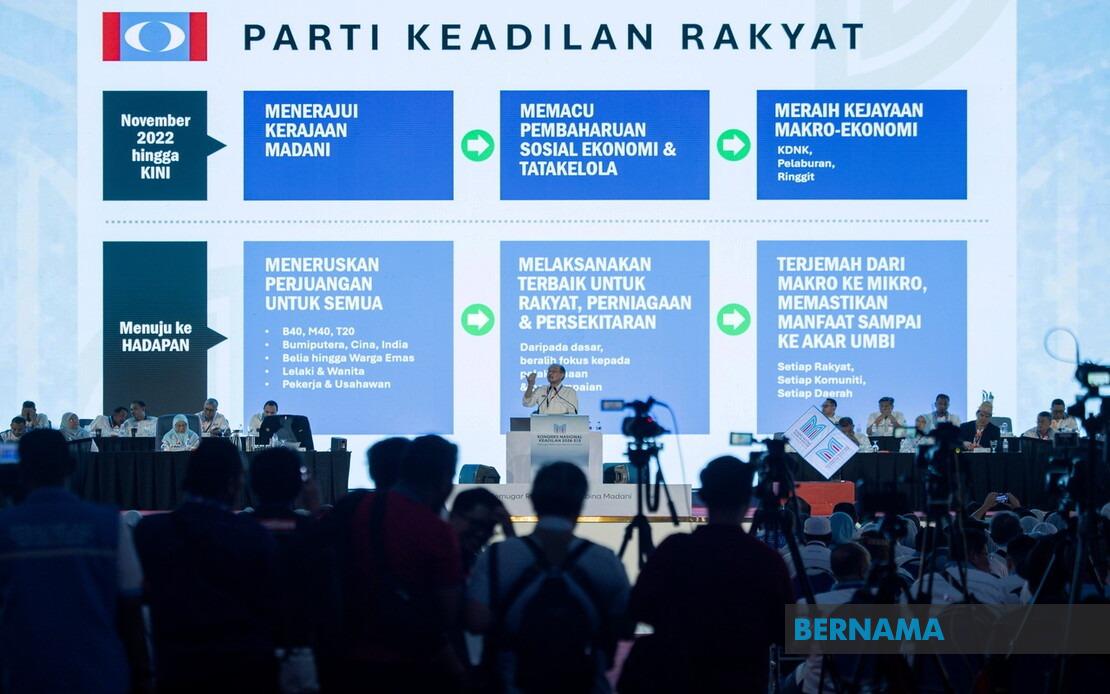
PKR President Datuk Seri Anwar Ibrahim has entrusted Home Minister Datuk Seri Saifuddin Nasution Ismail with full authority to execute the responsibilities of the party's deputy president position. The announcement, made during Anwar's closing remarks at the PKR National Congress 2026 held at the Melaka International Trade Centre in Ayer Keroh on August 16, comes as the incumbent deputy president, Nurul Izzah Anwar, steps back from her duties temporarily. While acknowledging that the additional responsibility represents a considerable workload, Anwar characterised Saifuddin Nasution's appointment as a natural progression given the minister's longstanding loyalty and deep understanding of party operations.
The decision to formalise Saifuddin Nasution's interim role represents a strategic consolidation of leadership within PKR's senior echelon. Anwar's confidence in his colleague stems from their lengthy association and demonstrated commitment to the party's ideals. In his speech, the Prime Minister explicitly called upon the entire PKR machinery to extend their unwavering support, cooperation, and allegiance to Saifuddin Nasution as he navigates this temporary assignment. This public endorsement carries significant weight within party hierarchies, signalling that the transition is not merely an administrative formality but rather a considered decision backed by the party president's considerable authority.
The Central Leadership Council had previously sanctioned this arrangement on August 6, with PKR Information Chief Datuk Seri Fahmi Fadzil confirming that Saifuddin Nasution would assume interim deputy president responsibilities following approval of Nurul Izzah's leave request. The timing of these announcements reflects careful coordination within the party's top leadership, ensuring that organisational continuity is maintained during a period of transition. For Malaysian observers, the move underscores the distinction between formal party positions and operational authority, a dynamic particularly important in understanding how Malaysian political parties manage competing priorities and personnel requirements.
Beyond the deputy president appointment, Anwar unveiled additional structural changes to strengthen PKR's organisational framework heading into the next electoral cycle. Datuk Seri Amirudin Shari, another vice-president, has been elevated to the position of party election director, a role that carries substantial influence over campaign strategy and candidate selection. Meanwhile, Tengku Datuk Seri Zafrul Tengku Abdul Aziz has been appointed as coordinator within the Prime Minister's Office, a placement that directly connects party interests with the highest levels of government administration. These parallel appointments suggest a deliberate reconfiguration of PKR's leadership structure to better position the party for upcoming electoral contests.
The situation surrounding Datuk Seri Aminuddin Harun exemplifies the internal pressures confronting PKR in the aftermath of recent electoral disappointments. Six Negeri Sembilan PKR division heads have petitioned for a reassessment of Aminuddin's tenure as chairman of the state party leadership council, following the party's defeat in the Negeri Sembilan state election on August 1. Rather than immediately acquiescing to these demands, Anwar has intervened with a different approach, redirecting Aminuddin's focus toward his vice-presidential responsibilities and a newly expanded portfolio overseeing cadre training and development for junior party members. This redirection implicitly deflects pressure for wholesale personnel changes while repositioning Aminuddin's considerable administrative experience toward what Anwar characterises as a critical institutional function.
Anwar's handling of the Negeri Sembilan situation reflects a nuanced understanding of party management and the risks of scapegoating individual leaders for collective failures. The Prime Minister explicitly rejected the notion that Aminuddin should bear sole responsibility for the state election loss, instead framing the defeat as a shared responsibility requiring collective acknowledgment and systemic correction. This measured response carries implications for party morale and internal cohesion, particularly among senior figures who might otherwise feel vulnerable to removal following electoral setbacks. By anchoring accountability to organisational performance rather than individual culpability, Anwar seeks to maintain stability within PKR's leadership while signalling that electoral discipline will be addressed through structural and strategic reforms rather than punitive personnel changes.
The expanded training and cadre development mandate assigned to Aminuddin addresses a recognisable gap in PKR's organisational capacity. Malaysian political parties have increasingly recognised that electoral competitiveness depends not merely on charismatic leadership but on the depth and quality of party machinery at grassroots levels. By tasking Aminuddin with empowering new PKR members through systematic training programmes, Anwar is attempting to build institutional resilience and reduce future dependence on particular personalities. Aminuddin's background as former Negeri Sembilan Menteri Besar provides substantial credibility for such a role, as he brings firsthand understanding of how state-level administration and party organisation intersect.
These leadership adjustments occur against the backdrop of PKR's mixed recent electoral performance and the broader dynamics within Malaysia's governing coalition. The party continues to navigate tensions between maintaining unity with its coalition partners in Pakatan Harapan and Barisan Nasional while managing internal factional interests and maintaining organisational effectiveness across multiple states. The August 1 Negeri Sembilan defeat represents a particular disappointment given PKR's historical influence in that state, making the aftermath politically sensitive within party ranks and requiring careful management by senior leadership.
For regional observers tracking Malaysian politics, these developments illustrate how ruling parties in Southeast Asia manage internal succession planning and leadership transitions while maintaining public cohesion. Anwar's appointment of Saifuddin Nasution as interim deputy president, combined with the strategic repositioning of other vice-presidents and the careful handling of Aminuddin's situation, demonstrates a leadership approach emphasising continuity and institutional development over dramatic personnel overhauls. The decisions announced at the PKR National Congress 2026 suggest that party leadership intends to address electoral competitiveness through organisational strengthening and strategic repositioning rather than wholesale leadership replacement, a calculated gambit that may determine PKR's viability as a major political force in upcoming national and state contests.

