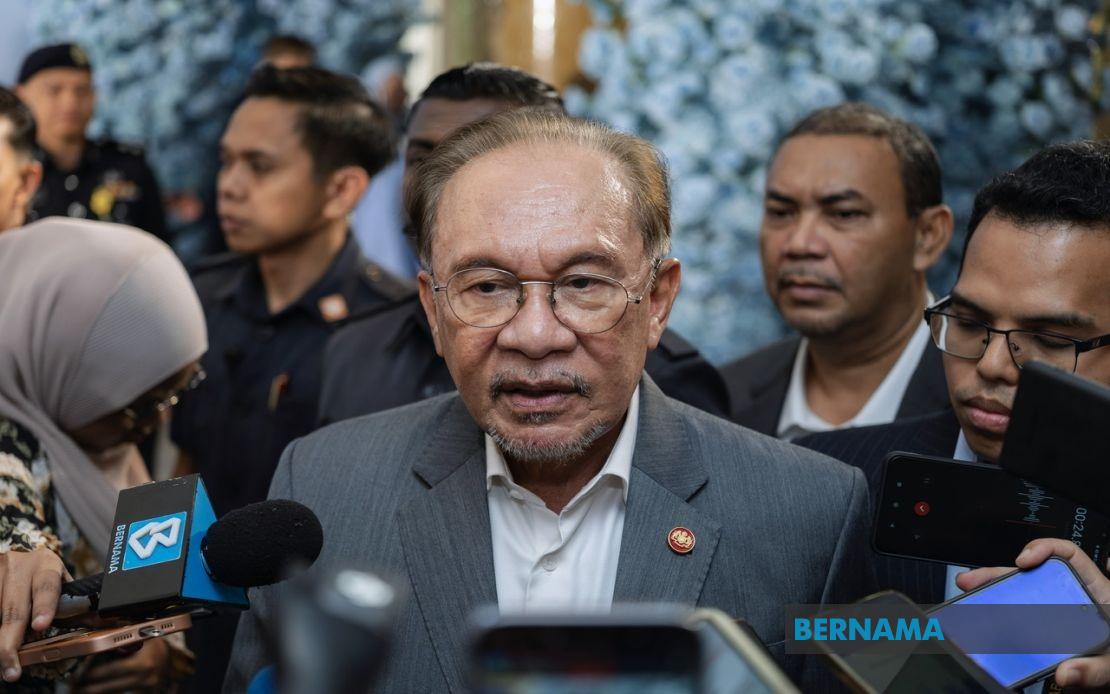
Prime Minister Datuk Seri Anwar Ibrahim disclosed on July 15 that he remains uninformed about the circumstances leading to the abrupt withdrawal of four Melaka DAP state assemblymen from the state government, signalling a potential rift within the ruling coalition's stronghold in the southern state. In his capacity as both premier and chairman of Pakatan Harapan, Anwar indicated that coalition leadership intends to investigate the situation and pursue remedial steps without delay, though he provided no timeline or specific details about the anticipated intervention.
The exodus occurred following a contentious constitutional amendment passed by the Melaka State Legislative Assembly that authorises the appointment of nominated state legislators, a measure the departing DAP representatives evidently found objectionable. The four assemblymen—Allex Seah Shoo Chin from Kesidang, Low Chee Leong from Kota Laksamana, Leng Chau Yen from Banda Hilir, and Kerk Chee Yee from Ayer Keroh—announced their immediate separation from the state administration in protest, representing a significant crack in Pakatan Harapan's governance of the state.
The timing of this institutional breakdown underscores growing tensions within Malaysia's ruling coalition over governance philosophy and democratic procedure. The appointment mechanism now enshrined in Melaka's constitution has historically been a flashpoint in Malaysian politics, as such provisions can dilute the principle of direct electoral accountability by allowing governments to install unelected representatives without popular mandate. The DAP's opposition to this amendment likely stems from its traditional emphasis on parliamentary democracy and transparency, values that sit uneasily with unelected nominations.
Almost simultaneously with the assemblymen's announcement, Anwar had urged the Melaka DAP branch to reconsider its withdrawal decision, appealing to the party's commitment to advancing development initiatives and improving citizen welfare. His public plea suggested that he viewed the departure as counterproductive to the coalition's broader agenda in the state, where Pakatan Harapan has governed since 2018. However, the Prime Minister's apparent lack of prior knowledge about the four lawmakers' intentions raises questions about internal communication structures within the coalition and the autonomy that state-level parties exercise over such consequential decisions.
This episode reflects a persistent tension within Malaysian coalition politics: the balance between central leadership direction and component party autonomy. Pakatan Harapan comprises several distinct parties with differing ideological positions, and occasions where one component takes unilateral action—particularly involving withdrawals from government—can create friction at the national leadership level. The fact that Anwar required briefing on the matter suggests either a breakdown in prior consultation or a deliberate decision by Melaka DAP to act unilaterally, both of which carry implications for coalition cohesion.
For Melaka's electorate, the departure of four state representatives creates immediate governance complications. These assemblymen controlled portfolios and had direct responsibility for constituencies, and their withdrawal may create vacancies in the state cabinet or administrative committees that Pakatan Harapan must now rush to fill. The constitutional amendment enabling nominated representatives takes on fresh urgency in this context, as the government may use such appointments to stabilise its numerical position in the assembly, though doing so could further antagonise DAP and other coalition members opposed to the mechanism.
The constitutional amendment itself warrants scrutiny within Malaysia's ongoing democratic discourse. Nomination-based appointments to state assemblies have long been controversial, with critics arguing they undermine the principle that elected representatives derive legitimacy from voters. The fact that such an amendment passed—presumably with support from the government coalition—indicates that other parties within Pakatan Harapan may have endorsed or acquiesced to a measure that the DAP ultimately found untenable. This divergence in coalition members' positions on fundamental governance issues suggests ideological or strategic misalignment that could surface in other contexts.
For Southeast Asian observers, this situation illustrates the fragility of broad-based governing coalitions in plural democracies. Pakatan Harapan was assembled to challenge the previous governing arrangement, and has held power nationally since 2018, but maintaining unity across diverse parties with distinct constituencies and principles remains perpetually challenging. The Melaka situation is unlikely to be the last instance where component parties clash over constitutional or procedural matters, particularly as various members compete for political advantage in the run-up to future elections.
Anwar's measured response—deferring action while promising follow-up—reflects an approach that avoids immediate confrontation but also postpones resolution. For Melaka's stability and for Pakatan Harapan's credibility as a governing coalition, swift clarification of the circumstances and a coherent response will be essential. Whether the coalition can bridge the apparent philosophical gap between those supporting nominated appointments and those opposing them remains to be seen, but the four DAP assemblymen's departure demonstrates that such disagreements are no longer merely theoretical—they are now shaping the actual composition and functioning of state government. How the Prime Minister and coalition leadership navigate this will set a precedent for handling similar internal disputes going forward.

