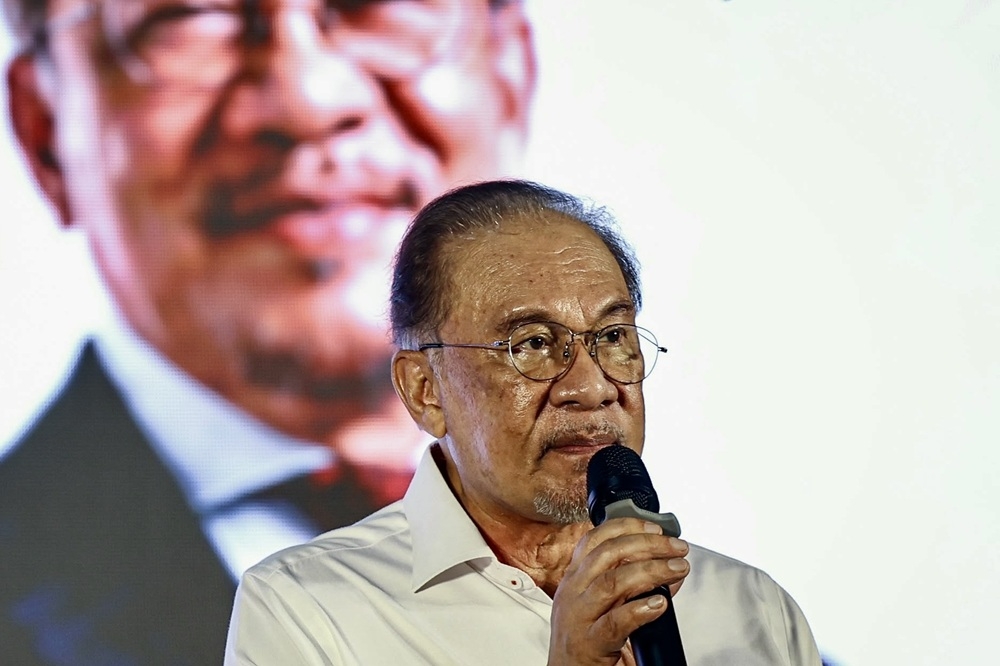
Prime Minister Datuk Seri Anwar Ibrahim said he is still awaiting comprehensive details about the contentious situation unfolding within the Democratic Action Party's Melaka operations, though he assured that the ruling coalition's senior figures would take decisive steps once briefed on the complete picture.
The remarks underscore the measured approach the Pakatan Harapan administration is adopting toward what appears to be significant friction within one of its core constituent parties. Rather than rushing to public statements, the coalition leadership is reportedly seeking thorough documentation of events before formulating an official response—a strategy that reflects the delicate internal balance required to maintain the multiparty alliance that returned to government following the 2022 elections.
Melaka, a state with symbolic historical importance and electoral significance in the nation's political map, has become a focal point of recent controversies involving DAP, the predominantly Chinese-majority party that holds considerable sway within the Pakatan framework. The nature and severity of the internal discord have not been fully disclosed, but sources within the coalition suggest the issues involve substantive disagreements that could affect party cohesion and, by extension, the stability of the broader Harapan government.
Anwar's statement reflects a pattern of deliberate caution that has characterised his approach to intra-coalition management since assuming the prime ministerial office. In previous instances of tension among Pakatan's constituent parties—which include the Malay-Muslim focused Amanah and PKR alongside the DAP—the Prime Minister has typically sought to defuse situations through private dialogue before any public intervention. This methodology prioritizes coalition preservation over immediate crisis resolution, a pragmatic stance given that Harapan's narrow parliamentary majority leaves little room for internal fracturing.
The Melaka DAP situation arrives at a particularly sensitive juncture for Harapan's political calculations. Regional state governments controlled by the coalition face the constant threat of defection or realignment, as demonstrated repeatedly since 2018. Any perception of weak central leadership or inability to manage internal party discipline could invite opportunistic challenges from opposition factions seeking to prise away legislators or destabilize state governments. Anwar's insistence on receiving full briefings before acting may therefore represent both caution and strategic positioning.
For the DAP specifically, the Melaka discord represents a test of its internal governance structures and its ability to manage disagreements without requiring external mediation. As the most organized and institutionally developed party within Harapan, the DAP has traditionally prided itself on strong internal discipline and decision-making processes. Any suggestion that party leadership in Melaka has fractured or that central DAP authorities cannot resolve local disputes autonomously carries implications for how the party's broader organizational effectiveness is perceived within the coalition and among Malaysian voters.
The commitment from Pakatan leadership to take action once briefed suggests that the coalition takes the matter seriously enough to warrant higher-level intervention should DAP's internal mechanisms prove insufficient. This escalation path, while presented in measured terms, indicates that coalition partners view the situation as potentially destabilizing. Whether the planned response will involve facilitation between competing DAP factions, review of party appointments in Melaka, or more substantive structural changes remains uncertain pending Anwar's receipt of full documentation.
Malaysian political observers have noted that maintaining coalition discipline across diverse parties with distinct ideological bases and demographic support bases represents one of the most persistent challenges for Harapan's sustainability. Unlike the Barisan Nasional's model of hegemonic dominance, Harapan operates through negotiated consensus among relatively autonomous partners. This structure creates flexibility and enables broad representation but requires constant vigilant management to prevent internal disputes from metastasizing into coalition-threatening crises.
The situation also carries implications for broader Southeast Asian governance patterns, where multiparty coalitions have become increasingly common as electoral fragmentation proceeds. Anwar's Harapan experiment is watched closely by political analysts and actors across the region as a test case for whether diverse political parties can sustain effective governing partnerships without resorting to authoritarian internal suppression or collapsing into factional conflict. The manner in which this Melaka episode resolves will offer valuable lessons about coalition stability in Southeast Asia's democratic systems.
Stakeholders within the DAP, Harapan, and opposition parties are monitoring Anwar's response carefully, as the Prime Minister's handling of this matter will establish precedent for how future intra-coalition disputes will be managed. A forceful intervention might reassure coalition partners that Harapan leadership takes internal discipline seriously; conversely, allowing DAP to resolve its issues independently could strengthen that party's autonomy within the broader alliance. The balance Anwar strikes will likely reveal his strategic priorities and influence how power dynamics evolve within the coalition heading into future electoral cycles.

