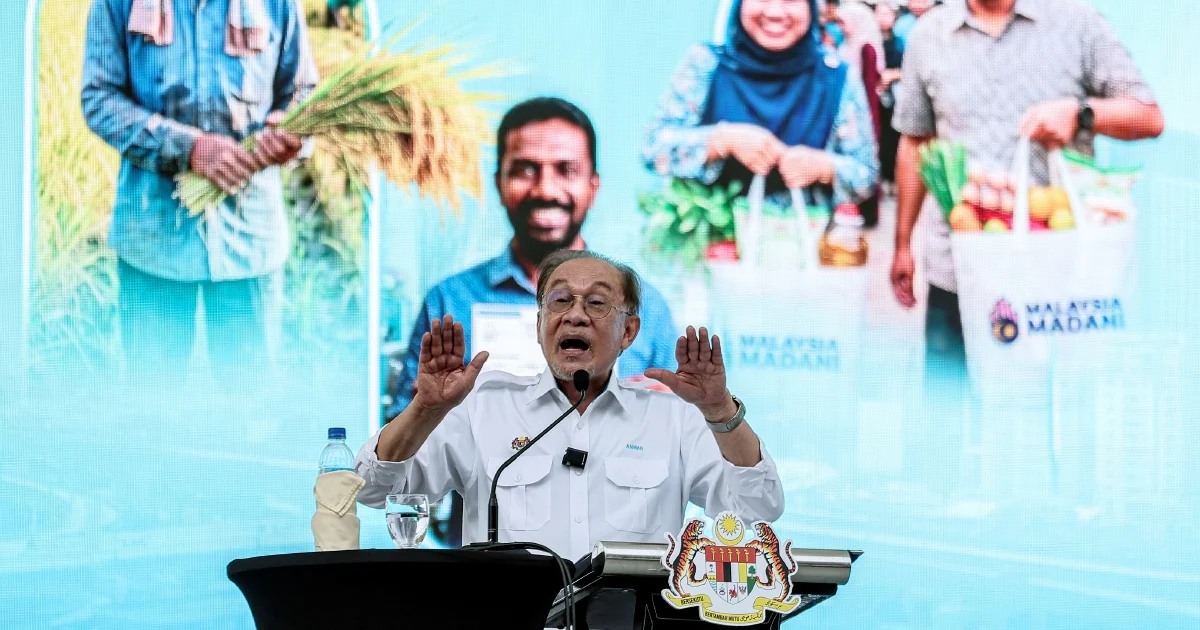
Prime Minister Anwar Ibrahim has unveiled plans to substantially strengthen grassroots security initiatives across the nation by raising annual funding for Neighbourhood Watch Areas (Kawasan Rukun Tetangga, or KRT) to RM10,000, representing a considerable jump from the existing RM6,000 allocation. The announcement, made in Segamat, signals a renewed government commitment to empowering local communities in crime prevention efforts, with the enhanced grants set to commence from January 1, 2027.
This funding enhancement comes at a critical juncture for Malaysia's public safety agenda. Neighbourhood Watch Areas represent a tried-and-tested model of community-based policing that has long been central to Malaysia's decentralised crime prevention strategy. By channelling additional resources directly to these grassroots organisations, the government is effectively demonstrating confidence in community-led approaches to security, rather than relying exclusively on formal enforcement mechanisms.
The RM4,000 increase per KRT location represents a 67% boost in annual allocations, marking one of the more substantial enhancements to community safety budgets in recent years. For many neighbourhoods, this expanded budget opens possibilities for enhanced training programmes, improved communication infrastructure, and more effective patrols. The phased implementation beginning in 2027 also allows local KRT coordinators time to develop strategic spending plans aligned with their specific community needs.
Neighbourhood Watch Areas function as the frontline of community-level security coordination in Malaysia. These volunteer-based organisations bridge the gap between residential communities and formal police forces, enabling rapid information-sharing and coordinated responses to local safety concerns. With membership typically drawn from resident associations and community leaders, KRTs embody principles of collective responsibility that have proven effective in maintaining social cohesion alongside security objectives.
For Malaysian neighbourhoods, the practical implications are substantial. Enhanced budgets could facilitate improved lighting in communal areas, better communication systems amongst volunteers, increased presence during high-risk periods, and engagement programmes targeting youth involvement in community safety. Different communities facing distinct security challenges—from urban break-ins to rural petty crime—now have greater flexibility to tailor their approaches using available funding.
The announcement also reflects broader policy recognitions about the limits of enforcement-heavy approaches to public safety. Sustainable crime prevention increasingly depends on community awareness, early intervention, and neighbourhood solidarity rather than reactive policing alone. By investing more directly in local-level capacity, the government acknowledges that residents themselves must be primary stakeholders in their own security outcomes.
From a regional perspective, Malaysia's expansion of community policing funding aligns with emerging trends across Southeast Asia. Singapore, Thailand, and Indonesia have similarly recognised the value of neighbourhood-based security networks, though funding models vary considerably. Malaysia's approach—combining volunteer participation with government resources—positions the nation alongside regional comparators in taking grassroots safety seriously.
The timing of the implementation merits attention. Beginning the rollout on January 1, 2027 provides KRT leaders with approximately one year to prepare budget frameworks, identify priority areas for expenditure, and establish accountability mechanisms. This phased approach contrasts with immediate implementation and suggests recognition that effective resource deployment requires planning rather than rushed disbursement.
However, the success of this funding increase ultimately depends on factors beyond financial allocation. Voluntary participation rates, quality of local leadership, coordination between KRTs and police forces, and community awareness about available resources will collectively determine whether enhanced budgets translate into tangible safety improvements. Regions with strong community engagement infrastructure may extract maximum benefit, whilst areas experiencing leadership challenges or lower civic participation might realise more modest outcomes.
The announcement also carries subtle implications for municipal governance in Malaysia. Local authorities and state governments will need to facilitate smooth disbursement mechanisms, establish transparent evaluation criteria, and ensure equitable resource distribution across urban and rural settings. The federal commitment to RM10,000 per KRT must be supported by efficient administrative systems that prevent bottlenecks or delays in fund transfers.
Critically, this initiative demonstrates the government's willingness to make consequential investments in community infrastructure outside major infrastructure projects or electoral flashpoints. Neighbourhood safety may lack the political salience of highways or ports, yet it profoundly affects daily quality of life for ordinary Malaysians. This funding increase therefore reflects policy priorities that align government resources with genuine community priorities.
For residents and community leaders managing KRTs, the expanded allocation opens strategic conversations about preventative investment versus reactive spending. Communities might prioritise environmental design improvements, youth engagement programmes, or enhanced coordination equipment—decisions that reflect local vulnerability assessments rather than standardised approaches. This flexibility itself represents a significant institutional shift toward community agency.
Looking forward, the RM10,000 allocation baseline may be subject to further review depending on inflation, crime pattern evolution, and demonstrated effectiveness across different community contexts. The government has effectively created a new funding floor for grassroots security initiatives, one that acknowledges that sustainable public safety requires sustained investment in local capacity rather than sporadic government interventions.

