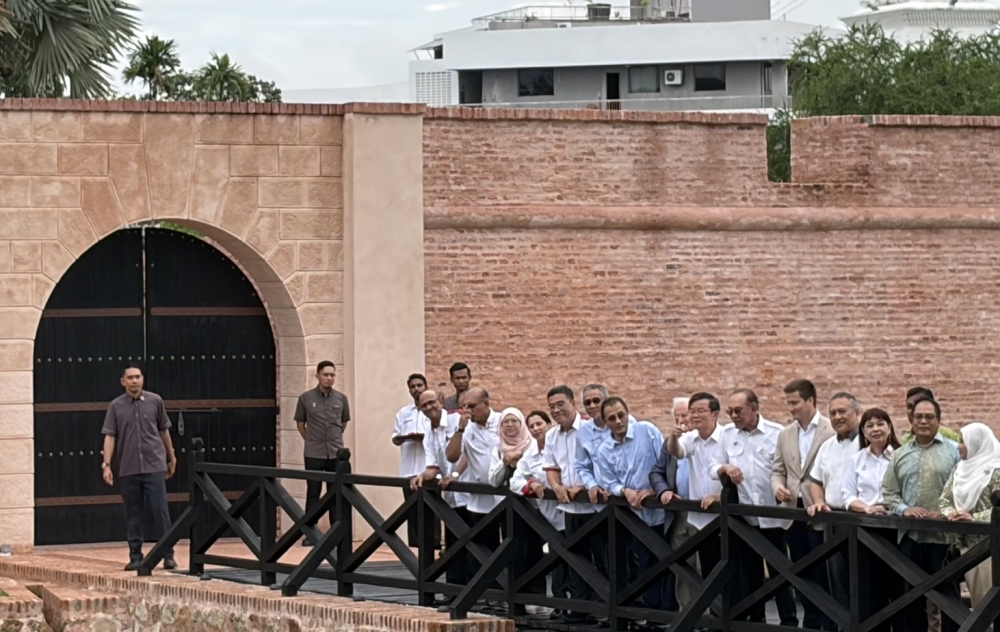
Prime Minister Datuk Seri Anwar Ibrahim has made a significant push for Malaysia to fundamentally reimagine how it understands and presents its own history, contending that the country requires a thorough reconstruction of its historical narrative. Speaking in George Town on July 25, Anwar laid out his vision for how Malaysians should approach their national past, suggesting that current interpretations may not adequately capture the complexity and diversity of the Malaysian experience.
The Prime Minister's remarks signal a broader intellectual project within the government to examine how historical events, personalities, and periods are framed within the national consciousness. His call reflects growing recognition among Malaysian policymakers that narratives developed during earlier political periods may require reassessment in light of contemporary understandings of society, identity, and national values. This repositioning carries implications not just for academic circles but for how national identity is cultivated among citizens, particularly younger generations encountering Malaysian history through schools and public discourse.
Anwar's emphasis on reconstructing history aligns with ongoing debates within Malaysian society about how the nation should understand pivotal moments in its development. The question of historical narrative carries particular weight in a multicultural country where different communities may hold distinct perspectives on shared events. How the nation chooses to commemorate and interpret its past inevitably shapes contemporary political discourse and national cohesion, making this far more than an academic exercise.
The call for narrative reconstruction suggests the Prime Minister believes current historical framings may contain gaps, emphasise certain perspectives over others, or fail to capture important dimensions of Malaysia's journey. This could encompass Malaysia's pre-colonial heritage, the colonial period, the independence struggle, the formation of the Federation, and subsequent nation-building efforts. Each period presents opportunities to explore alternative interpretations that might enrich public understanding and foster greater national pride grounded in comprehensive rather than selective accounts.
For Malaysian readers and educators, Anwar's intervention raises practical questions about how school curricula, historical publications, and public commemorations should evolve. The Malaysian education system has periodically reviewed history textbooks, but a Prime Ministerial directive for fundamental narrative reconstruction suggests a more systematic overhaul may be contemplated. This could affect how students learn about key figures, defining national moments, and the underlying principles that shaped the nation's founding documents and structures.
The timing of these remarks deserves attention within Malaysia's evolving political landscape. Multiple governments have served since independence, each potentially emphasizing different aspects of national history. Anwar's push for reconstruction may reflect efforts to move beyond interpretations associated with previous administrations, establishing a fresh framework that better aligns with his government's stated priorities around inclusivity, pluralism, and forward-looking nation-building.
Regionally, Malaysia's approach to historical narrative carries significance for Southeast Asia more broadly. The region encompasses multiple nations grappling with how to present their own histories in ways that honour complexity while building contemporary consensus. Malaysia's experience in rethinking its narrative amid diversity could offer lessons for neighbours facing similar challenges, particularly around balancing different historical memories and perspectives within plural societies.
The practical implementation of reconstructed narratives raises methodological questions worthy of consideration. Who determines which historical accounts gain prominence? How should competing interpretations be evaluated and presented? What role should academic historians, cultural institutions, and community voices play in shaping new frameworks? These questions matter significantly for ensuring that reconstruction projects enhance rather than restrict understanding.
Anwar's call also reflects global trends in historical reconsideration. Many nations have undertaken substantial reviews of how their histories are taught and remembered, often prompted by evolving values around inclusivity, social justice, and honest reckoning with difficult periods. Malaysia may benefit from examining international examples whilst tailoring approaches to local context, political traditions, and multiethnic composition.
For business and foreign policy perspectives, clarifying Malaysia's historical narrative matters too. International actors, investors, and diplomatic partners benefit from understanding how Malaysia conceives its own identity and heritage, as these shape the nation's policy priorities and international positioning. A deliberate reconstruction signals Malaysian leadership taking active steps to shape national self-perception rather than allowing historical interpretations to remain static.
The practical pathway forward remains to be detailed. Whether reconstruction involves commissioning new historical texts, revising curriculum standards, establishing research initiatives, or fostering public dialogue on particular periods will determine the initiative's scope and impact. Transparency about objectives and methodologies will be important for maintaining public confidence in whatever emerges.
Ultimately, Anwar's call recognises a fundamental truth: nations are not merely shaped by history but also by how they choose to remember and interpret it. Malaysia's conscious decision to reconstruct its narrative represents an opportunity to deepen national understanding, foster greater cohesion among diverse communities, and equip future generations with historical foundations that feel authentic, comprehensive, and relevant to contemporary aspirations.

