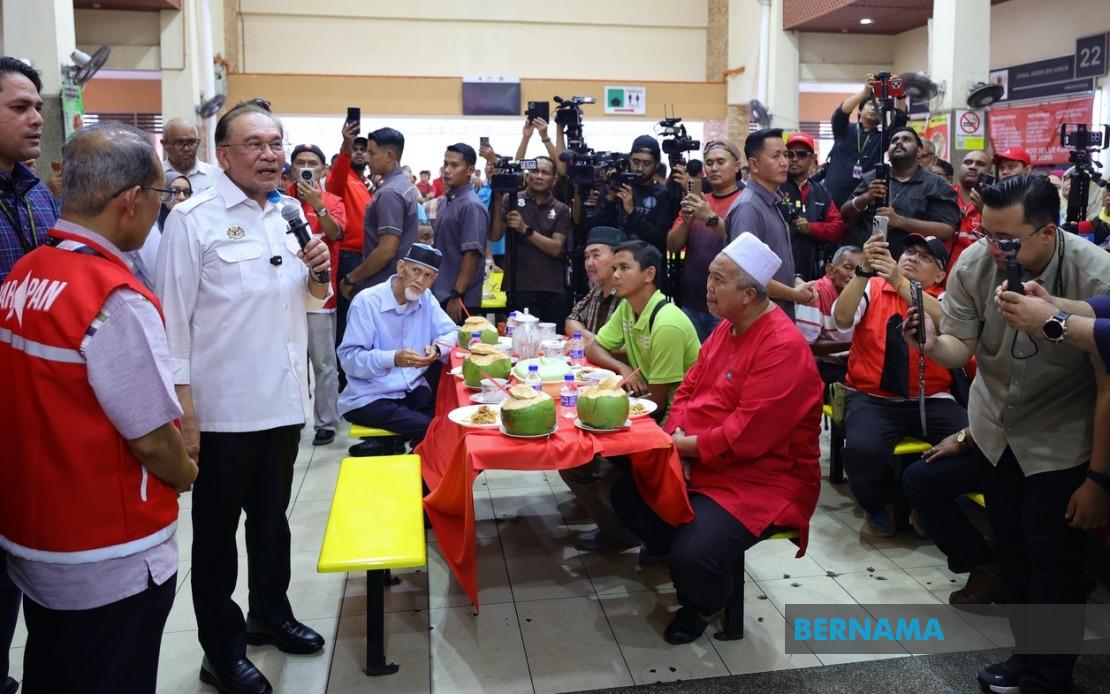
Prime Minister Datuk Seri Anwar Ibrahim is making a direct appeal to voters in Negeri Sembilan to return Pakatan Harapan to power in the state assembly election, framing the contest as a choice between continued political stability and uncertainty. Speaking during a campaign swing through Seremban on July 22, Anwar emphasised that a refreshed mandate for the coalition would provide the foundation for coherent policymaking and service delivery across the state, particularly when aligned with federal government initiatives. The appeal comes as the coalition seeks to defend its position in a state where it has governed relatively smoothly over the past three years, though Anwar acknowledged that perfect governance remains elusive.
The synchronisation between state and federal administrations represents a core argument in PH's electoral pitch for Negeri Sembilan. According to Anwar, when both levels of government operate under the same political umbrella, the implementation of development projects and social programmes becomes more efficient and coordinated. This vertical alignment reduces bureaucratic friction and allows resources to flow more readily to communities. The Prime Minister suggested that fragmented governance, where the state and federal authorities operate at cross-purposes or under different political banners, inevitably produces delays and inefficiencies that ultimately affect ordinary citizens seeking public services or waiting for infrastructure improvements.
As PH chairman in addition to his role as Prime Minister, Anwar has positioned political unity and stability as prerequisites for economic and social progress in Negeri Sembilan. He pointed to the track record of Menteri Besar Datuk Seri Aminuddin Harun, crediting the state leadership and cross-party cooperation for maintaining a relatively calm political environment. This framing attempts to convert the state's recent history of political consensus into an argument for continuity. Anwar stressed that the past three years have demonstrated the benefits of focused, undistracted governance, suggesting that a return to factional infighting or political uncertainty would reverse these gains.
The coalition is fielding candidates across all 36 state seats in Negeri Sembilan, maintaining its broad challenge to retain control. The lineup comprises 16 hopefuls from PKR, 11 from DAP and nine from Amanah, reflecting the internal distribution of power within the PH alliance. This comprehensive slate signals confidence in the coalition's organisational capacity and reach within the state, though it also demonstrates the necessity of maintaining internal balance among the three parties. The composition reflects efforts to preserve the delicate equilibrium that has held PH together at the federal level, with each partner allocated seats that roughly correspond to their standing within the alliance.
Acknowledging that governance is inherently imperfect, Anwar adopted a measured tone when discussing PH's record in Negeri Sembilan. Rather than claiming flawless administration, he invited voters to view the upcoming election as an opportunity to continue a process of iterative improvement. This approach attempts to defuse criticism by reframing policy shortcomings not as failures but as inevitable features of complex governance that can be refined with continued cooperation from voters. By emphasising responsiveness to feedback and commitment to amendment, Anwar sought to position PH as a learning organisation willing to adapt based on public input.
The message to voters essentially frames the election as a choice between refinement and disruption. Anwar urged constituents to grant PH candidates the opportunity to serve, implicitly contrasting this with the instability that might follow a change of administration. The emphasis on giving candidates a chance reflects an underlying anxiety within the coalition that voter dissatisfaction or fatigue with the ruling bloc could open opportunities for opposition parties to gain ground. By appealing to voters to remain patient with an administration willing to improve, PH hopes to forestall wholesale defections to rival political forces.
For Malaysian politics more broadly, this appeal from Anwar carries implications beyond Negeri Sembilan's borders. The state election serves as a test of PH's ability to maintain voter confidence following its return to federal office in 2022. Negeri Sembilan has been relatively quiet politically, lacking the internal tensions visible in some other PH-governed states, and therefore presents an opportunity for the coalition to demonstrate electoral durability. A strong showing would reinforce the narrative that PH has successfully stabilised Malaysian politics, while a weak performance could suggest that voter support for the coalition is more fragile than supporters wish to acknowledge.
The Election Commission has scheduled polling day for August 1, with early voting commencing on July 28. This timeline means PH has roughly a week to intensify its campaign messaging and mobilise its ground machinery in the state. The electoral calendar also means results will arrive during a period when federal politics continues to command national attention, ensuring that any significant outcome in Negeri Sembilan will be scrutinised for signals about broader political trends affecting the government's standing with voters.
Anwar's presence in Seremban leading PH campaign activities underscores the importance the coalition's leadership attaches to the Negeri Sembilan contest. His decision to personally campaign and frame the election as a choice about stability reflects calculations that a visible commitment from the Prime Minister can reinforce the coalition's message and motivate supporters to vote. The emphasis on maintaining the status quo contrasts with the volatility that has characterised Malaysian state politics in recent years, where administrations have frequently fallen to defections or shifting coalitions, making the promise of political continuity a potentially powerful draw for voters seeking predictable governance.

