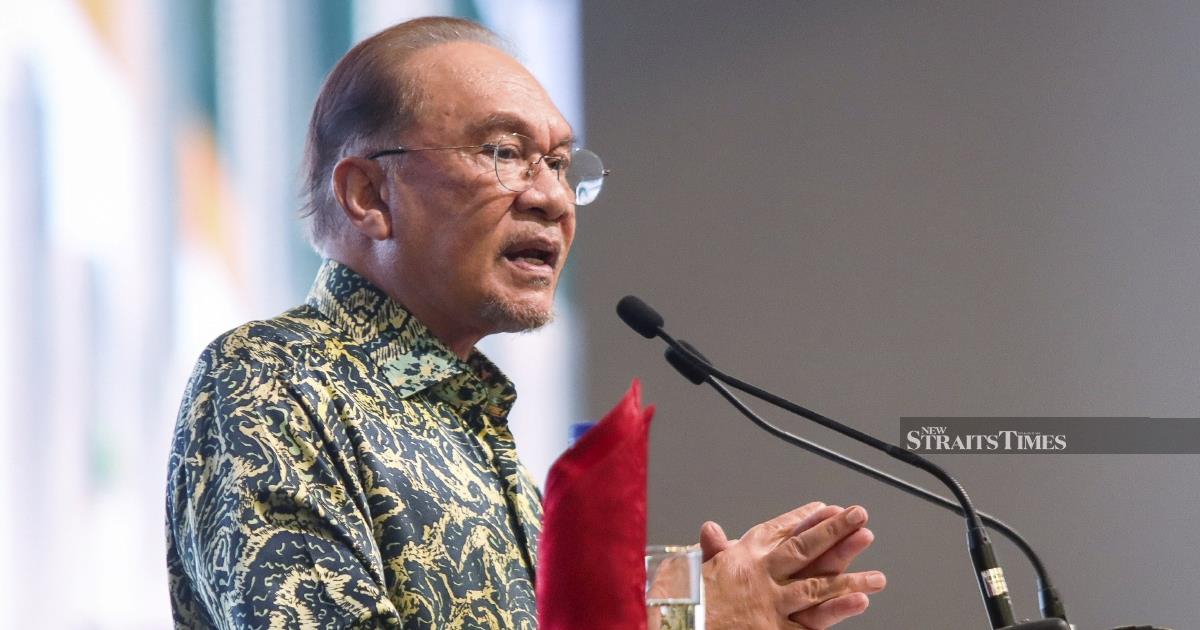
Prime Minister Datuk Seri Anwar Ibrahim has made a direct appeal to Malaysia's younger generation, urging them to distance themselves from polarising ideologies while maintaining active engagement with the government machinery. Speaking in his Permatang Pauh constituency, Anwar sought to reassure young citizens that policymakers are attentive to their grievances and committed to addressing the underlying issues that fuel discontentment among this demographic.
The Prime Minister's intervention reflects growing awareness within Malaysia's political establishment that youth disengagement from mainstream democratic processes poses a strategic challenge to national stability. With social media platforms serving as primary information channels for younger Malaysians, competing narratives around governance, economic opportunity, and national identity have proliferated, often amplifying divisive rather than unifying messages. Anwar's remarks suggest the government recognises this digital landscape requires direct, personalised outreach to counteract polarising content that fragments society along ideological lines.
Youth dissatisfaction in Malaysia stems from multiple sources that transcend conventional political boundaries. Economic anxieties regarding employment prospects, housing affordability, and wage stagnation persistently rank among top concerns expressed by millennials and Generation Z Malaysians. Simultaneously, questions around social mobility, meritocracy in public institutions, and the pace of socio-cultural change generate friction across different communities. By positioning the government as a responsive entity willing to dialogue on these substantive issues, Anwar attempts to reclaim narrative territory where extremist or fringe viewpoints have gained traction by portraying establishment institutions as unresponsive or illegitimate.
The Prime Minister's emphasis on rejecting divisive ideologies carries particular significance within Malaysia's plural society, where communal sensitivities remain acute. Certain online networks and messaging ecosystems have demonstrated capacity to weaponise identity-based grievances, targeting youth cohorts through tailored content that exacerbates rather than bridges intercommunal divides. Anwar's framing positions such rhetoric not merely as politically undesirable but fundamentally contrary to the national interest, thereby attempting to mobilise social peer pressure against movements or ideologies that thrive on polarisation.
Engagement represents the operative word in Anwar's articulated strategy. Rather than simply dismissing youth concerns as illegitimate, the government approach contemplates sustained dialogue through formal and informal channels. This includes town halls, feedback mechanisms integrated into policy formulation, and digital platforms where young Malaysians can articulate grievances and witness responsive action. Such engagement models acknowledge that young citizens increasingly demand agency in decisions affecting their futures, rejecting paternalistic governance paradigms where their input is sought only during electoral cycles.
The Permatang Pauh setting carries symbolic weight, as this constituency has long demonstrated strong support for Anwar and represents a base from which he can broadcast messages seeking broader resonance. By delivering this message in his home ground, the Prime Minister underscores personal commitment to youth engagement rather than treating it as delegated bureaucratic responsibility. This localised approach also enables demonstration projects wherein constituency-level initiatives addressing youth concerns become models potentially replicable across other regions.
Malaysia's historical experience with youth-driven political mobilisation, including the student movements of preceding decades, illustrates both constructive and disruptive potential residing within this demographic. Contemporary youth possess unprecedented information access and networking capabilities compared to earlier generations, amplifying both capacity for positive social contribution and susceptibility to radicalisation through online channels. Policymakers therefore face imperative to channel youthful energy toward institutional participation rather than extrainstitutional confrontation.
The government's acknowledgment that it listens to youth concerns implicitly concedes that previous administrations faced legitimacy deficits with younger voters. Current messaging attempts remedying this perception deficit through demonstrated responsiveness on concrete policy issues. Whether such assurances translate into tangible policy adjustments on housing, employment, or education will significantly determine whether young Malaysians embrace constructive engagement or continue exploring alternative avenues for expressing discontent.
Regionally, Malaysia's approach toward youth engagement mirrors broader Southeast Asian dynamics where rapid digital adoption among younger cohorts outpaces institutional adaptation. Neighbouring countries similarly grapple with youth frustration directed at establishment institutions perceived as unresponsive or corrupt. Anwar's framing of youth disengagement as a challenge requiring direct government intervention reflects understanding that legitimacy crises affecting young voters pose risks not only to immediate political stability but to long-term democratic health and institutional credibility across the region.
Looking forward, the consistency between rhetorical commitment to youth engagement and actual resource allocation toward addressing identified concerns will determine programme success. Young Malaysians represent increasingly sophisticated audiences capable of distinguishing between performative outreach and substantive policy reform. The government's capacity to convert Anwar's stated attentiveness into demonstrable improvements in their material circumstances and social inclusion will ultimately determine whether this generation becomes willing participant in democratic processes or pursues extrainstitutional alternatives.

