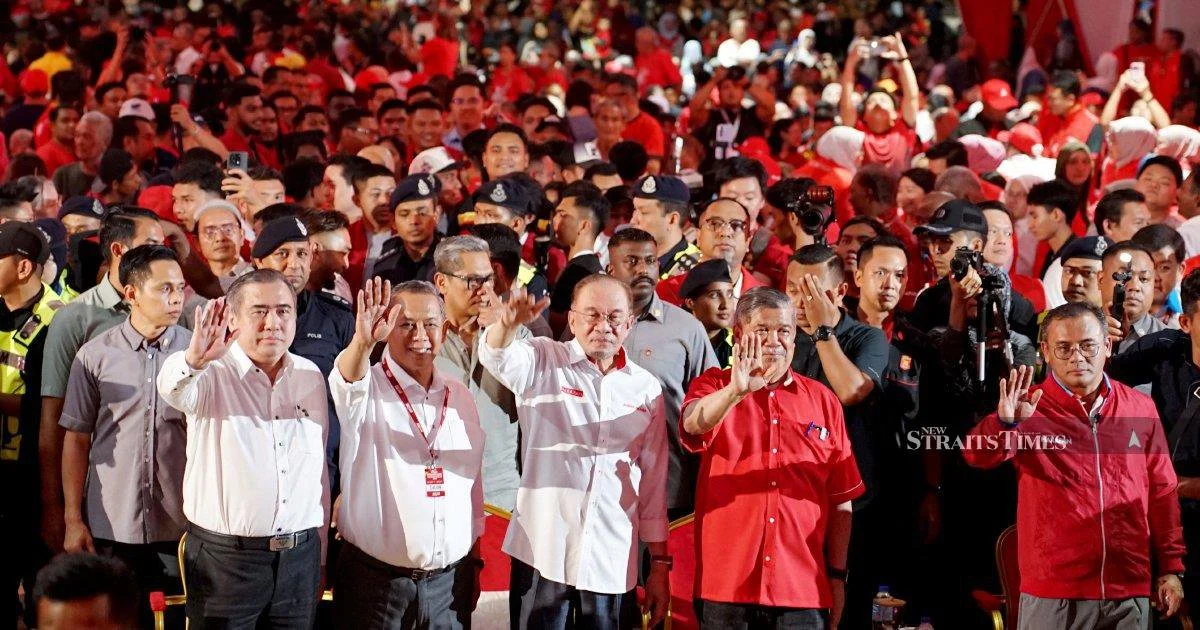
Prime Minister Datuk Seri Anwar Ibrahim has issued a direct appeal to the political establishment, particularly those contesting the Negri Sembilan election, to refrain from leveraging the royal institution as a campaign instrument. Speaking at an event in Kuala Pilah, Anwar underscored the importance of maintaining clear boundaries between the monarchy and partisan electoral competition, a distinction that remains foundational to Malaysia's constitutional framework.
The warning arrives at a critical juncture for Malaysia's political landscape, where state elections routinely test the maturity of the nation's democratic institutions. Negri Sembilan, with its unique constitutional position as one of Malaysia's federal territories governed by an elected ruler system, holds particular significance in these discussions. The state's historical prominence in Malaysia's constitutional history makes it an especially sensitive arena for questions about institutional propriety.
Anwar's intervention reflects broader concerns within Malaysia's political leadership about maintaining respect for constitutional boundaries. The royal institution, as the head of state in each Malaysian state, occupies a position of considerable symbolic and constitutional importance. Explicitly politicising the monarchy risks undermining public confidence in institutions that are meant to stand above the fray of partisan competition. This principle, while theoretically straightforward, has faced practical challenges as political contests intensify and parties seek every possible advantage.
The timing of the Prime Minister's remarks suggests growing awareness that electoral campaigns, particularly at the state level, can occasionally drift into territory that compromises institutional integrity. By addressing the matter publicly and directly, Anwar signals that the federal government takes such transgressions seriously and expects all political participants to exercise restraint. This kind of institutional discipline becomes increasingly important as Malaysia navigates a period of coalition politics where multiple parties operate within shared governmental structures.
Negri Sembilan's electoral context adds another layer of complexity to Anwar's warning. The state's system, in which the ruler is elected by the assembly rather than inheriting the title through traditional succession, creates a distinctive dynamic. This elected monarchy model requires even greater clarity about separating electoral competition from respect for the institution itself. Confusing these boundaries could potentially undermine the legitimacy of the electoral process itself by creating perceptions that institutional symbols are being manipulated for partisan gain.
From a constitutional perspective, Malaysia's monarchies—whether hereditary or elected—depend on maintaining a measure of political neutrality and public respect that transcends factional divisions. When political parties attempt to monopolise the royal institution's prestige or claim special affinity with it, they risk eroding the very institutional capital that makes the monarchy valuable to national stability and unity. Anwar's statement reflects this sophisticated understanding of how institutions must be protected even during competitive electoral moments.
The appeal to political discipline also carries implications for Malaysia's broader democratic health. Mature democracies function effectively when participants accept certain guardrails that protect core institutions from tactical exploitation. By reminding political leaders of these boundaries, Anwar is essentially asking the political class to demonstrate that it can compete aggressively without compromising systemic integrity. This is particularly important in a federation like Malaysia, where respect for state-level institutions is essential to maintaining federal cohesion.
For the Negri Sembilan campaign specifically, this guidance creates a framework within which parties must conduct their competition. Candidates and supporters who have been tempted to invoke royal endorsement, solicit institutional backing, or otherwise blur lines between electoral politics and constitutional roles now face a clear signal that such conduct is viewed unfavourably at the highest levels of government. The effectiveness of this warning will depend partly on whether party leadership enforces it among their own rank-and-file members and supporters.
The broader significance of Anwar's intervention extends beyond Negri Sembilan to establish a precedent for how Malaysia's political leadership expects institutions to be treated during competitive periods. In a region where democratic institutions sometimes face pressure from various directions, explicit statements defending constitutional boundaries serve an important signalling function. They communicate to both domestic audiences and international observers that Malaysian political parties, despite their fierce competitions, share a baseline commitment to institutional respect.
Looking forward, the statement also implicitly calls on political observers, media commentators, and the general public to scrutinise how parties conduct themselves relative to this standard. When electoral campaigns proceed with appropriate institutional deference, it reinforces public understanding that certain domains—particularly the constitutional monarchy—deserve protection from partisan controversy. Conversely, any apparent violations would stand out more sharply against this clearly articulated standard.
The challenge for Malaysian politics lies in translating these principled statements into consistent practice across all levels and all parties. Electoral campaigns generate intense pressures for political advantage, and the temptation to invoke institutional prestige can be strong. However, Anwar's warning from Kuala Pilah serves notice that such temptations must be resisted. The capacity to maintain institutional boundaries even during heated political competition ultimately distinguishes functioning democracies from those where democratic processes gradually corrode the very institutions supposed to constrain power.

