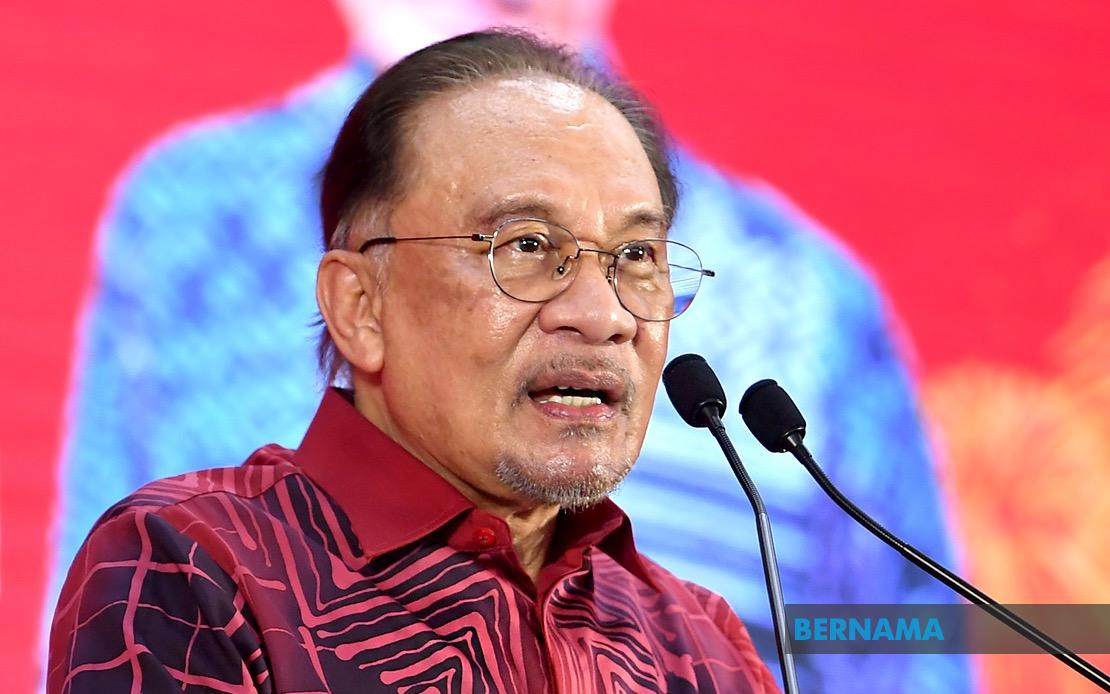
The PKR National Congress 2026 has commenced in Melaka with expectations that Prime Minister Datuk Seri Anwar Ibrahim will use his keynote address to articulate the party's forward-looking agenda while reaffirming its foundational commitment to reform. Thousands of party delegates and senior leaders have converged on the state capital for what the party frames as a pivotal moment in its political trajectory, with the gathering deliberately positioned to reflect on past achievements whilst charting a course for future engagement with Malaysia's evolving democratic landscape.
Operating under the banner "Memugar Reformasi, Membina MADANI," the congress represents an opportunity for the ruling party to consolidate internal messaging and demonstrate organisational coherence at a time when Malaysian politics continues to experience significant realignment. The two-day format allows space not only for formal proceedings but also for substantive debate on the issues shaping daily life for ordinary Malaysians, particularly economic pressures, educational reform and the maintenance of political stability—concerns that resonate across the electorate regardless of party affiliation.
Anwar's dual role as both party president and sitting Prime Minister lends particular weight to his remarks. His policy speech is likely to address how PKR intends to leverage its position within the governing coalition to advance specific policy objectives whilst managing the inherent tensions between party interests and broader national governance responsibilities. The occasion also serves as a barometer of party sentiment regarding the government's economic performance and social policies, areas where public satisfaction has become increasingly contested.
The preliminary sessions conducted yesterday by the party's youth wing, Angkatan Muda Keadilan, and women's division under deputy president Nurul Izzah Anwar suggest a structured approach to consensus-building before the main congress activities. These subsidiary gatherings typically serve as testing grounds for emerging policy proposals and allow grassroots voices to influence the party leadership's thinking—a mechanism that becomes particularly important in maintaining cohesion within diverse party structures.
The scale of attendance reflects PKR's organisational capacity and its remaining appeal within Malaysia's political marketplace. With approximately 2,500 delegates and at least 3,000 observers expected, the congress will function as both internal party forum and public demonstration of strength. The participation of international diplomatic representatives from major powers including the United States, China, Japan and Australia underscores the government's broader diplomatic profile and signals that Malaysian domestic political events now command attention from key international stakeholders.
The inclusion of domestic political party leaders alongside international observers creates an interesting dynamic, transforming the congress into something beyond a purely partisan gathering. This arrangement allows PKR to position itself within a broader context of democratic practice and international engagement whilst simultaneously demonstrating the diversity of Malaysia's political ecosystem to overseas audiences.
Substantive debate sessions scheduled across the congress will concentrate on the policy areas most likely to shape voter behaviour in coming elections. The economy remains paramount—inflation, employment, wages and the cost of living continue to define public sentiment across demographic groups. Educational policy debates will address longstanding concerns about the quality and equity of Malaysia's schooling system and higher education opportunities. Political stability discussions will likely touch on coalition management, institutional relationships and the broader question of how Malaysia's various political forces can coexist constructively.
The participation of multiple government ministries and agencies, from the National Registration Department to the Immigration Department and Royal Malaysia Police, transforms the congress into something resembling a civic festival. The Domestic Trade and Cost of Living Ministry's parallel "Karnival Rahmah Mega" initiative opens these proceedings to the general public, allowing PKR to extend its political messaging to non-delegates whilst simultaneously providing accessible services to citizens. This multi-layered approach maximises the political value derived from holding a major party congress.
The Bill Kayong Award ceremony honouring five families whose members dedicated their lives to the party injects an emotional and historical dimension into proceedings. Such recognition serves multiple functions—it honours party loyalty, provides narrative continuity with PKR's history as a reform movement, and subtly reminds attendees that party membership carries expectations of commitment and sacrifice. For younger members, these ceremonies transmit organisational values and historical consciousness.
Anwar's closing remarks tomorrow will essentially provide the official party narrative for the period ahead, functioning as guidance for PKR's messaging apparatus as it engages with both supporters and sceptics. The concluding speech traditionally synthesises debate threads, articulates strategic priorities and recalibrates party positioning in response to feedback received across the two-day gathering. For political observers, it will offer insights into how PKR believes it should be perceived by voters and what policy emphasis the party intends to prioritise during its remaining time in government.
For Malaysia's broader political system, the congress demonstrates that despite coalition pressures and competing interests, major parties retain capacity for large-scale internal organisation and discourse. The quality of debate and the strategic thinking demonstrated across these sessions will influence not only PKR's future trajectory but also the tenor of Malaysian politics more broadly. How effectively the party translates congress decisions into government action will ultimately determine whether such gatherings translate into sustained voter confidence or become merely performative exercises.

