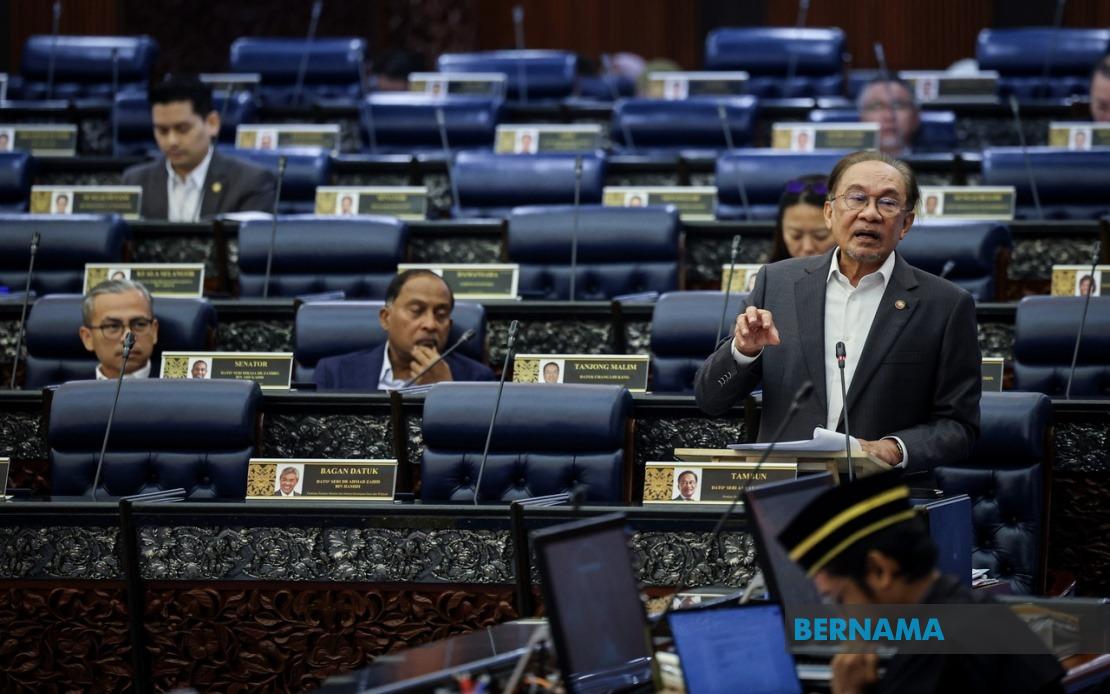
Prime Minister Datuk Seri Anwar Ibrahim moved to quell speculation about his role in electoral matters on Thursday, clarifying that his public comments regarding the timing of the Johor state election represented his individual perspective rather than any attempt to sway the Election Commission. Speaking during parliamentary question time at the Dewan Rakyat, Anwar sought to draw a sharp distinction between offering general observations and overstepping into the territory of institutional decision-making, an important nuance in Malaysia's constitutional framework where the EC maintains statutory independence.
The controversy centred on Anwar's earlier statements during campaigning, in which he had suggested that conducting the Johor election on a Sunday would be preferable to Saturday polling. His reasoning was rooted in practical considerations affecting a significant segment of Malaysian voters: the substantial workforce employed across the border in Singapore who often work extended Saturday hours and would find Sunday voting more accommodating for returning home to participate in the democratic process. By framing his position in terms of voter accessibility rather than partisan advantage, Anwar attempted to position his remarks as pragmatic rather than prescriptive.
Under questioning from Ahmad Fadhli Shaari of Pasir Mas, representing Perikatan Nasional, Anwar reiterated that the Election Commission possessed sole authority over scheduling decisions. He acknowledged that should the EC determine Saturday was the appropriate date, that choice would be binding and final. This explicit deference to the commission's judgment served as his primary defence against allegations of overreach, establishing what he characterized as a clear operational boundary between advisory commentary and institutional interference. The distinction carries particular weight given Malaysia's sensitivity toward maintaining checks and balances between political leaders and independent regulatory bodies.
The cross-examination also touched on whether Anwar intended to engage Singapore's Prime Minister Lawrence Wong regarding voting logistics for Malaysian citizens employed there. Anwar categorically denied any such intention, emphasizing that Malaysia respected fundamental principles of non-interference in another nation's electoral processes and expected reciprocal respect from its neighbours. Despite acknowledging his personal warmth towards Wong and Singapore's broader importance as a key regional partner, Anwar maintained that electoral matters fell squarely within Malaysia's sovereign domain.
That said, the Prime Minister did acknowledge that Malaysian companies operating in Singapore had been informed to provide reasonable accommodation for their Malaysian employees wishing to return home during election periods. This approach sought to balance practical support for voters with the principle that election administration remained Malaysia's internal prerogative. By characterizing such company-level arrangements as voluntary facilitation rather than official diplomatic coordination, Anwar drew another careful distinction designed to satisfy both his domestic political critics and Malaysia's international commitments.
The parliamentary exchange reflects broader tensions within Malaysian politics regarding the appropriate sphere of prime ministerial commentary during election campaigns. While Malaysian leaders routinely discuss policy preferences and campaign issues, direct public advocacy regarding election logistics risks creating perceptions of political pressure on nominally independent institutions, particularly when such comments appear to favour particular voting arrangements. The fact that opposition lawmakers seized on Anwar's remarks to question his commitment to institutional independence suggests this remains a sensitive area where perceptions can rapidly escalate into constitutional questions.
For the broader Malaysian electorate, especially those in Johor and the significant diaspora working in Singapore, the episode underscores an ongoing challenge in managing cross-border voting logistics in a region where employment migration significantly exceeds electoral machinery capacity. Saturday or Sunday scheduling carries genuine consequences for voter participation rates among this demographic, making it a legitimate policy discussion rather than a trivial matter. However, that same importance means such discussions require careful handling to ensure they remain advisory rather than directive in nature.
The situation also highlights the increasing complexity of electoral administration in an era of substantial cross-border mobility within Southeast Asia. Unlike many democracies, Malaysia has not yet developed comprehensive mechanisms for remote or overseas voting by citizens working abroad, relying instead on the assumption that most voters will physically return home during elections. As regional economic integration deepens and more Malaysians work in neighbouring countries, this assumption may require fundamental reconsideration, potentially driving future debates about voting infrastructure and accessibility that transcend any single election cycle.
Anwar's insistence on respecting the Election Commission's independence, while simultaneously discussing practical considerations affecting voter access, perhaps captures the genuine dilemma facing modern democratic leadership. Prime ministers inevitably hold views on policy matters including electoral logistics, yet sustaining institutional credibility requires demonstrating restraint in how those views are expressed and acted upon. By emphasizing that his comments were personal observations rather than directives, Anwar attempted to navigate this tension, though whether his clarification successfully resolved the parliamentary controversy remains subject to interpretation based on one's underlying political alignment.
The episode carries implications beyond Johor's immediate electoral context. It reinforces the importance of clear communication protocols between political leadership and independent bodies, and demonstrates how comments made during election campaigns can attract disproportionate scrutiny when they touch on procedural matters. For future elections at federal and state levels, it suggests that political leaders discussing electoral logistics must be especially careful to distinguish between legitimate policy advocacy and institutional deference, lest their remarks generate questions about respect for constitutional boundaries that ultimately distract from substantive campaign discourse.

