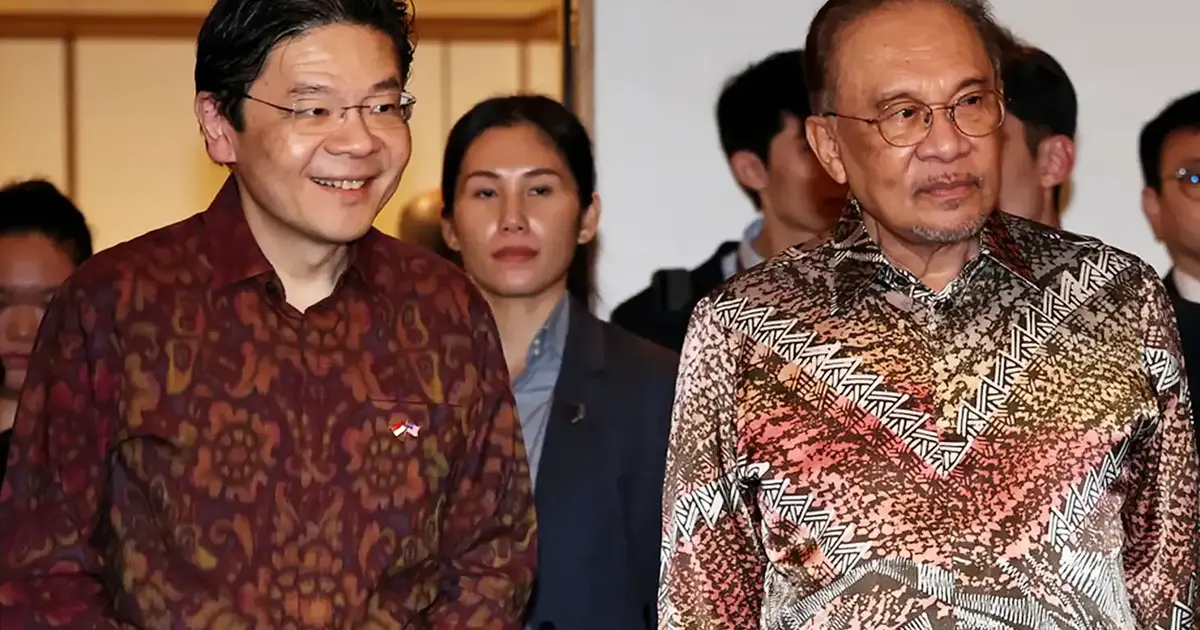
Prime Minister Anwar Ibrahim has moved to clarify that he has not approached Singapore's government about allowing Malaysians working or residing in the city-state to travel back to participate in the upcoming Johor state election, addressing speculation about potential diplomatic arrangements between the two neighbours.
When asked whether he intended to request permission from his Singaporean counterpart to enable such voters to return temporarily for polling day, Anwar indicated no such formal request had been initiated. This clarification comes as preparations intensify for the Johor ballot, which remains one of the most politically significant contests in Malaysia given the state's economic weight and traditional role as a kingmaker in national politics.
The question itself reflected genuine practical concerns. Johor's proximity to Singapore means a substantial Malaysian workforce commutes daily or maintains residency across the causeway, and election season has historically raised questions about voter participation from those living abroad. Unlike federal elections, state elections place greater emphasis on ensuring maximum participation from eligible voters in the affected state, making voter accessibility a matter of genuine administrative interest.
Anwar's response underscores a practical reality of electoral politics in Malaysia: while cross-border movement is routine for economic reasons, special arrangements during election periods would require formal coordination. The Prime Minister's position suggests that either no such coordination was deemed necessary, or that existing mechanisms already adequately address the situation. This reflects the operational relationship between Malaysia and Singapore, where millions of workers commute across the Johor-Singapore border daily through established frameworks.
The Johor state election carries particular weight within Malaysia's political landscape. As the southernmost major state and home to a significant manufacturing and services sector, Johor's electoral outcome often influences broader national political trends. The state has been a foundation of Barisan Nasional support historically, though recent elections have demonstrated the volatility of voter sentiment even in traditionally predictable constituencies.
Voter participation in Malaysian state elections has become an increasingly complex issue as migration patterns shift. Unlike national elections where a single day of polling can be nationally coordinated, state elections require voters to return to their constituencies of registration. For those living temporarily across the border in Singapore—whether for employment, business, or family reasons—the logistics of returning can be challenging, though not insurmountable given the short geographic distance.
The clarification also reflects broader questions about the franchise and voter accessibility in contemporary Malaysia. As economic integration with Singapore deepens and cross-border movement becomes more routine, election officials periodically revisit how to balance accessibility with security and electoral integrity. Anwar's statement suggests the current approach relies on existing mechanisms rather than seeking special diplomatic arrangements.
Singapore's relationship with Malaysian electoral matters remains carefully bounded. The island city-state maintains strict neutrality on Malaysian internal political processes, and any formal request regarding voter accommodation would likely receive cautious consideration given the precedent it might establish. The fact that Anwar felt compelled to publicly clarify that no such request was made suggests either media speculation had become pronounced or that the question reflected concerns from multiple quarters.
The timing of this clarification is significant. As campaigning for the Johor election approaches, questions about voter participation and accessibility will likely intensify. Clarifying that the government is not seeking special arrangements through Singapore helps establish clear expectations about how the election will proceed and which mechanisms voters should rely upon.
For Malaysian voters based in Singapore, standard procedures would apply: they would need to arrange their own return to Johor on polling day or cast postal votes if eligible under Malaysia's electoral rules. The practicality is straightforward given the approximately 30-minute drive across the Causeway, though coordinating schedules around work commitments remains a genuine challenge for some voters.
Anwar's response reflects the pragmatic approach typically adopted by Malaysian election officials: acknowledging practical realities while maintaining established procedures rather than creating ad hoc exceptions. This approach preserves electoral equity—ensuring all voters face similar requirements—while maintaining clear boundaries between electoral administration and diplomatic coordination.
As Malaysia's political landscape continues evolving with shifting voter demographics and economic patterns, questions about franchise accessibility will likely recur. The Johor election provides an immediate test case for how effectively current mechanisms serve voters across borders, and the results may inform discussions about how future elections accommodate Malaysians living and working abroad.

