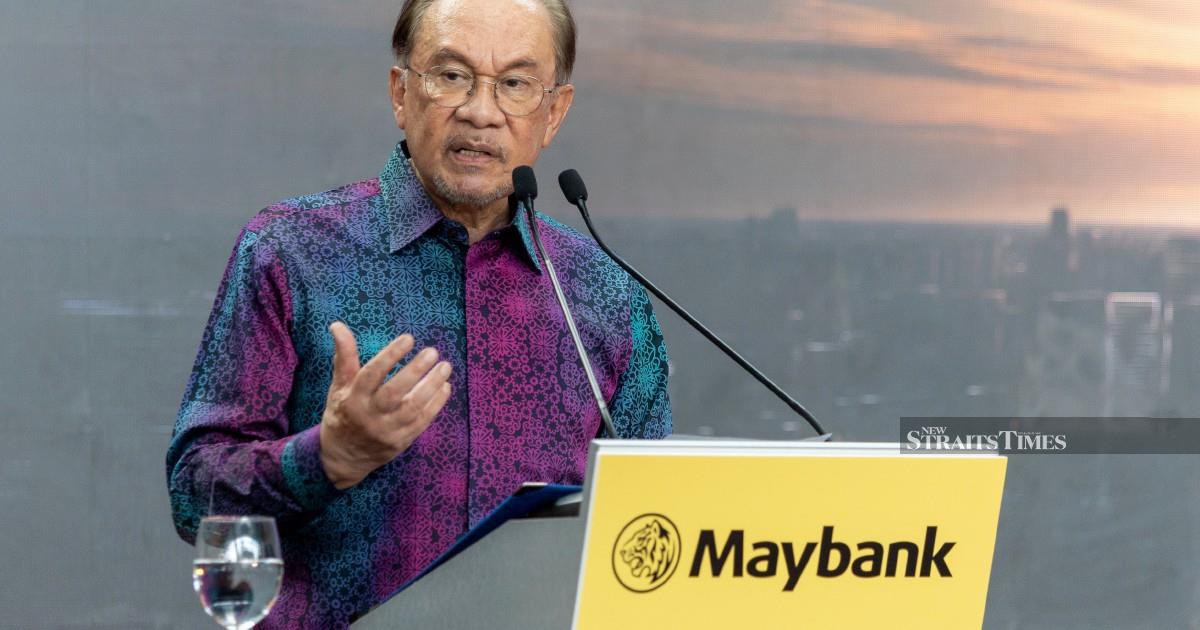
Prime Minister Datuk Seri Anwar Ibrahim has publicly recognised Malayan Banking Berhad's strategic ascent to prominence among Asia's most consequential financial institutions, reflecting the institution's decade-long expansion across the region. The acknowledgment represents an official endorsement of one of Malaysia's flagship enterprises and its role in cementing the nation's standing within the broader Asian financial ecosystem.
Maybank's trajectory from a domestic lender to a regional banking force carries significant implications for Malaysia's economic diplomacy and financial sector standing. The bank's expansion across multiple Asian markets has positioned it as a key player in channelling cross-border capital flows and facilitating trade relationships that benefit not only Malaysia but the wider Southeast Asian region. This growth demonstrates how Malaysian financial institutions can compete effectively alongside global banking giants through strategic investment and operational excellence.
The prime minister's commendation underscores the government's confidence in the banking sector's capacity to drive economic growth and innovation. As Malaysia seeks to establish itself as a regional fintech and Islamic finance hub, Maybank's expansion into sophisticated financial services—including wealth management, investment banking, and digital solutions—provides a template for how domestic institutions can evolve beyond traditional retail banking. The bank's regional footprint now spans multiple countries, allowing it to serve multinational corporations and facilitate investment flows that strengthen Malaysia's connections with neighbouring economies.
Maybank's transformation has been underpinned by strategic acquisitions, organic growth initiatives, and substantial technology investments. The group's presence across Southeast Asia and parts of South Asia has been carefully constructed to address local market needs whilst maintaining consistent brand standards and risk management frameworks. This regionalisation strategy has allowed the bank to tap into growth opportunities in emerging markets whilst leveraging its Malaysian expertise and heritage.
The bank's elevation to regional prominence holds particular relevance for Malaysian consumers and businesses. For retail customers, Maybank's scale and resources enable it to offer competitive services and innovative digital banking solutions that rival international competitors. For corporate clients—especially small and medium-sized enterprises seeking to expand regionally—Maybank's presence across multiple countries provides a familiar banking partner with understanding of local regulatory environments and market dynamics.
From a systemic perspective, Maybank's strength contributes to financial stability in Malaysia and the region. As a systemically important institution, the bank's resilience and sound management practices support confidence in the Malaysian financial system. The bank's robust capital positions and diversified earnings streams across multiple markets reduce concentrated risk exposure and enhance its capacity to support economic activity during periods of external stress.
The prime minister's recognition also reflects broader policy priorities around supporting Malaysian champions in the global economy. Government backing for expanding regional reach by Malaysian companies—whether in banking, manufacturing, or technology—forms part of a coherent strategy to increase Malaysian influence and economic presence across Asia. Maybank's success in this regard provides a model that other sectors can potentially emulate.
Looking forward, Maybank's regional position places it at the intersection of several significant financial trends. The shift towards digital banking adoption across Asia, the growing importance of Islamic finance in Muslim-majority markets, and increasing cross-border investment flows all represent opportunities for a regionally-positioned institution with Malaysian roots. The bank's ability to navigate these trends whilst maintaining profitability and stability will determine whether its regional leadership position can be sustained and deepened.
The banking sector's significance extends beyond mere financial metrics. Banks like Maybank serve as crucial infrastructure for broader economic development, channelling savings into productive investments and enabling commerce across borders. By establishing itself as a regional leader, Maybank contributes to deepening financial integration across Southeast Asia and improving the availability of financial services to underbanked populations.
Maybank's transformation also signals the maturation of Malaysia's financial markets. A generation ago, major financial institutions in the region were predominantly foreign-owned or foreign-dominated. The emergence of Malaysian banks as significant regional players reflects the country's development trajectory and the increasing sophistication of its financial ecosystem. This shift carries symbolic and practical importance for Malaysian national pride and economic autonomy.
The bank's regional success carries lessons for other Malaysian institutions aspiring to expanded influence. Success in foreign markets requires not merely capital and ambition but deep understanding of local contexts, regulatory compliance, cultural adaptation, and sustained commitment to service quality. Maybank's achievements in these areas have made it a template for regional expansion that balances standardisation with localisation.
As Malaysia navigates a complex regional economic landscape marked by shifting trade relationships, technological disruption, and geopolitical considerations, the strength of its financial institutions becomes increasingly vital. Maybank's position as a regional leader provides Malaysian policymakers with a trusted domestic institution capable of channelling resources into priority economic areas and supporting Malaysian businesses as they pursue regional opportunities. The prime minister's public recognition reinforces this institution's strategic importance to Malaysia's economic future.

