Prime Minister Datuk Seri Anwar Ibrahim has publicly committed to advancing a long-anticipated electoral boundary redrawing exercise in Sarawak that would significantly expand the state's legislative representation. The initiative, which seeks to increase the Sarawak State Legislative Assembly from its current 82 seats to 99 seats by adding 17 new constituencies, represents one of the most substantial electoral reforms proposed for the East Malaysian state in recent years. The matter has moved into an active phase within government, with the Prime Minister requesting the Election Commission to furnish a comprehensive progress report outlining the timeline and procedural steps required to bring the redelineation into effect.
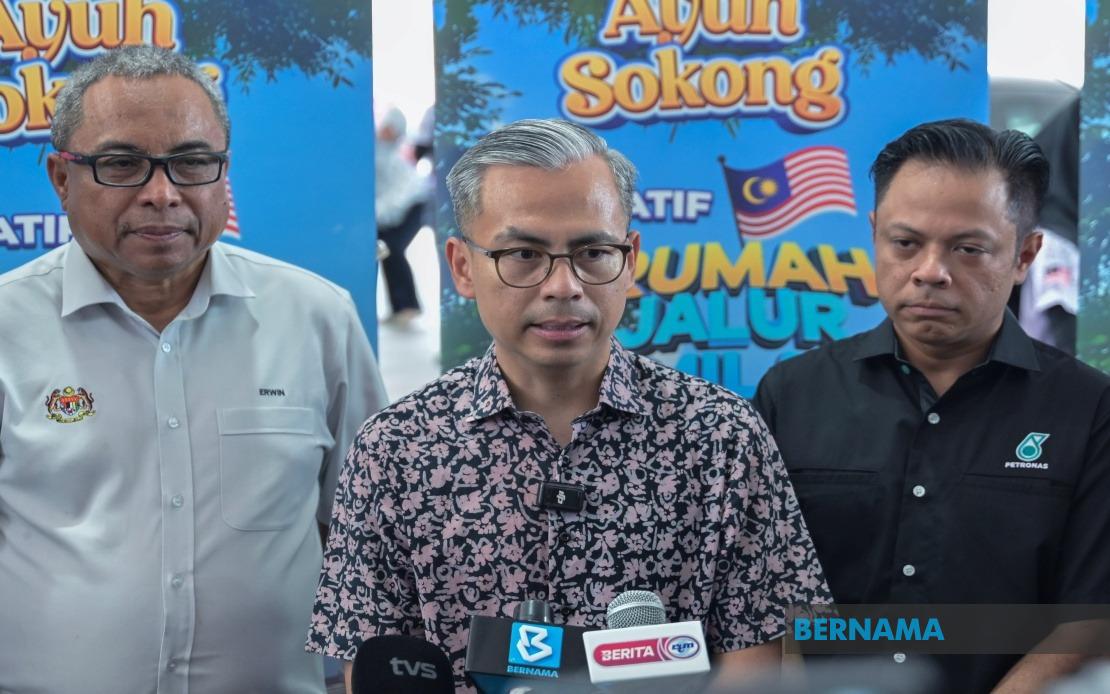
Government spokesman Datuk Seri Fahmi Fadzil disclosed the Prime Minister's directive following deliberations at a recent Cabinet meeting, where senior ministers underscored the importance of advancing this electoral restructuring. Fahmi, who serves as Communications Minister alongside his spokesperson role, confirmed that Anwar has signalled clear intent to proceed with implementation once administrative processes are completed. The delay in providing a definitive timeline to Cabinet stems not from political hesitation but from the need to secure technical information and administrative clearances from the Election Commission, whose role is pivotal in executing such constitutional modifications.
The initiative gained fresh impetus when two cabinet-level ministers—Nancy Shukri, who heads the Women, Family and Community Development portfolio, and Alexander Nanta Linggi, the Works Minister—formally tabled the redelineation proposal during Cabinet proceedings. Their intervention reflects growing recognition across government that Sarawak's representation in its own state assembly has not kept pace with population growth and demographic shifts across the state's interior and coastal regions. This advocacy from multiple quarters suggests a unified political commitment to resolving a matter that has been discussed in policy circles for some time.
The legislative framework for this expansion already exists in draft form. The Sarawak State Legislative Assembly (Composition of Membership) Bill 2025, which proposes the addition of 17 new seats to bring the total to 99, has been prepared and awaits the procedural stepping stones necessary for passage and enactment. Creating new electoral constituencies requires meticulous boundary delineation work, demographic analysis, and extensive consultation with relevant stakeholders in Sarawak. The Election Commission's responsibility extends beyond merely approving the framework; the body must conduct detailed boundary studies, consider accessibility and geographic feasibility of proposed constituencies, and ensure equitable representation across the state's diverse regions.
For Malaysian federalism, this development carries broader significance. Sarawak, one of two East Malaysian states with constitutionally entrenched autonomy, has historically maintained its own electoral arrangements distinct from peninsular Malaysia. An expansion of the Sarawak State Assembly seats represents not merely an administrative adjustment but a reaffirmation of the state's importance within the national political architecture. The increase from 82 to 99 seats—a 20.7 percent expansion—signals government recognition that Sarawak's burgeoning population and development in recent decades warrant enhanced legislative capacity and more granular representation.
The practical implications for Sarawak's political landscape deserve consideration. Additional seats will provide more opportunity for diverse voices from both major political coalitions to secure representation in the state assembly, potentially reshaping the balance of power in state politics. Rural and semi-urban constituencies, particularly in Sarawak's developing interior regions, may benefit from more precisely calibrated boundaries that reflect contemporary settlement patterns. The redelineation also carries implications for federal-state relations, as an expanded assembly could influence the state's negotiating position on matters ranging from resource sharing to development funding.
Parallel to the Sarawak initiative, the government is actively preparing for electoral challenges elsewhere. Fahmi disclosed comprehensive preparations underway for the forthcoming Melaka state election, reflecting the administration's multi-front approach to democratic processes. The focus on infrastructure and logistics—particularly internet connectivity at polling centres—demonstrates lessons learned from recent state elections in Johor and Negeri Sembilan. The Malaysian Communications and Multimedia Commission has been tasked with coordinating with the Election Commission to ensure that all polling centres in Melaka possess adequate digital infrastructure, a requirement that reflects the increasingly complex technical dimensions of modern electoral administration.
This infrastructure emphasis represents a shift in electoral management paradigms within Malaysia. Reliable internet access at polling stations has become essential for various operational functions, from voter verification systems to administrative communication networks. By proactively addressing these requirements months before the Melaka election, the government aims to prevent the logistical complications that sometimes emerge when technical preparations are left to the final weeks. The institutional cooperation between MCMC and the Election Commission illustrates how technical agencies must synchronise their efforts to support electoral integrity.
The government's simultaneous focus on both the Sarawak redelineation and Melaka election readiness underscores the complexity of managing Malaysia's federal democracy. Electoral arrangements, boundary demarcations, and administrative infrastructure constitute the foundation upon which democratic legitimacy rests. When these elements function effectively and transparently, they reinforce public confidence in electoral outcomes. Conversely, delays or perceived inadequacies in electoral administration generate scepticism about government competence and electoral fairness.
The timeline question remains unresolved pending the Election Commission's submission. Fahmi's candid acknowledgment that Cabinet has not yet been briefed on implementation schedules suggests this remains a medium-term project rather than an immediate priority. This gradualist approach may reflect both the technical complexity involved and the need to build consensus among Sarawak's diverse stakeholder communities. However, the explicit Prime Ministerial commitment and high-level ministerial advocacy suggest momentum is building behind this initiative.
For Sarawak's political future, this redelineation represents a watershed moment. The expansion of assembly seats will reshape the state's democratic architecture and potentially unlock new opportunities for representation and political participation across the state's varied communities. The procedural path ahead, though requiring coordination among multiple government agencies, appears navigable given the apparent political consensus underpinning the initiative. How swiftly the Election Commission completes its technical work and when Cabinet receives concrete timelines will determine whether this constitutional reform proceeds within the current parliamentary term or extends into subsequent years.

