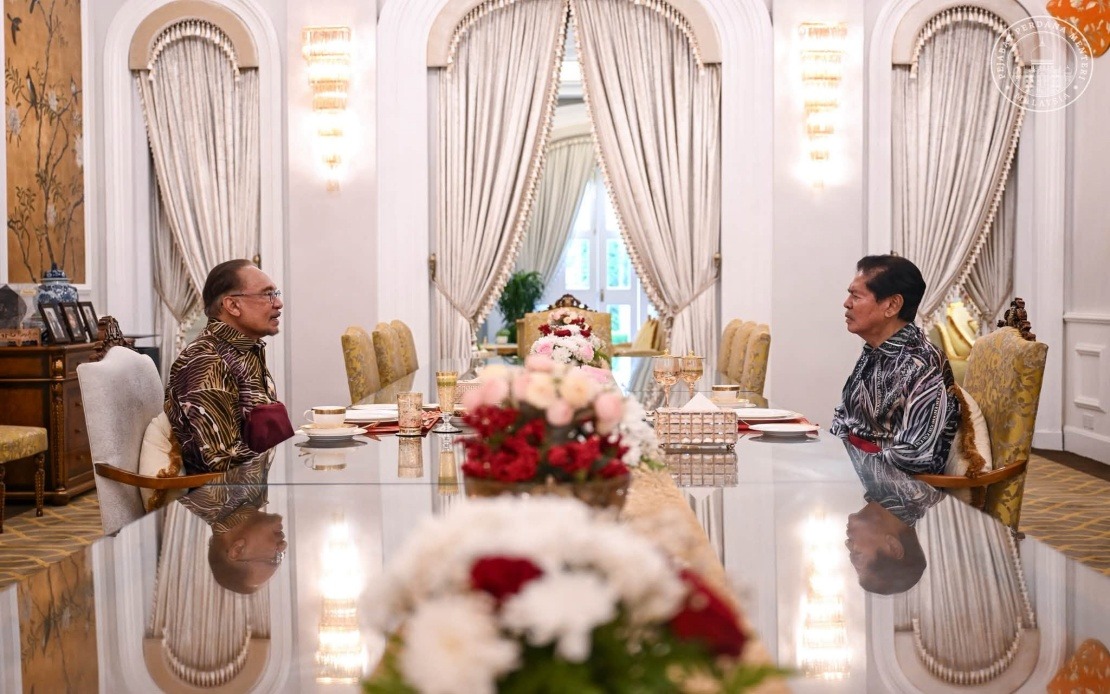
Prime Minister Datuk Seri Anwar Ibrahim brought his two-day working visit to Penang to a close on Thursday with a formal tea reception at the Governor's official residence, Seri Mutiara, where he was received by Governor Tun Ramli Ngah Talib. The gathering marked the culmination of an intensive schedule across the state that had seen the Premier engage with various community initiatives and national programmes throughout the visit.
In remarks shared on social media, Anwar characterised the meeting as emblematic of the strengthened collaboration between the Federal Government and the Penang state administration. He underscored that the gathering reaffirmed their joint dedication to advancing development priorities across the state while ensuring the wellbeing of Penang's residents remains central to policy decisions. Such high-level courtesy calls between federal and state leadership have become customary practice in Malaysia's federal system, serving both as symbolic gestures of unity and practical opportunities for dialogue on governance matters.
Governor Ramli similarly used the occasion to highlight the significance of direct engagement with the Prime Minister. He described receiving Anwar at his residence as a valued opportunity to discuss pressing issues affecting both Penang specifically and Malaysia at large. The Governor's statement reflected the traditional protocol observed during such state visits, wherein senior elected officials leverage personal meetings to raise regional concerns and coordinate on national initiatives that have local implications.
A notable highlight of the afternoon gathering was the informal yet warm interaction between Anwar and the Governor's grandson, Aldrey Alfi, who reportedly engaged the Premier with enthusiastic questioning. Governor Ramli's public acknowledgment of this moment, where he expressed gratitude for Anwar's gracious engagement with his young grandson, humanised what might otherwise appear as purely ceremonial proceedings. Such personal touches in official visits often resonate strongly with the Malaysian public, demonstrating accessibility and approachability among national leaders.
Anwar's two-day sojourn in Penang had been methodically scheduled with substantive engagements that reflected the government's development agenda. The Prime Minister had participated in the Permatang Pauh Entrepreneur Revival Programme, an initiative aimed at supporting small and medium-sized business development in one of Penang's key constituencies. This programme represents the government's broader push to foster economic resilience at grassroots level, particularly among entrepreneurs who form the backbone of Malaysia's commercial ecosystem.
Additionally, Anwar attended the 15th Malaysia Scout Jamboree, a flagship event that brings together youth from across the nation for character-building and leadership development activities. The Scout movement has long enjoyed government patronage as an instrument for instilling discipline, patriotism, and community service values among young Malaysians. By personally attending such an event, the Prime Minister sent a clear signal about the administration's commitment to youth development and the extracurricular programmes that complement formal education.
The MADANI Sahabat 2026 National Day Countdown Programme also formed part of Anwar's itinerary, reflecting the government's efforts to build momentum toward Malaysia's upcoming national celebrations. The MADANI banner, which encapsulates the administration's vision for a prosperous, inclusive, and progressive Malaysia, has become central to the government's communication strategy. By launching countdown initiatives well in advance of National Day, the government aims to cultivate widespread civic participation and national pride among all communities.
These varied engagements illustrate the multifaceted nature of modern prime ministerial duties in Malaysia. Beyond the formal apparatus of governance, premiers must demonstrate visible commitment to economic empowerment programmes, youth engagement, cultural initiatives, and symbolic national events. Penang, as one of Malaysia's most developed states and a significant economic contributor, naturally attracts high-level federal attention, particularly given the need for coordinated policy implementation between state and national governments.
The timing and conclusion of Anwar's visit, marked by the Governor's residence reception, underscores the continued importance of personal relationships and direct communication channels between federal and state leadership in Malaysia's system of governance. Such visits provide opportunities for officials to move beyond formal cabinet meetings and statutory coordination mechanisms, creating space for candid discussion of state-specific challenges and opportunities. The tea reception format, rooted in Malaysian civic tradition, served as an appropriate venue for such dialogue while maintaining the dignified atmosphere befitting interactions between senior officials.
For Penang residents and businesses, such high-profile federal visits carry practical implications. They signal sustained government commitment to the state's development priorities and provide platforms for raising issues requiring federal support or coordination. The visibility of such engagements also reinforces to investors and stakeholders the health of federal-state relations, an important factor in economic confidence and policy implementation predictability. As Malaysia navigates complex challenges ranging from economic repositioning to social cohesion, the quality of vertical coordination between different tiers of government remains crucial to effective governance and service delivery.
Governor Ramli's warm reception and public appreciation for Anwar's visit reflected the diplomatic protocols that have characterised Malaysian governance traditions. Such courtesies, often dismissed as mere formalities, actually serve important functions in maintaining institutional relationships and demonstrating mutual respect across administrative boundaries. The Governor's willingness to highlight the personal dimension of the visit—his grandson's interaction with the Prime Minister—added authenticity to what could otherwise be perceived as purely transactional political activity.

