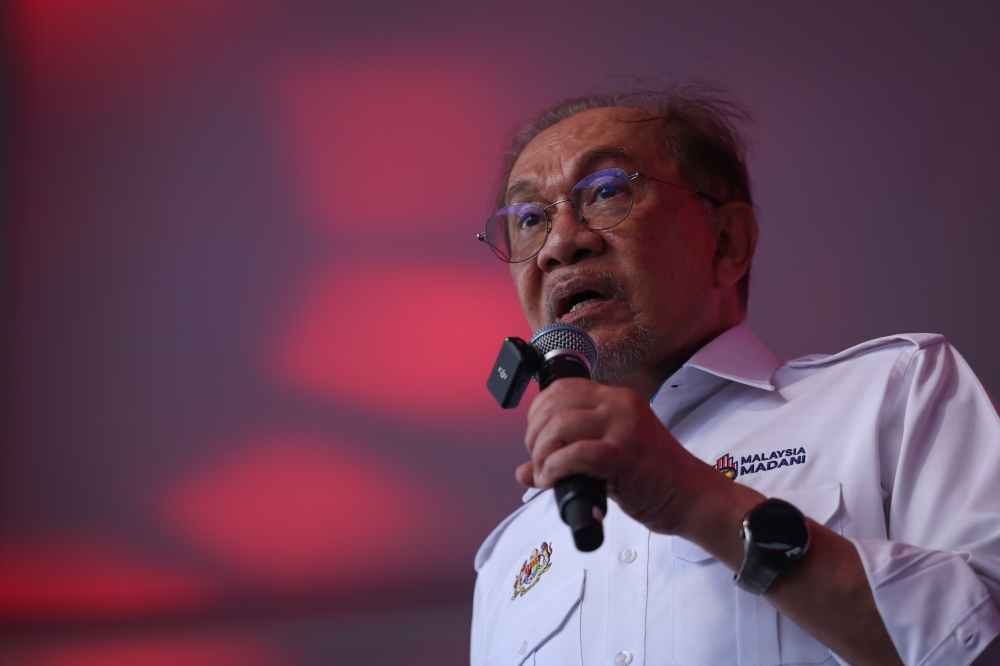
Prime Minister Datuk Seri Anwar Ibrahim launched a stinging rebuke of the opposition Perikatan Nasional coalition on Monday, accusing its parliamentary members of shirking their duty to the millions of Tabung Haji depositors by absenting themselves from crucial debate on the religious pilgrimage fund's inquiry. The confrontation underscored deepening tension between the ruling Pakatan Harapan government and opposition benches as parliament continues to grapple with the fallout from the savings scheme's accumulated financial difficulties.
The parliamentary walkout occurred during deliberations on the Royal Commission of Inquiry established to investigate the board of trustees' governance and financial management of Tabung Haji, Malaysia's principal savings scheme dedicated to Muslims preparing for the Hajj pilgrimage. The inquiry represents a significant undertaking to determine accountability for the fund's deteriorating position and the impact on millions of Malaysians who have deposited life savings into the institution over decades. Anwar's accusation that opposition lawmakers abandoned the discussion signals the government's frustration with what it perceives as performative opposition rather than constructive scrutiny.
Tabung Haji has faced mounting challenges in recent years, with depositors increasingly vocal about delays in pilgrimage placements and concerns over fund management. The establishment of the Royal Commission reflected public pressure on the government to ensure transparent investigation into how the organisation's assets have been managed and where responsibility for shortcomings lies. For many Malaysian Muslims, Tabung Haji represents not merely a savings vehicle but a sacred obligation, making the inquiry politically and emotionally charged across communal and electoral lines.
Anwar's criticism during the parliamentary session extended beyond mere parliamentary tactics, touching on what he characterised as an abdication of opposition responsibility. He suggested that by walking out, opposition MPs were effectively turning their backs on millions of everyday Malaysians whose retirement and pilgrimage aspirations depended on the fund's integrity and recovery. The Prime Minister's language proved notably sharp, reflecting his administration's view that proper governance and parliamentary accountability require consistent opposition engagement rather than selective participation.
The opposition's departure from the chamber raises questions about parliamentary dynamics in Malaysia's current political configuration. Perikatan Nasional, comprising primarily UMNO, PAS, and several smaller parties, holds substantial numbers of seats despite being in opposition. Their absence during such substantive debate removes critical voices from parliamentary proceedings and potentially weakens the quality of public deliberation on matters affecting millions of constituents. For citizens following parliamentary business, the departure suggested a breakdown in the basic functioning of Westminster-style oversight mechanisms.
Tabung Haji's accumulated difficulties trace back years, with repeated delays in processing pilgrimage applications and public criticism of administrative inefficiencies. The fund's investment portfolio and governance structures have come under scrutiny, with concerns raised about whether management decisions adequately protected depositors' interests during economic volatility. Previous administrations faced pressure to reform the institution, but sustained action proved elusive, allowing problems to compound and public confidence to erode. The current Royal Commission represents an attempt to break this cycle through independent, formal investigation.
The timing of this parliamentary clash reflects broader political tensions between Pakatan Harapan and Perikatan Nasional ahead of what observers expect will be crucial electoral contests. The government, seeking to demonstrate commitment to governance reform and accountability, views opposition engagement with such inquiries as essential legitimacy for the process. By contrast, the opposition may calculate that selective engagement or withdrawal protects its political interests, though at the cost of appearing dismissive of ordinary depositors' concerns.
For Malaysian Muslim communities particularly, Tabung Haji carries profound significance beyond financial considerations. The organisation facilitates religious obligation and aspiration, binding spiritual meaning to economic transaction. Public trust in Tabung Haji's recovery depends partly on confidence that both government and opposition will pursue accountability with equal vigour, regardless of political calculation. Opposition absence from parliamentary scrutiny potentially signals to depositors that their interests rank below partisan advantage.
The incident highlights persistent challenges in Malaysian parliamentary culture. Despite universal suffrage and representative democracy, meaningful bipartisan engagement on matters affecting public welfare remains inconsistent. Depositors of Tabung Haji require sustained, serious parliamentary oversight and cannot reasonably be expected to accept debate from which opposition perspectives are voluntarily absent. Anwar's criticism, whatever its partisan purpose, contained valid substance about parliamentary obligation.
Moving forward, resolution of Tabung Haji's challenges requires sustained commitment from all political actors. The Royal Commission's findings will ultimately depend on cooperation across political divides, resources dedicated to investigation, and implementation capacity for recommended reforms. Public expectations for transparent accountability and depositor protection cannot be met through parliamentary theatre or selective engagement. Both government and opposition bear responsibility to ensure that institutional inquiry receives full parliamentary attention and support.

