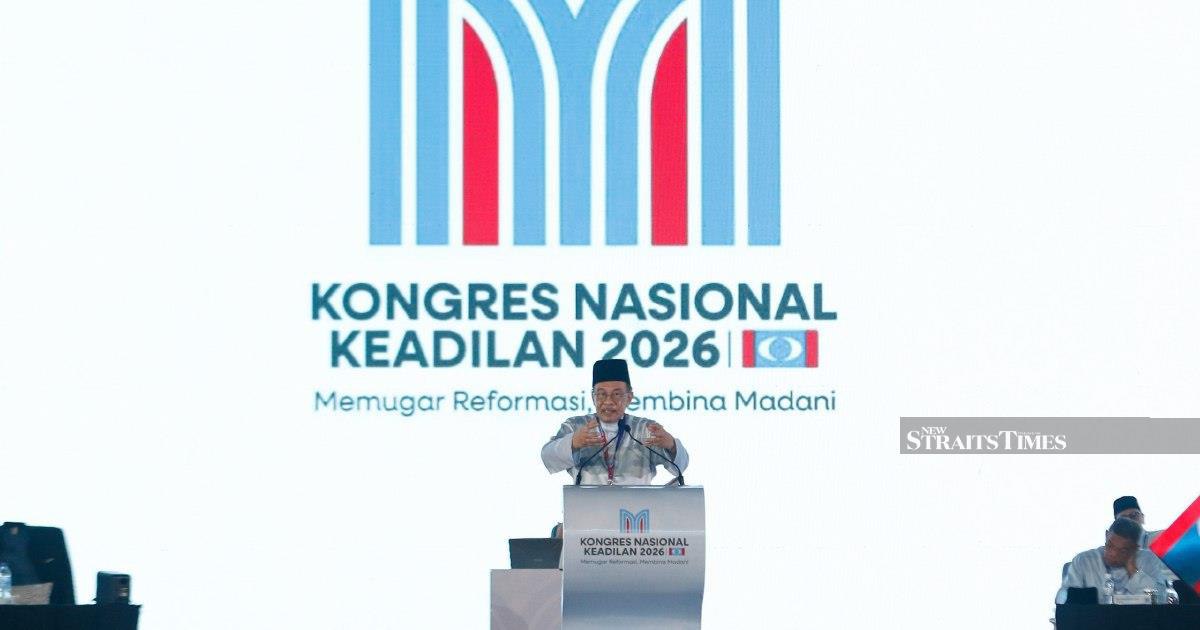
PKR president Datuk Seri Anwar Ibrahim has formally acknowledged that embezzlement, locally termed "sakau," has indeed taken place within Tabung Haji, drawing on conclusions documented in the Royal Commission of Inquiry investigation into the Islamic pilgrimage savings fund. The candid admission came during the PKR Congress held in Ayer Keroh, marking a significant moment in ongoing public discourse surrounding the troubled institution's governance and financial integrity.
Tabung Haji has long occupied a sensitive position in Malaysia's institutional landscape, serving millions of Muslim citizens as the primary vehicle for accumulating savings specifically designated for the hajj pilgrimage. The institution's mandate requires it to manage funds with exceptional probity given the sacred trust placed in it by contributors, many of whom represent lower and middle-income segments of Malaysian society. When issues of financial mismanagement emerge at such an organisation, they strike at the heart of public confidence in financial stewardship and governance standards across the broader system.
The Royal Commission of Inquiry's investigation into Tabung Haji represents one of Malaysia's more comprehensive examinations of institutional malfeasance in recent years. The commission's mandate encompassed scrutinising the management practices, investment decisions, and internal controls that allegedly permitted funds to be misappropriated or diverted from their intended purpose. The detailed findings documented in the RCI report provided a factual foundation for understanding how embezzlement mechanisms operated and the scale of financial loss incurred.
Anwar's public articulation of these findings holds particular weight given his trajectory within Malaysian politics. As the country's current prime minister and PKR's highest-ranking official, his statements on institutional accountability and financial governance shape broader political narratives around reform and anti-corruption measures. By directly confirming the embezzlement allegations at a party congress, Anwar positioned his administration as willing to confront uncomfortable truths about governance failures, rather than deflecting or minimising such findings.
The embezzlement at Tabung Haji carries ramifications extending beyond simple financial loss. The institution serves as a repository of accumulated faith and savings for millions of Malaysians, many of whom have contributed regularly over decades specifically to fulfil the religious obligation of performing hajj. When custodians of such resources breach that trust through misappropriation, the damage encompasses both material loss and profound erosion of institutional legitimacy. This undermines not only Tabung Haji itself but potentially affects public perception of other similar savings and trust-based financial institutions.
For Malaysian financial sector oversight, the Tabung Haji case underscores the necessity for robust internal audit mechanisms, transparent accountability structures, and external regulatory scrutiny. The institution, despite its Islamic foundation and government backing, operates within Malaysia's broader financial regulatory framework and must be subject to the same standards of transparency and governance demanded of conventional financial institutions. Gaps revealed during the RCI investigation highlight where regulatory attention and institutional reform requirements remain necessary.
The political context surrounding Anwar's acknowledgment also deserves consideration. His administration has positioned itself as committed to addressing corruption and governance failures inherited from previous administrations. By explicitly confirming embezzlement findings at Tabung Haji, Anwar demonstrated willingness to engage transparently with historical institutional failures, though questions remain regarding implementation of corrective measures and accountability for those responsible for the misappropriation.
Regional observers monitoring Malaysia's governance trajectory will view this acknowledgment as a barometer of institutional accountability standards. Southeast Asian nations continue navigating tensions between traditional governance hierarchies and contemporary demands for transparency. Malaysia's handling of the Tabung Haji embezzlement—from investigation through public confirmation of findings—contributes to the broader regional conversation about institutional reform and fiduciary responsibility.
The practical implications for Tabung Haji contributors remain significant. Affected individuals require clarity regarding whether embezzled funds will be recovered or compensated, what structural reforms have been implemented to prevent recurrence, and how the institution's management and oversight mechanisms have been strengthened. Anwar's confirmation of embezzlement represents an important step toward accountability, but affected parties will ultimately measure success through concrete restitution, institutional reform, and demonstrable improvements in governance standards.
Moving forward, the challenge for Malaysian policymakers involves translating the RCI's investigative findings into substantive institutional reform. This encompasses reviewing Tabung Haji's governance structure, strengthening internal controls, enhancing regulatory oversight, and potentially pursuing legal accountability for those responsible for the embezzlement. The acknowledgment by the nation's highest political leadership provides necessary momentum for these reforms, signalling that governance failures will not be ignored or buried despite institutional prominence or religious significance.
The Tabung Haji situation also raises broader questions about institutional resilience and reform capacity within Malaysia's government-linked organisations. Many such entities manage substantial public resources and carry significant social responsibilities. The embezzlement findings at Tabung Haji suggest systemic vulnerabilities that likely extend across other institutions, potentially motivating a comprehensive review of governance standards across the government-linked sector. Anwar's public stance may therefore catalyse wider institutional auditing and reform initiatives beyond Tabung Haji alone.

