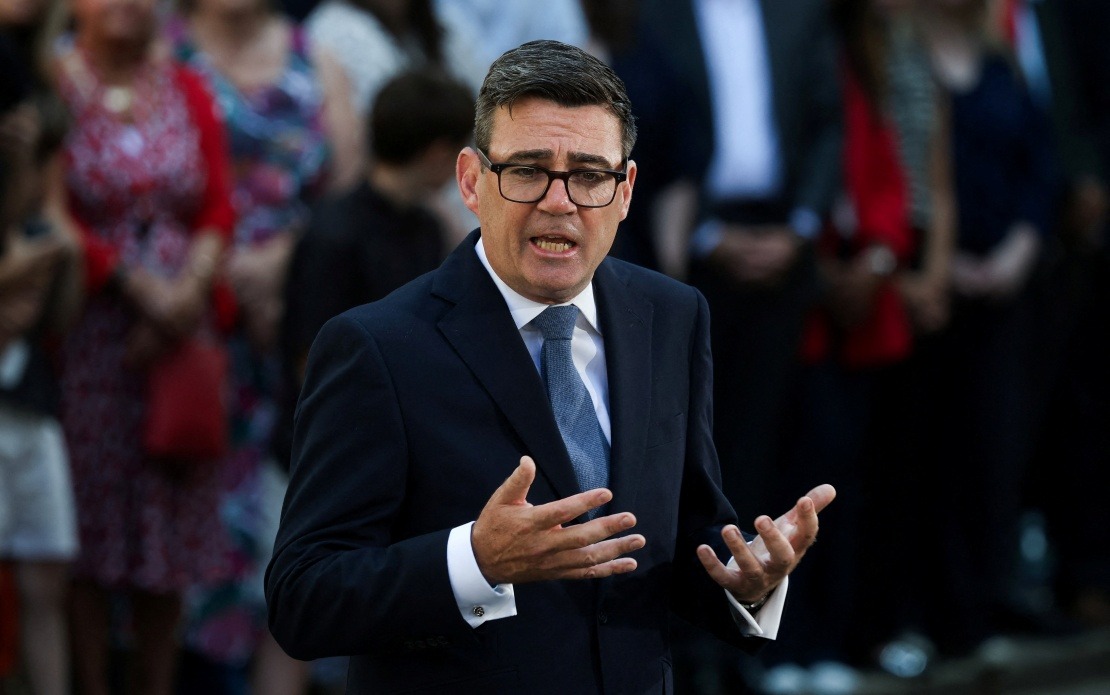
Prime Minister Datuk Seri Anwar Ibrahim has extended formal congratulations to Andy Burnham following his appointment as the United Kingdom's seventh Prime Minister in a decade, signalling Malaysia's readiness to deepen diplomatic and economic ties with Britain under new leadership. Burnham assumed office on Monday after the Labour Party elevated him to the top post on Friday, succeeding Keir Starmer who tendered his formal resignation at Buckingham Palace.
Through a Facebook statement released today, Anwar articulated Malaysia's strategic vision for the relationship, emphasising the urgency of translating bilateral goodwill into concrete outcomes. He specifically flagged the completion of a Digital Trade Agreement as a priority, reflecting Malaysia's broader pivot towards technology-driven commerce and regulatory harmonisation with major Western trading partners. This initiative carries particular significance for Malaysian businesses seeking seamless access to the UK market while leveraging digital infrastructure to enhance supply chain efficiency.
The Prime Minister outlined an ambitious agenda spanning artificial intelligence and digitalisation, sectors where Malaysia has positioned itself as an emerging innovation hub within Southeast Asia. Collaboration with Britain in these domains would provide Malaysian enterprises and research institutions access to world-class expertise and investment capital, accelerating the country's digital transformation ambitions. Clean energy emerged as a third pillar, underscoring shared commitment to environmental sustainability and positioning both nations as partners in the global green transition—a development of particular relevance as Malaysia targets net-zero emissions and seeks international partnerships to finance renewable energy infrastructure.
Defence cooperation rounded out Anwar's enumerated priorities, signalling continuity in security arrangements that have long anchored the Malaysia-UK relationship. This dimension assumes heightened importance given regional tensions in the South China Sea and the critical role British military presence plays in maintaining maritime stability across Southeast Asia. Strengthening defence ties with London ensures Malaysia maintains strategic flexibility and access to advanced military technology and intelligence-sharing protocols.
Anwar's statement notably incorporated diplomatic messaging on the Middle East conflict, commending Burnham for his candid acknowledgement that Britain's initial response to the Gaza crisis failed to meet standards of moral clarity. By publicly praising the new Prime Minister's willingness to critique his predecessor's approach and renew pressure on Israel, Anwar positioned Malaysia within a broader coalition of nations seeking recalibration of Western policy on Palestinian rights. This framing serves Malaysia's domestic political interests while subtly signalling to Burnham that navigating Middle Eastern sensitivities will be crucial to building trust with Southeast Asian partners, many of whom maintain deep popular concern for Palestinian welfare.
The timing of Anwar's outreach carries symbolic weight given the impending 70th anniversary of Malaysia-UK diplomatic relations in 2025. Rather than treating this milestone as mere ceremonial occasion, Anwar framed it as a strategic inflection point—an opportunity to refresh partnership frameworks and chart directions aligned with 21st-century challenges. This rhetorical move reflects Malaysia's approach to managing longstanding relationships with traditional partners while maintaining agency in defining their contemporary relevance.
Anwar's simultaneous expression of gratitude toward Keir Starmer demonstrates diplomatic courtesy while subtly repositioning the relationship with fresh leadership. The acknowledgement of Starmer's contributions to strengthening ties provides graceful closure to the previous administration while signalling openness to new directions. This balanced gesture insulates Malaysia from appearing capricious while legitimising the transition as an opportunity for renewed commitment rather than discontinuity.
The substance of Malaysia's agenda with Britain reflects broader patterns in Malaysian foreign policy under Anwar's stewardship. Rather than ideological alignment or security dependence alone, the emphasis on digital trade, artificial intelligence, and clean energy demonstrates Malaysia's calculation that prosperity and technological advancement constitute primary drivers of national interest. These sectors represent areas where Malaysia possesses genuine capacity to cooperate as equal partner rather than subordinate to British interests, reversing historical colonial dynamics that still subtly influence perceptions of bilateral relations.
For Britain, Anwar's overture signals that Malaysia remains receptive to sustained engagement despite the turbulence surrounding Burnham's ascension and broader questions about Labour's foreign policy direction. By immediately extending congratulations and laying out a constructive agenda, Anwar positioned Malaysia as a reliable partner willing to work pragmatically with British governments regardless of party composition. This posture enhances Malaysia's standing as a stable partner in the Indo-Pacific, a region where Britain has invested significantly in security partnerships and trade relationships.
The diplomatic choreography surrounding Anwar's statement also reflects Malaysia's nuanced navigation of great power competition in the region. By maintaining active, substantive partnerships with traditional Western allies like Britain while carefully managing relationships with China and other powers, Malaysia preserves strategic autonomy. Enhanced Malaysia-UK cooperation in digital trade and artificial intelligence does not entail Chinese exclusion, but rather ensures Malaysia possesses multiple sources of technology transfer and investment capital, reducing vulnerability to any single power.
Looking forward, the concrete pursuit of the Digital Trade Agreement and expanded defence cooperation will test whether Anwar's diplomatic initiative translates into tangible outcomes. Both areas involve sensitive negotiations and competing interests, requiring sustained high-level engagement. The success of Malaysia-UK relations under Burnham will likely hinge on whether Britain perceives genuine strategic value in deepening Southeast Asian partnerships, or whether Westminster's focus remains narrowly concentrated on European relationships and special arrangements with traditional English-speaking allies.

