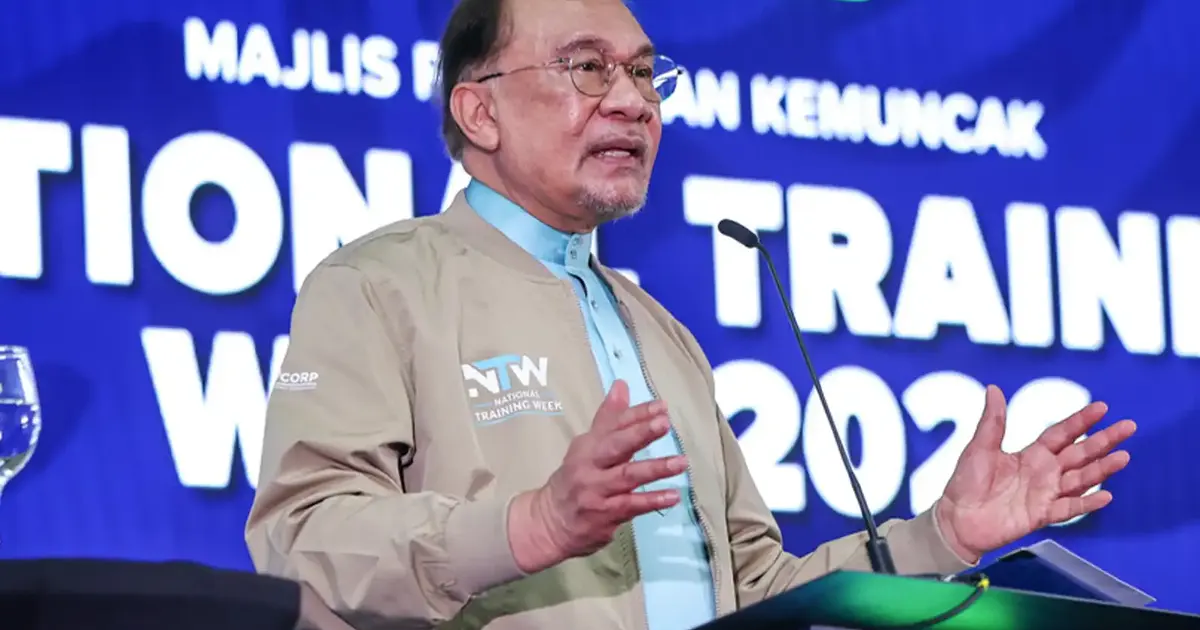
Prime Minister Anwar Ibrahim has publicly challenged recent statements questioning the loyalty of Malaysia's non-Malay communities, reaffirming his conviction that both Malaysian Chinese and Malaysian Indian citizens are deeply committed to the nation's constitutional framework and demonstrate consistent dedication to the country.
The disagreement centres on characterisations that have cast doubt over the political allegiance and national commitment of ethnic minorities within Malaysia's plural society. Anwar's intervention underscores a persistent tension within Malaysian politics around questions of belonging, citizenship, and the bounds of acceptable political discourse regarding the country's diverse population. His defence of these communities reflects a broader vision of national unity that transcends ethnic categorisation, a position that has long formed a cornerstone of his political messaging across multiple decades in public life.
The Prime Minister's remarks carry particular weight given Malaysia's constitutional architecture, which explicitly guarantees citizenship rights to all communities regardless of ethnicity or religion, while simultaneously enshrining special provisions for Bumiputera populations. This dual framework has generated ongoing debate about how to balance inclusive nationalism with acknowledgment of constitutional protections. Anwar's statement implies that acceptance of this constitutional settlement constitutes evidence of loyalty, challenging alternative interpretations that might question whether certain communities can be considered fully committed to the nation's foundational principles.
The timing of Anwar's comments reflects broader dynamics within Malaysia's political landscape, where questions of identity, representation, and national narrative remain contested terrain. Coalition governments and opposition blocs have each attempted to articulate competing visions of what Malaysian nationalism means and who can authentically embody it. By defending non-Malay communities' constitutional fidelity and patriotic commitment, Anwar positions himself within a tradition of inclusive nation-building that seeks to accommodate diverse populations within a single overarching framework.
Malaysian Chinese citizens comprise approximately 23 per cent of the nation's population and have historically played central roles in commerce, education, and professional sectors. They maintain distinct cultural and linguistic practices, including the use of Chinese language media and community organisations, which sometimes generate political anxiety among Malay-Muslim majority communities about social cohesion and national integration. However, multiple generations of Malaysian Chinese have been born within the country and have no lived experience of existence elsewhere, making assertions about conditional loyalty or divided allegiance increasingly difficult to substantiate empirically.
Similarly, Malaysian Indian communities represent roughly seven per cent of the population and have established deep historical roots spanning more than a century. Despite facing socioeconomic challenges and occasional marginalisation within political structures, Indian Malaysians have consistently participated in national institutions, served in the civil service and military, and engaged with the democratic process. Their contributions across multiple sectors of the economy and society demonstrate substantive integration rather than peripheral attachment to national projects.
Anwar's assertion that these communities respect the constitution addresses a frequently deployed anxiety within Malaysian political discourse: the suggestion that non-Malays harbour reservations about or resistance to the constitutional settlement negotiated at independence. This narrative has periodically surfaced during moments of political stress, typically functioning to mobilise Malay-Muslim voters around questions of constitutional preservation. By characterising non-Malay Malaysians as constitutionally committed, Anwar attempts to reframe the conversation away from suspicion toward recognition of shared national foundation.
The dispute also illuminates tensions within Malaysia's ruling coalition. Different political actors maintain competing perspectives on multiculturalism, integration, and the appropriate balance between protecting Bumiputera interests and promoting inclusive citizenship. These disagreements occasionally become public, as in this instance, reflecting genuine differences in political philosophy rather than mere tactical manoeuvring. Sanusi's remarks, whatever their precise formulation, appear to embody a more defensive posture regarding Malay-Muslim interests, whilst Anwar advances a more expansive conception of Malaysian identity.
For regional observers, Malaysia's handling of these questions carries broader significance. Southeast Asia contains numerous plural societies navigating similar challenges around majority-minority relations, constitutional frameworks, and inclusive nationalism. How Malaysia articulates and implements responses to questions of loyalty and belonging influences regional conversations about multicultural governance and democratic legitimacy. Anwar's position, emphasising constitutional commitment as the measure of citizenship contribution, offers one possible approach to these persistent tensions.
The controversy also highlights enduring challenges within Malaysian discourse around ethnicity and national identity. Across multiple administrations and political configurations, questions about non-Malay Malaysians' authentic commitment to the nation continue to surface, suggesting that deeper structural anxieties about diversity, demography, and constitutional arrangements remain unresolved. Anwar's defence represents an attempt to shift conversational norms toward presuming loyalty unless demonstrated otherwise, rather than maintaining suspicion as the default position.
Moving forward, how Malaysian political leaders articulate visions of national unity during moments of disagreement will shape public confidence in institutional integrity and social cohesion. When political figures explicitly defend minority communities' constitutional fidelity and patriotic commitment, they establish rhetorical space for inclusive governance. Conversely, public statements questioning non-Malays' loyalty risk hardening intercommunal divisions and undermining shared commitment to constitutional frameworks that acknowledge both universal citizenship and particular protections.

