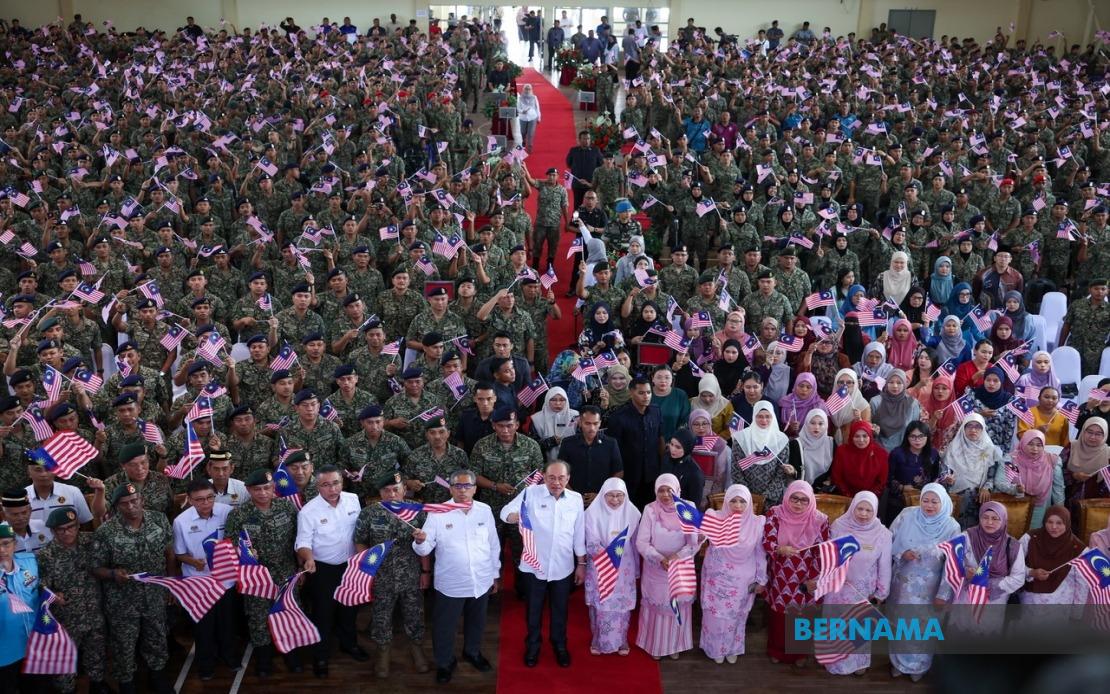
Prime Minister Datuk Seri Anwar Ibrahim has firmly pushed back against suggestions that the government under his leadership is shortchanging the Bumiputera community, particularly ethnic Malays. Speaking in Tampin on July 27, Anwar pointed to the recent establishment of new Malay reserve land in Kuala Lumpur as concrete evidence that his administration prioritizes protecting indigenous economic interests. The move represents a significant shift in policy direction since the MADANI government took office in 2022, addressing what the Prime Minister characterizes as a long-standing erosion of Malay landholdings in the capital.
One of the most striking aspects of Anwar's tenure has been his focus on reversing decades of decline in Malay-controlled property in Kuala Lumpur. He highlighted that since the nation gained independence in 1957, no new Malay reserve land had been established in the capital until his administration took action. During the previous decades, existing parcels of such land were progressively disposed of without replacement, creating a net loss to the Bumiputera community. This historical pattern forms the backdrop for understanding why Anwar views the recent land designation as a watershed moment in bumiputera policy.
The centrepiece of this initiative involves the 480-acre Bandar Malaysia site, which the government reclaimed in 2023. This significant property had previously been under the control of foreign interests—specifically a Chinese entity and a private company—in arrangements that Anwar argues violated existing regulations. The reclamation of this strategic parcel represents not merely a symbolic gesture but a substantial recovery of valuable urban real estate. By retrieving control of Bandar Malaysia, the government was able to redirect a portion of this premium property back towards the Bumiputera community through formal reserve land designation.
From the reclaimed Bandar Malaysia site, the government designated 50 acres specifically as Malay reserve land. This acreage is particularly significant because it comprises some of Kuala Lumpur's most sought-after property, located in the heart of the capital where land values command premium prices. The strategic importance of this designation cannot be overstated: rather than allocating peripheral or less valuable urban land, the government has set aside prime real estate for Malay ownership and control. This decision sends a clear market signal about the government's commitment to ensuring that Bumiputera interests are not confined to marginal economic zones.
Anwar explained that the reclaimed land has been placed under the stewardship of two major state-linked entities: Petronas and Khazanah Nasional. Both organizations are characterized as Malay-controlled, ensuring that the strategic direction and benefits of managing this significant asset remain aligned with Bumiputera interests. This governance structure represents an attempt to maintain long-term protection of the land's Bumiputera character while leveraging the professional expertise and financial resources of established sovereign wealth entities. The arrangement reflects a more sophisticated approach to reserve land management than simple direct allocation to individual proprietors.
Significantly, Anwar disclosed that the proposal to designate Malay reserve land from Bandar Malaysia faced no organized opposition when presented to the Cabinet, despite the government's multi-ethnic coalition composition. DAP secretary-general Anthony Loke, whose party might historically have questioned preferential Bumiputera allocations, merely sought clarification rather than mounting objections. When Anwar explained the rationale—that Malay landholdings in Kuala Lumpur were measurably shrinking and required deliberate government intervention—Loke reportedly accepted the reasoning. This cabinet-level consensus, according to Anwar, underscores the legitimacy and cross-party acceptance of the government's bumiputera approach.
The Prime Minister characterized his explanation to coalition partners as fulfilling his responsibility to reverse demonstrable erosion of Malay economic interests. Rather than framing bumiputera policy as special privilege disconnected from economic reality, Anwar presented it as a corrective measure responding to documented decline. This framing seeks to reposition bumiputera policy within a narrative of protecting legitimate communal assets rather than creating new advantages. By grounding the reserve land designation in measurable data about shrinking holdings, Anwar attempts to depoliticize what remains a contentious issue in Malaysian multiculturalism.
For Malaysian readers, particularly those monitoring economic policy affecting different communities, this announcement carries several implications. First, it suggests the MADANI government intends to actively manage bumiputera interests rather than allowing market forces to determine outcomes. Second, the focus on Kuala Lumpur specifically—the nation's commercial and political heart—indicates a strategic choice to concentrate bumiputera land protection efforts where property values and economic opportunity are greatest. Third, the involvement of professional wealth management entities rather than individual allocation suggests a longer-term, institutional approach to preserving Malay-controlled assets.
The broader context of this announcement reflects ongoing tensions within Malaysian politics about how to balance competing principles of meritocracy, economic efficiency, and communal protection. Bumiputera policy remains deeply embedded in the Malaysian social contract, yet implementation and scope continue to generate debate. Anwar's emphasis on recovering lost assets and reversing decline frames his government's approach as conservative—seeking to restore rather than expand bumiputera entitlements. This positioning attempts to appeal both to those concerned about dilution of indigenous protections and those who question whether extensive special privileges serve broader economic interests.
Regionally, Malaysia's approach to managing indigenous or special interests in property and commerce continues to distinguish it from neighbouring Southeast Asian economies. The visibility of this bumiputera initiative also serves domestic political purposes, potentially offsetting criticism from Malay-Muslim constituencies that the government has compromised on traditional policy priorities through coalition politics. By demonstrating concrete action on asset protection in the capital, Anwar seeks to demonstrate that the MADANI government remains a credible guardian of bumiputera interests despite its multi-racial coalition composition and emphasis on economic modernization. The reclamation and redesignation of Bandar Malaysia land thus functions simultaneously as economic policy, political communication, and coalition management.

