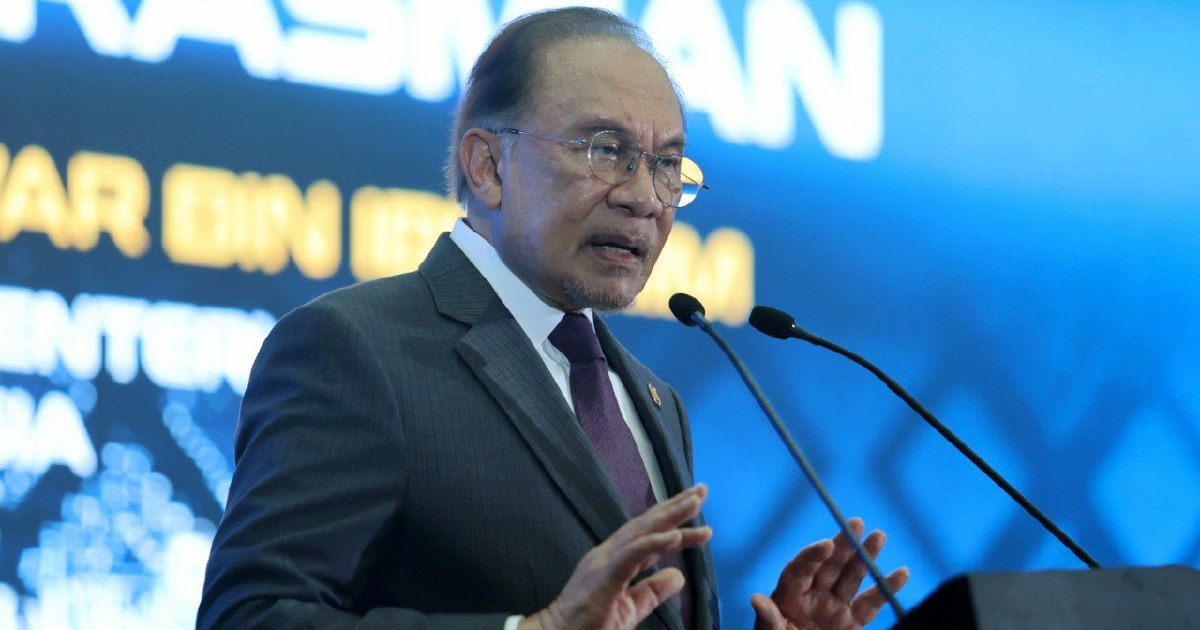
Prime Minister Datuk Seri Anwar Ibrahim has issued a stern directive to schools nationwide, insisting they abandon the practice of suppressing bullying complaints to maintain institutional standing. Speaking in Nilai, Anwar stressed that educational authorities must prioritise the welfare of victimised students over institutional reputation management, a principle that strikes at the heart of how Malaysian schools have traditionally handled disciplinary matters involving student behaviour.
The Premier's intervention reflects growing concern within government circles about systemic failures in how schools address bullying allegations. By publicly cautioning against concealment strategies, Anwar is signalling that the education ministry will expect transparency and accountability from school administrators who may have previously buried complaints to avoid negative media coverage or parental backlash. This represents a marked shift in official expectations regarding institutional conduct.
Bullying in Malaysian schools has become increasingly documented through social media, with viral videos and anonymous accounts exposing incidents that institutions might otherwise have contained quietly. Parents increasingly expect their children to study in environments free from harassment, whether physical or psychological, making the suppression of such cases politically and socially untenable in the modern era. Schools that attempt to silence victims or downplay serious incidents now risk greater reputational damage through public disclosure rather than through transparent acknowledgment.
The Prime Minister's emphasis on swift action carries particular weight given Malaysia's multi-racial, multi-religious student population. Bullying cases involving ethnic or religious dimensions require especially sensitive handling, with delayed or inadequate responses capable of escalating community tensions. Prompt investigation and fair resolution can prevent grievances from festering and spilling beyond school walls into broader social friction.
Educational institutions operating under pressure to maintain high rankings and positive public profiles have historically faced temptation to manage difficult cases informally rather than through formal channels that generate documentation. Some schools have counselled bullying victims to transfer, effectively removing the problem rather than addressing its root causes. Others have discouraged parents from pursuing formal complaints, preferring in-house mediation that leaves no official record. Anwar's directive effectively closes off these escape routes.
The statement also implies that school management should report serious bullying incidents to parents, education officials, and law enforcement where appropriate, rather than assuming they can resolve all matters internally. This places schools within the formal accountability structure that exists for child protection across the country, bringing school discipline into alignment with broader safeguarding principles.
For students who have experienced bullying, Anwar's message provides explicit backing for their pursuit of justice and remedial action. It signals that attempting to silence victims or discourage complaints will no longer be tolerated at any level of the education system. This empowerment of students and their families may encourage previously unreported cases to emerge, initially creating the appearance of increased bullying but actually reflecting improved detection and documentation.
The Malaysian education system operates under distinct hierarchies where school principals and senior management wield significant autonomy over internal discipline matters. Anwar's intervention at the highest political level sends a cascading signal through the hierarchy that this autonomy has limits when bullying cases are at stake. State education departments and school boards will now be expected to implement oversight mechanisms ensuring principals cannot simply suppress problematic incidents.
Clear reporting protocols and whistleblower protections for teachers and support staff become essential under this new framework. Staff members who witness bullying or become aware of institutional cover-ups need assurance they will be protected if they escalate concerns to education officials rather than remaining silent. Without such protections, the strongest institutional pressures will continue discouraging disclosure regardless of what the Prime Minister says.
The broader education landscape across Southeast Asia reflects similar struggles balancing institutional reputation with student welfare. Schools in neighbouring countries grapple with comparable pressures to project excellence while concealing behavioural problems. Malaysia's explicit commitment to transparency and swift action positions the country ahead of regional peers on child protection standards, potentially influencing neighbouring education systems toward similar transparency expectations.
For parents navigating school selection in Malaysia, Anwar's directive effectively makes an institution's bullying response procedures a legitimate evaluation criterion. Schools that embrace transparent incident reporting and swift victim-centred remediation are now operating in alignment with the Prime Minister's stated expectations. Parents can reasonably expect to see documentary evidence of bullying policies, accessible complaint mechanisms, and demonstrated follow-through on investigating allegations.
Implementing this directive effectively requires investment in counselling services, trained mediators, and clear procedural guidelines that schools currently lack in many cases. The education ministry will need to support schools in building capacity for these functions rather than simply demanding compliance without resources. Budget allocation and professional development for school administrators should now prioritise child protection training and trauma-informed approaches to student welfare.
Anwar's warning ultimately reflects a modernisation of child protection standards within Malaysia's education system, acknowledging that reputational damage flows more readily from suppressed scandals exposed online than from transparent, well-managed responses to inevitable human challenges within large school communities. Schools that embrace this principle may paradoxically emerge stronger institutionally while serving students more effectively.

