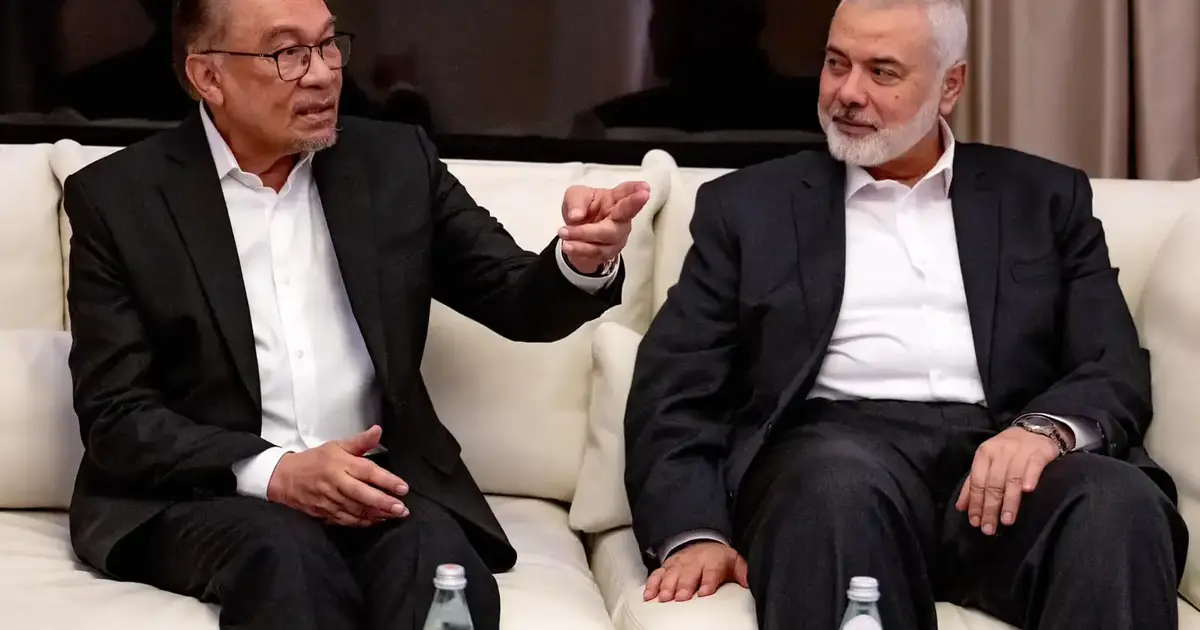
Prime Minister Anwar Ibrahim has categorically rejected allegations suggesting that members of the Palestinian militant organisation Hamas have conducted training operations within Malaysian territory, describing the claims as entirely baseless. His denial addresses growing international scrutiny of Malaysia's stance on designated terrorist organisations and reflects mounting pressure from Western governments monitoring cross-border militant activities in Southeast Asia.
The Malaysian leader's response carries significant implications for the country's international standing, particularly as it navigates complex diplomatic relationships with both Western powers and regional actors. Malaysia has long maintained a precarious balance in Middle Eastern affairs, publicly supporting Palestinian causes while operating within a global counter-terrorism framework that lists Hamas on various international watchlists. The denial represents an attempt to reassure key allies, especially the United States, of Malaysia's commitment to preventing extremist activities on its soil.
Anwar's statement gains particular weight given his disclosure that he has informed US President Donald Trump about his previous encounter with a Hamas leader. This revelation suggests an attempt at transparency with the Trump administration, signalling that Malaysia's government possesses no hidden agenda regarding engagement with Palestinian organisations. By proactively volunteering information about historical interactions rather than allowing such details to surface through intelligence channels, Anwar appears to be pre-empting potential diplomatic friction.
The timing of these denials reflects broader geopolitical tensions in Southeast Asia, where multiple intelligence agencies actively monitor militant networks. Malaysia's strategic location along major shipping routes and its substantial Muslim-majority population have historically made it a point of concern for international counter-terrorism efforts. Previous incidents involving foreign fighters and militant recruitment have already placed Malaysian security agencies under considerable international scrutiny.
Anwar's framing of the issue around his own past diplomatic engagement with Hamas leadership suggests an important distinction he wishes to establish: between legitimate political dialogue and supporting armed operations. This distinction holds particular relevance given Malaysia's long-standing political support for Palestinian statehood and its historical hosting of various Palestinian representatives. The Prime Minister appears intent on separating Malaysia's principled stance on Palestinian rights from any suggestion of material support for militant activities.
The allegations themselves have not been independently verified, and their origins remain unclear, adding layers of complexity to Anwar's response. In the current geopolitical climate, where information warfare and rival intelligence assessments frequently generate conflicting narratives, such unsubstantiated claims can nonetheless damage diplomatic relationships if left unaddressed. Anwar's prompt and emphatic denial suggests the Malaysian government takes such allegations seriously enough to warrant immediate rebuttal.
From a domestic perspective, Anwar's statement reflects broader efforts by his administration to present Malaysia as a responsible global actor committed to combating extremism while maintaining diplomatic flexibility. This positioning matters significantly for Malaysian investors and businesses operating internationally, as any perception of institutional links to designated terrorist organisations could trigger sanctions or financial restrictions. The government's rapid denial thus serves both foreign policy and economic interests.
The reference to briefing President Trump assumes particular significance given the incoming Trump administration's traditionally hardline stance on terrorism and Middle Eastern affairs. By demonstrating voluntary disclosure of past Hamas contact, Anwar appears to be establishing a foundation of trust with an administration potentially less inclined toward nuance regarding militant organisations. This proactive approach contrasts with strategies of remaining silent, which could invite more aggressive scrutiny.
Malaysia's position becomes further complicated by its role within the Organisation of Islamic Cooperation and its constituency as a Muslim-majority nation with significant Palestinian diaspora communities. These constituencies expect their government to maintain principled positions on Palestinian matters, yet international counter-terrorism frameworks demand strict adherence to designations of Hamas as a terrorist entity. Anwar's statements attempt to thread this needle by supporting Palestinian causes while explicitly rejecting allegations of militant infrastructure.
The denial also reflects Malaysia's experience with previous terrorist incidents on its territory, from the 2020 arrest of suspected ISIS operatives to historical concerns about militant recruitment networks. These precedents have made Malaysian security agencies increasingly attuned to monitoring extremist activities, providing some credibility to Anwar's assertions that such training operations would not occur undetected. The government has invested significantly in intelligence capabilities and counter-terrorism coordination with international partners.
Moving forward, Anwar's clarifications will likely form the basis for Malaysia's official position in any international forums or bilateral discussions on this matter. The statement establishes a clear record that the government categorically rejects the allegations, has informed major allies accordingly, and maintains its commitment to preventing militant activities. How subsequent events unfold will determine whether this proactive approach successfully insulates Malaysia from further diplomatic complications or whether additional scrutiny emerges.
For Malaysian readers and investors, the significance lies in understanding how these international allegations and government responses affect the country's international reputation and economic relationships. Malaysia's ability to maintain credibility with both Western security partners and its Muslim-majority population will require continued careful navigation of these sensitive diplomatic and security matters.

