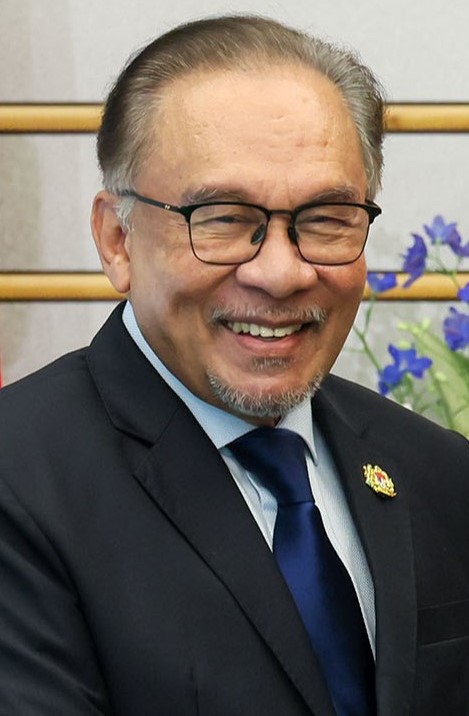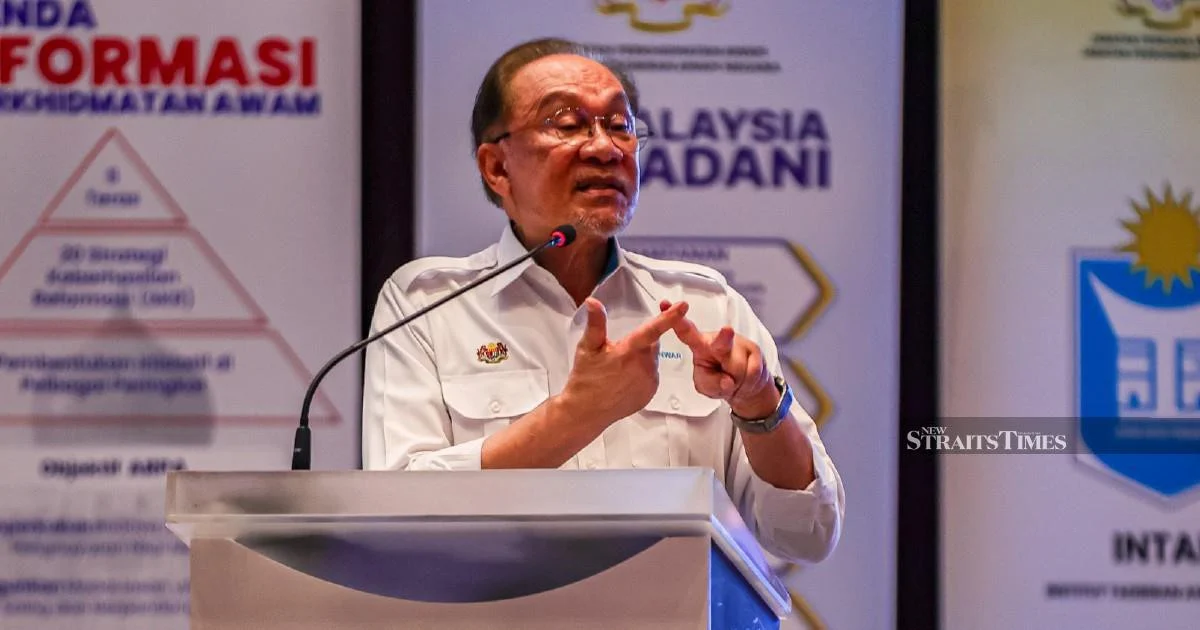
Prime Minister Datuk Seri Anwar Ibrahim stepped in to calm tensions within the ruling coalition on Friday, publicly defending Parti Amanah Negara (Amanah) president Datuk Seri Mohamad Sabu against suggestions that his speech at the Pakatan Harapan (PH) candidate announcement in Tangkak contained barbs directed at partner parties. Speaking from Alor Gajah, Anwar sought to reassure all coalition members that Mat Sabu's remarks had been misinterpreted and carried no malicious intent toward fellow PH components.
The clarification comes at a delicate moment for the ruling coalition, which has faced periodic strain from disagreements between its constituent parties over policies, ministerial positions, and campaign strategy. Amanah, as a smaller partner within PH alongside the dominant Democratic Action Party (DAP) and Parti Keadilan Rakyat (PKR), has occasionally expressed concerns about its influence within the broader alliance. The intervention by Anwar, who chairs PKR, reflects the premium the coalition places on maintaining unity ahead of potential electoral contests and during the complexities of coalition governance.
The Tangkak candidate announcement event itself highlights the ongoing coordination required within PH as the coalition prepares for electoral battles. The nomination of candidates involves careful negotiation between parties to ensure representation respects each component's strength while maintaining the alliance's overall viability. These negotiations frequently generate friction as smaller parties advocate for more seats and larger parties defend their numerical advantage. Anwar's public reassurance that internal rhetoric remains respectful suggests awareness that even minor disputes could feed into broader narratives about coalition instability.
Mat Sabu's leadership of Amanah, which was formed in 2015 as a breakaway from the Malaysian Islamic Party (PAS), positions him as a significant voice within moderate Islamist politics in Malaysia. His party has sought to carve out a distinctive identity within PH, particularly on religious and social issues where it attempts to differentiate itself from both the DAP's secular-leaning approach and PKR's broader tent strategy. The fact that his comments at a formal candidate announcement generated sufficient controversy to warrant the Prime Minister's intervention suggests the sensitivities around language and tone within coalition settings remain acute.
The broader context of Malaysian coalition politics reveals why Anwar felt compelled to publicly intervene. The previous ruling coalition, which included PAS before the party's 2018 shift toward opposition, eventually fractured partly due to accumulated tensions and perceived slights between components. The current PH coalition, formed in 2018 and expanded in 2020 with the inclusion of additional partners, operates with the knowledge that coalition cohesion cannot be taken for granted. Each party maintains its own electoral base, policy priorities, and leadership ambitions, creating inherent tensions that require constant management from the top.
Amanah's particular position within PH deserves attention when considering why this incident merited a prime ministerial statement. The party represents an important bridge to Muslim voters who might otherwise gravitate toward opposition Islamic parties, yet it commands fewer parliamentary seats than its coalition partners. This structural asymmetry means that while Amanah's participation lends legitimacy and breadth to PH's Islamic credentials, the party's actual influence on coalition decisions remains constrained. Such an imbalance can breed frustration that occasionally surfaces in public statements, whether intentionally critical or simply perceived as such by coalition partners sensitive to any hint of dissatisfaction.
Anwar's specific language choice—emphasizing that Mat Sabu made no mockery of any party—addresses a particular concern likely shared by coalition members: that internal disagreements should never take the form of ridicule or contempt. Mockery implies bad faith and disrespect, whereas disagreement can be framed as principled difference. By reframing the incident as a misunderstanding rather than deliberate provocation, Anwar provided both Mat Sabu and any potentially offended parties with a graceful exit from the controversy. This approach aligns with the standard operating procedure for managing coalition tensions at the leadership level, where public disputes are quickly contained and recharacterized as misinterpretation.
For Malaysian readers observing the ruling coalition's dynamics, this incident illuminates the perpetual balancing act required to maintain political alliances in a multi-party democracy. PH represents an ambitious experiment in bringing together parties with different ideological foundations, religious orientations, and organizational cultures. The coalition's ability to manage routine frictions without allowing them to escalate into public ruptures remains central to its sustainability. Anwar's intervention demonstrates that coalition leaders understand the danger posed by unresolved perceptions of disrespect or sidelining among partners.
The implications extend beyond immediate coalition management to broader questions about Malaysia's political trajectory. Should PH successfully maintain cohesion through the current term, it strengthens the case for alternative coalition models that deviate from the traditional Malay-Muslim dominance that characterized previous administrations. Conversely, further deterioration of coalition relations could accelerate the opposition's narrative that PH represents an unstable, short-lived aberration in Malaysian politics. Mat Sabu and his Amanah colleagues are aware that their party's future relevance depends partly on its perceived value to coalition partners, making premature conflict particularly counterproductive for a smaller player in the alignment.
Looking forward, Anwar's proactive damage control suggests the coalition intends to manage such incidents swiftly and prevent them from metastasizing into larger disputes. The question for ongoing coalition politics remains whether such firefighting at the top level adequately addresses underlying tensions, or whether without structural reforms to coalition governance and dispute resolution, similar frictions will continue surfacing with regularity. For now, the Prime Minister's intervention has publicly closed this particular chapter while signaling that coalition unity remains the paramount consideration for the leadership.