Prime Minister Datuk Seri Anwar Ibrahim has launched a scathing critique of the opposition, accusing it of exploiting the Tabung Haji scandal as a vehicle for political theatre rather than addressing the substantive governance failures that have damaged the institution. Speaking through a Facebook post on August 11, the Prime Minister contended that opposition parties have deliberately shifted focus away from those responsible for institutional betrayal, instead targeting him personally in what he characterised as transparent political manoeuvring designed to distract from accountability.
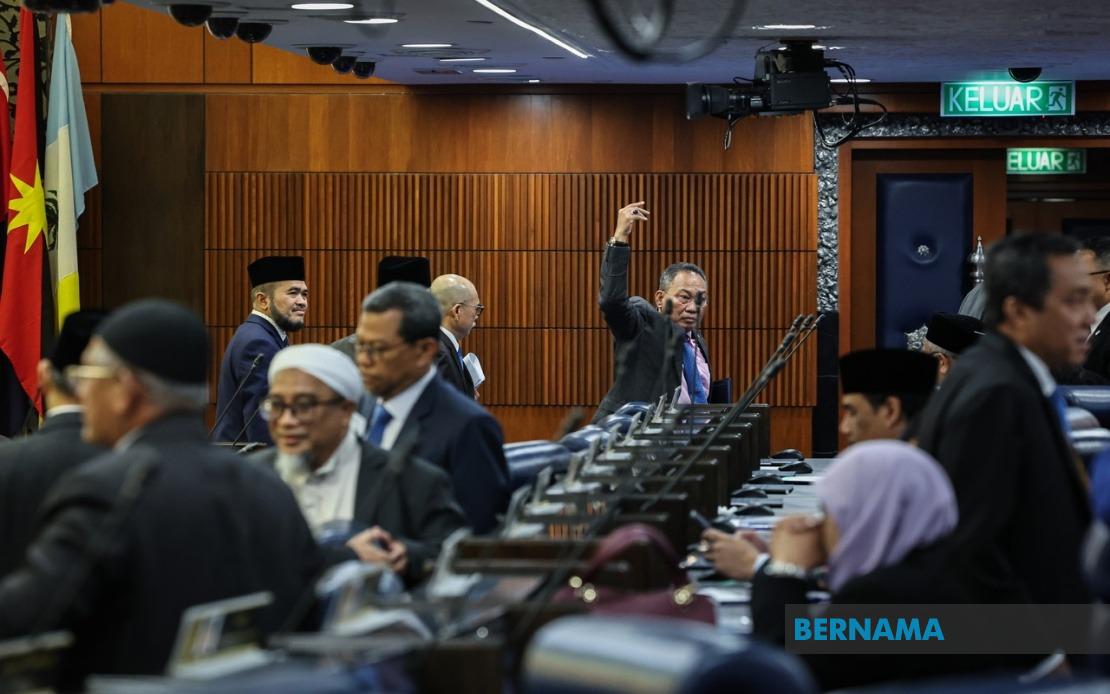
The Prime Minister's rebuke came in the aftermath of a tense parliamentary session in which several opposition Members of Parliament staged a walkout from the Dewan Rakyat during a special sitting convened to discuss findings from the Royal Commission of Inquiry into Tabung Haji's operations. The legislators' departure represented a protest against Speaker Tan Sri Johari Abdul's decision to proceed with ministerial briefings despite the Prime Minister's absence, as well as the rejection of a motion to adjourn proceedings proposed by the opposition's chief whip. This parliamentary theatrics underscored the deepening partisan divisions surrounding what should be a unified national response to institutional mismanagement affecting millions of ordinary Malaysians.
Anwar's central argument pivots on a moral framing of the dispute. He posed a pointed rhetorical question to the opposition: whether they genuinely wish to debate his role or whether they remain committed to defending Tabung Haji and its depositors. By positioning the issue as a choice between personal political attacks and institutional integrity, the Prime Minister sought to reclaim the moral high ground, characterising opposition criticism as symptomatic of a willingness to subordinate national interests to partisan advantage. His invocation of the concept of betrayal carries particular weight given the personal and religious significance Tabung Haji holds for Malaysia's Muslim majority, for whom the institution represents a crucial savings vehicle toward fulfilling the Hajj pilgrimage.
The Prime Minister's absence from the parliamentary session itself became a flashpoint, stemming from his recovery following an elective laparoscopic procedure to address a para-umbilical hernia. While Anwar offered a formal apology for his non-attendance, citing ongoing physiotherapy, the opposition appears to have seized upon the opportunity to cast doubt on government responsiveness to what they portray as a crisis requiring top-level executive engagement. This dynamic illustrates how institutional crises in Malaysian politics frequently become vehicles for questioning governmental competence and commitment, regardless of the specific medical or logistical circumstances involved.
The special parliamentary sitting was specifically convened to hear ministerial briefings on the Tabung Haji Royal Commission of Inquiry report, alongside government updates on measures being implemented to stabilise the institution's financial position. The 211-page RCI report, released publicly on July 29, documented extensive weaknesses in institutional management spanning the 2014 to 2020 period, a six-year window during which governance lapses accumulated to create the current financial distress. The inquiry proposed 25 recommendations for systemic improvement, with Tabung Haji having already implemented 75 per cent of these recommendations as of late July, suggesting at least some institutional capacity to respond to identified deficiencies.
Anwar's specific criticism of Perikatan Nasional and its component PAS party carries additional political significance, given that PAS controls the opposition coalition and commands substantial electoral support among rural and lower-income Muslim constituencies who constitute the core Tabung Haji depositor base. By questioning whether PN and PAS truly prioritise the interests of the institution's less privileged savers—enumerated carefully as including fishermen, farmers, teachers, police personnel, soldiers, and retirees—the Prime Minister sought to expose a perceived contradiction between opposition rhetoric celebrating Malay-Muslim interests and their willingness to exploit institutional crisis for short-term political gain. This rhetorical strategy attempts to flip the narrative, positioning the government as the authentic defender of ordinary Muslim Malaysians' financial security.
The Tabung Haji situation itself warrants contextualisation within Malaysia's broader institutional landscape. As a specialist financial institution serving exclusively Muslim depositors, Tabung Haji carries profound cultural and religious significance beyond conventional banking functions. The institution's financial difficulties therefore resonate across Malaysia's Muslim-majority population in ways that parallel crises at other mainstream financial institutions might not, making it inherently susceptible to political mobilisation. The RCI's establishment in 2021, with member appointments finalised in January 2022 and the report presented to the Yang di-Pertuan Agong in August 2022, suggests government acknowledgement of serious governance concerns requiring independent investigation.
The opposition's parliamentary walkout strategy, while symbolically significant, potentially risks appearing dismissive of the institutional investigation process itself. By refusing to participate in the ministerial briefing on RCI findings, opposition members arguably sacrificed an opportunity to scrutinise government responses to identified weaknesses through the formal parliamentary question mechanism. This tactical choice may reflect broader frustration with what opposition parties perceive as government control over the parliamentary agenda, but it simultaneously provides government critics with ammunition to question whether opposition concern genuinely centres on Tabung Haji's institutional health or merely on creating political embarrassment for Anwar personally.
For Malaysian depositors and the broader Southeast Asian context, the Tabung Haji situation underscores vulnerabilities within specialist financial institutions serving specific demographic constituencies. Malaysia's experience mirrors broader regional patterns wherein institutions designed to serve particular community interests—whether religious, ethnic, or occupational—sometimes accumulate governance deficits that ultimately compromise depositor interests. The RCI's findings and recommendations process therefore offers potential lessons for regulators across Southeast Asia managing similar institutions serving defined populations with distinct financial priorities and cultural expectations.
Moving forward, the critical question concerns whether Malaysian political actors can transition from competing over the Tabung Haji narrative toward collaborative implementation of the RCI's identified reforms. The fact that three-quarters of recommendations had already been implemented by late July suggests institutional capacity for remediation, yet sustained political controversy risks derailing completion of remaining improvements. Anwar's public challenge to the opposition effectively stakes government credibility on successful Tabung Haji recovery, while simultaneously daring opposition parties to demonstrate whether their stated commitment to protecting Muslim-majority interests extends beyond convenient political opportunism. The resolution of this institutional crisis will significantly shape how Malaysian political actors manage future governance failures affecting constituencies with defined religious or communal identity.

