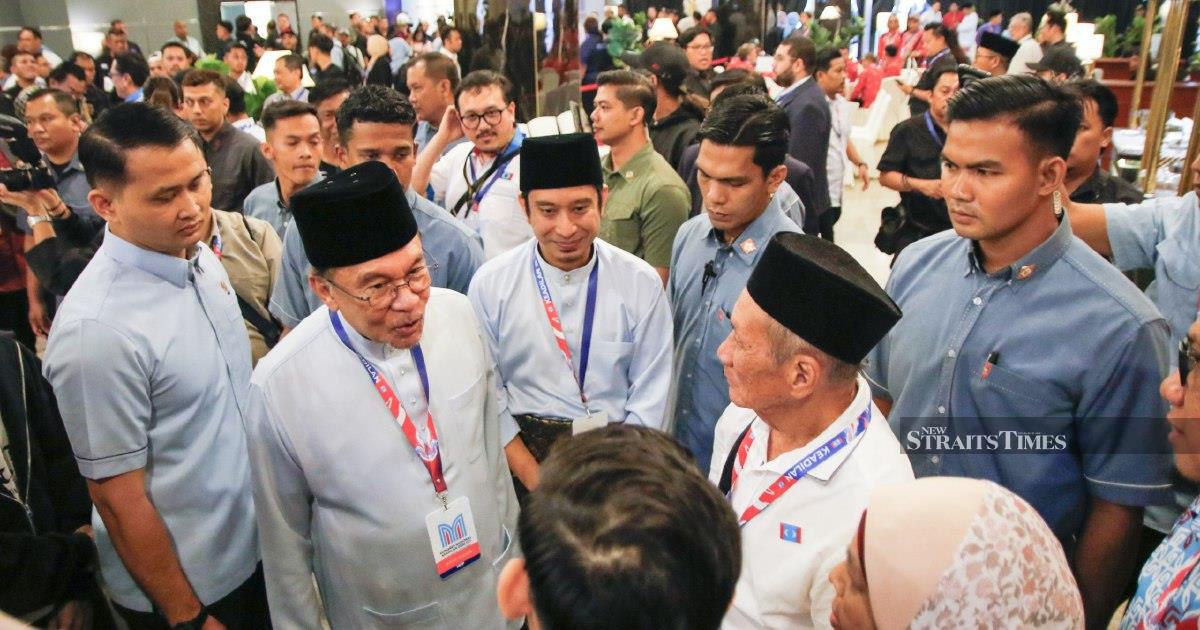
Prime Minister Datuk Seri Anwar Ibrahim moved to quash persistent speculation about friction within the country's top political leadership, publicly affirming that his relationship with Deputy Prime Minister Datuk Seri Dr Ahmad Zahid Hamidi continues to function effectively. Speaking at Ayer Keroh, Anwar directly addressed reports suggesting strain between the two key figures in Malaysia's executive branch, characterising such claims as unfounded and emphasising that substantive ties between them remain solid at the national level.
The emphatic denial comes as Malaysia navigates a complex political landscape where perceptions of unity among senior leadership directly influence investor confidence, parliamentary stability, and the government's ability to drive key reforms. Any perceived crack in the relationship between the Prime Minister and his deputy risks triggering instability within the ruling coalition and potentially complicating legislative agendas that depend on parliamentary consensus. Anwar's reassurance therefore serves a dual purpose: it addresses public concern while signalling to international observers and the financial markets that Malaysia's governance architecture remains intact.
The timing of these comments reflects the heightened sensitivity surrounding executive cohesion in recent months. Malaysian political observers have long noted the delicate balancing act required when managing diverse coalition partners and competing factional interests within government. By proactively addressing speculation rather than remaining silent, Anwar appears keen to prevent rumours from crystallising into substantive political narrative that could undermine cabinet operations or provide ammunition to opposition parties seeking to portray the administration as fractious.
Zahid, as Deputy Prime Minister, occupies a constitutionally significant role that includes deputy leadership of the cabinet and formal succession protocols. The perception of his relationship with the Prime Minister carries weight beyond mere personal dynamics. Institutional observers view the PM-DPM relationship as a barometer of executive stability, particularly given Malaysia's parliamentary democracy where coalition management demands constant negotiation and mutual accommodation among senior figures representing different party interests.
The Deputy Prime Minister's background as former Home Minister and current leadership within the United Malays National Organisation—one of the coalition's largest components—means his standing within government extends beyond protocol. Any genuine deterioration in working ties could theoretically affect decision-making processes, resource allocation, or the coordination of major policy initiatives across different ministries and departments. This structural reality explains why leadership publicly emphasises harmonious relationships rather than downplaying their importance.
Anwar's statement effectively reframes the narrative around coalition governance, suggesting that normal operational tensions or disagreements on specific issues are being mischaracterised as personal or political rift. This distinction matters significantly in Malaysian political culture, where demonstrating unity among senior leaders serves as reassurance to both domestic constituencies and international stakeholders that the government remains focused on delivering on its policy commitments and economic agenda.
The broader context includes Malaysia's ongoing economic recovery efforts, complex international relations management, and domestically, the need to maintain parliamentary arithmetic that keeps the coalition government in power. Any perception of serious division at the highest levels of leadership could provide opposition forces with openings to exploit, whether through parliamentary procedural tactics or by attempting to peel away coalition partners concerned about leadership stability.
Anwar's direct engagement with the question of his relationship with Zahid demonstrates the importance placed on executive messaging in Malaysia's current political environment. Rather than rely on intermediaries or allow speculation to fester, the Prime Minister chose to address the matter himself, a strategy that typically carries more weight in Malaysian political communication than indirect statements or official denials through media advisers.
The comment also reflects Anwar's broader positioning as a leader committed to transparent governance and direct engagement with public concerns. By acknowledging that such questions exist and then firmly dismissing them, he simultaneously validates public interest in leadership stability while providing reassurance. This approach contrasts with previous Malaysian administrations that sometimes responded to such questions with obfuscation or silence, which could inadvertently fuel further speculation.
For Malaysian stakeholders—whether business leaders concerned about policy continuity, civil society organisations monitoring governance quality, or ordinary citizens interested in government performance—Anwar's statement provides explicit confirmation that the executive branch is functioning with maintained institutional relationships. This matters particularly for Malaysian investors and international partners evaluating the country's political risk profile and capacity to execute medium-term economic strategies.
The reassurance carries particular significance given Malaysia's position as a significant regional economy and trading hub. Any suggestion of fundamental disarray in top leadership could ripple through regional business networks and affect investor sentiment toward Malaysian assets and opportunities. International relations also depend partly on perceptions of stable, unified governance; diplomatic partners require confidence that commitments made by one leader will be honoured by others within the same administration.
Moving forward, such public reaffirmations may become routine when media speculation arises, functioning as standard governance communication rather than crisis management. This normalisation of transparent leadership messaging, when done strategically, can help insulate executive relationships from constant rumour cycles and allow government focus to remain on policy delivery and institutional performance.

