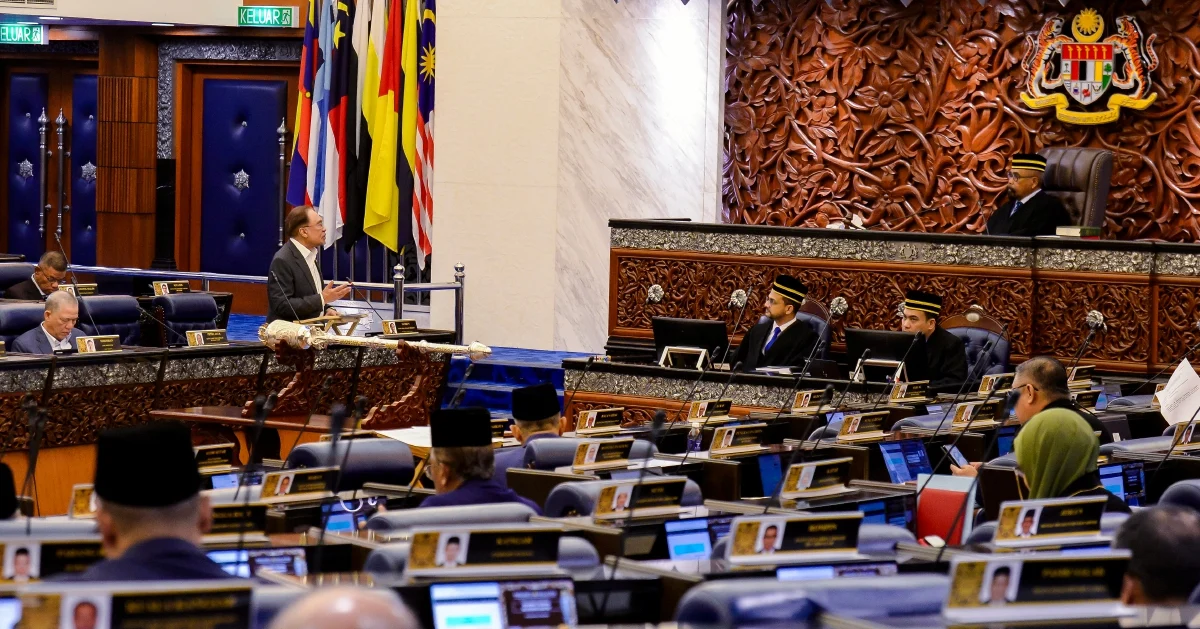
Prime Minister Datuk Seri Anwar Ibrahim has drawn a clear boundary on federal spending, declaring that Kuala Lumpur cannot be expected to routinely absorb additional financial costs spawned by policy choices made at the state level. This assertion marks a significant moment in the ongoing negotiations over fiscal responsibility between Malaysia's federal and state governments, a perennial source of tension across the federation.
The prime minister's position reflects growing concern within the federal government about the sustainability of the current cost-sharing arrangement between Putrajaya and the thirteen state administrations. For decades, Malaysian states have often looked to the centre to resolve financial pressures created by their own policy decisions, whether in healthcare, education, infrastructure, or welfare. This pattern has contributed to an accumulation of unfunded liabilities and repeated supplementary allocations to states that exceed their budgeted revenues.
Anwar's statement carries particular weight given Malaysia's current fiscal constraints. The federal government faces its own mounting obligations, from debt servicing to managing the pandemic's ongoing economic fallout and funding critical infrastructure projects. The fiscal deficit has remained stubbornly high, limiting the federal government's capacity to provide open-ended subsidies for state-level spending decisions. By clarifying that states must live within the means provided by their federal grants and internal revenue bases, Anwar is attempting to establish a more disciplined and predictable fiscal framework.
This position also reflects broader concerns about governance standards across Malaysia's state capitals. Some administrations have accumulated significant debts through poorly planned projects or expenditure commitments that far outstrip their revenue-generating capacity. Without clear rules about federal assistance, states have had limited incentive to adopt rigorous financial planning or cost controls. Anwar's approach suggests a preference for imposing budgetary discipline through a stricter demarcation of responsibility rather than through ongoing negotiations over emergency relief.
The implications for Malaysian federalism are substantial. States will need to prioritise their spending more carefully, potentially deferring some initiatives or seeking efficiencies in service delivery. This may place pressure on state governments controlled by opposition parties, which already receive relatively less federal support than states aligned with the federal administration. However, the approach could also incentivise all states to improve their revenue generation and spending management, ultimately leading to more transparent and accountable governance.
For ordinary Malaysians, this shift may have mixed effects. In states with poor financial management, residents might see reduced service delivery or delayed projects if state governments cannot access federal bail-outs. Conversely, states with effective administrations could benefit from a system that rewards fiscal responsibility and efficiency. The transition period could be difficult, particularly for vulnerable populations who depend on state-funded healthcare, welfare, and education services in financially strapped administrations.
Southeast Asian regional observers will note that Malaysia is not alone in grappling with these tensions. Federal systems across the region struggle to balance local autonomy with fiscal discipline. The approach Anwar is signalling—essentially moving from an implicit guarantee to a firmer commitment to state self-reliance—represents a substantive shift in Malaysian federalism that could reshape how states approach governance and financial planning.
Industry and business groups are also watching closely. State-level economic policies that impose costs without corresponding revenue generation could become untenable. This might encourage states to adopt more business-friendly policies that expand their tax bases, though it could also push some administrations toward austerity measures that harm growth. The interplay between fiscal discipline and economic dynamism will test whether Malaysia's federal framework can accommodate both rigour and prosperity.
The federal government will need to demonstrate consistency in applying this principle. If Putrajaya selectively provides relief to certain states based on political affiliation or lobbying power, the credibility of the new framework will rapidly erode. Anwar's announcement must therefore be backed by transparent criteria for any exceptional federal support and a clear process for states to plan within their expected resource envelope.
Looking ahead, this stance will likely drive more detailed negotiations over federal-state financing arrangements. States will demand greater clarity on guaranteed revenue streams and the parameters for federal assistance, while the federal government will push back against open-ended commitments. These discussions will define the fiscal relationship between Putrajaya and state capitals for years to come, shaping everything from infrastructure development to social service provision across the Malaysian federation.

