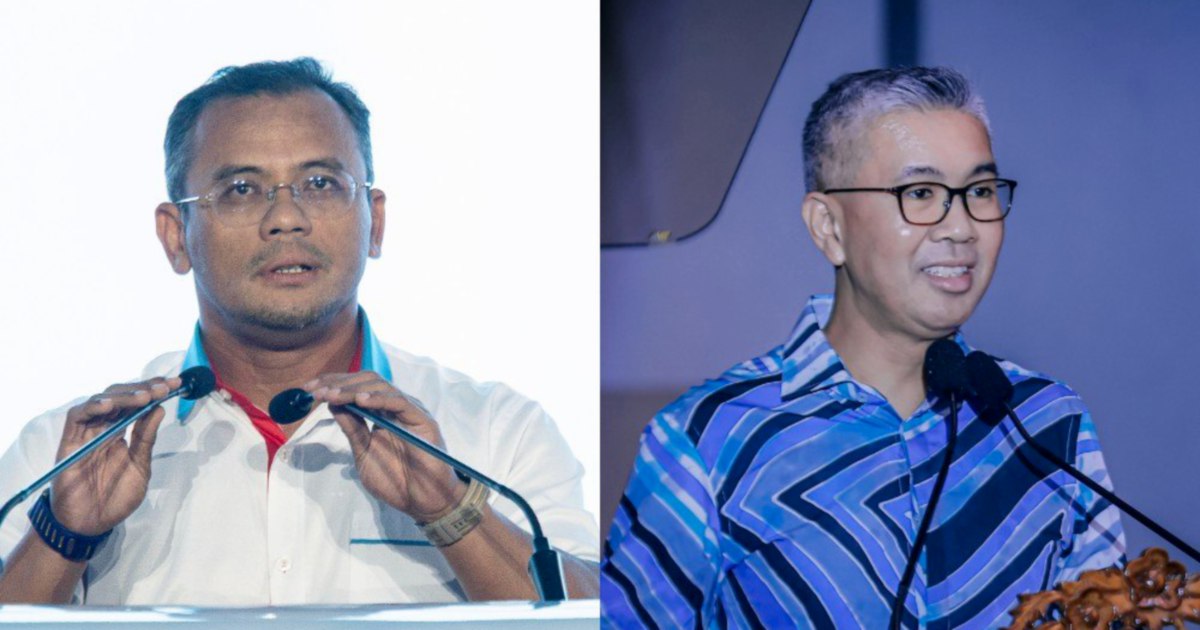
PKR president Datuk Seri Anwar Ibrahim has formally granted full authority to vice-president Datuk Seri Saifuddin Nasution Ismail to take on the comprehensive responsibilities of the party's deputy president role, marking a pivotal moment in the ruling coalition's organisational hierarchy.
The announcement, made during proceedings in Melaka, represents a strategic consolidation of power within PKR's upper echelons at a time when the party faces mounting pressures from both internal competition and external political challenges. Saifuddin's elevation underscores Anwar's confidence in the senior statesman's capacity to manage party affairs and bridge divisions that have periodically surfaced within the party's broader membership.
Simultaneously, Anwar unveiled additional appointments designed to strengthen PKR's institutional machinery ahead of anticipated electoral contests. The party named Amirudin as its election director, a position carrying substantial weight in coordinating campaign strategies, resource allocation, and candidate selection processes. This appointment reflects the party's recognition that electoral competitiveness hinges increasingly on organised administrative structures rather than ad-hoc grassroots mobilisation alone.
Tengku Zafrul has been designated as the Prime Minister's Office coordinator, a role that bridges party politics and governmental operations. This positioning carries particular significance given Malaysia's coalition-based governance model, where party officials frequently interface with federal bureaucratic machinery. The appointment suggests Anwar's intent to maintain tighter alignment between PKR's strategic objectives and the administration's policy implementation.
For Malaysian political observers, these moves signal Anwar's methodical approach to party management following his ascension to the prime minister's office. Rather than dramatic purges or wholesale restructuring, the appointments reflect incremental professionalisation and role clarification—a pragmatic acknowledgment that parties competing in modern electoral environments require sophisticated administrative capabilities. PKR's internal dynamics have historically reflected competing factional interests, and the elevation of Saifuddin potentially positions him as an arbiter of such tensions.
Saifuddin's expanded mandate carries particular relevance for the party's long-term stability. As a figure with extensive parliamentary experience and a reputation for measured deliberation, his assumption of deputy president duties may provide the institutional continuity that allows Anwar to focus primarily on prime ministerial responsibilities. The separation of executive party leadership from parliamentary duties has become increasingly common in Commonwealth-style democracies, and Anwar appears to be implementing this model within PKR's framework.
The appointment of Amirudin as election director addresses a critical organisational need within the party. Electoral cycles in Malaysia occur with unpredictable frequency, particularly given the coalition's slender parliamentary majority and periodic political crises. A dedicated election director with clear accountability ensures that campaign preparations proceed systematically rather than reactively. This institutional formalisation reflects lessons learned from previous electoral contests where coordinated messaging and ground organisation proved decisive.
Tengku Zafrul's role as PMO coordinator deserves particular attention for Southeast Asian and Malaysian stakeholders. The position essentially formalises party representation within the highest levels of government administration. Given that the current administration comprises multiple parties—PKR, DAP, Amanah, and allied MPs—such coordination mechanisms prevent policy conflicts and ensure that coalition partners remain aligned on key governmental initiatives. For PKR specifically, this role provides institutional leverage in inter-coalition negotiations regarding resource distribution and policy priorities.
The timing of these announcements carries strategic implications extending beyond mere administrative reorganisation. PKR has faced persistent questions about succession planning and whether party structures adequately reflect governance realities now that Anwar occupies the prime minister's office. By formalising Saifuddin's deputy position, Anwar provides institutional clarity regarding the party's day-to-day leadership. This arrangement permits Anwar to exercise strategic direction while delegating operational party management to trusted subordinates.
For coalition partners and opposition observers, these appointments signal PKR's determination to maintain organisational cohesion despite the pressures inherent in governing. The party's historical susceptibility to internal divisions—particularly those reflecting generational or ideological differences—necessitates strong institutional mechanisms for dispute resolution and policy coordination. Saifuddin's elevation as deputy president, combined with the administrative appointments, suggests Anwar has prioritised precisely such mechanisms.
The broader context includes Malaysia's evolving political economy, where parties increasingly require professional campaign infrastructure, data analytics capabilities, and coordinated messaging strategies to remain competitive. By appointing dedicated election and PMO coordinators, PKR explicitly acknowledges that successful governance and electoral performance depend on institutional sophistication rather than personalised charismatic leadership alone.
These appointments also reflect the reality that Malaysian prime ministers, particularly those leading coalition governments, must balance party political interests against governmental responsibilities. Creating dedicated party officials for specific functions—elections, government liaison, and party administration—permits this balance while ensuring neither dimension suffers neglect. For Malaysian observers monitoring political developments, these structural decisions provide insight into how Anwar envisions PKR's institutional future within Malaysia's political ecosystem.

