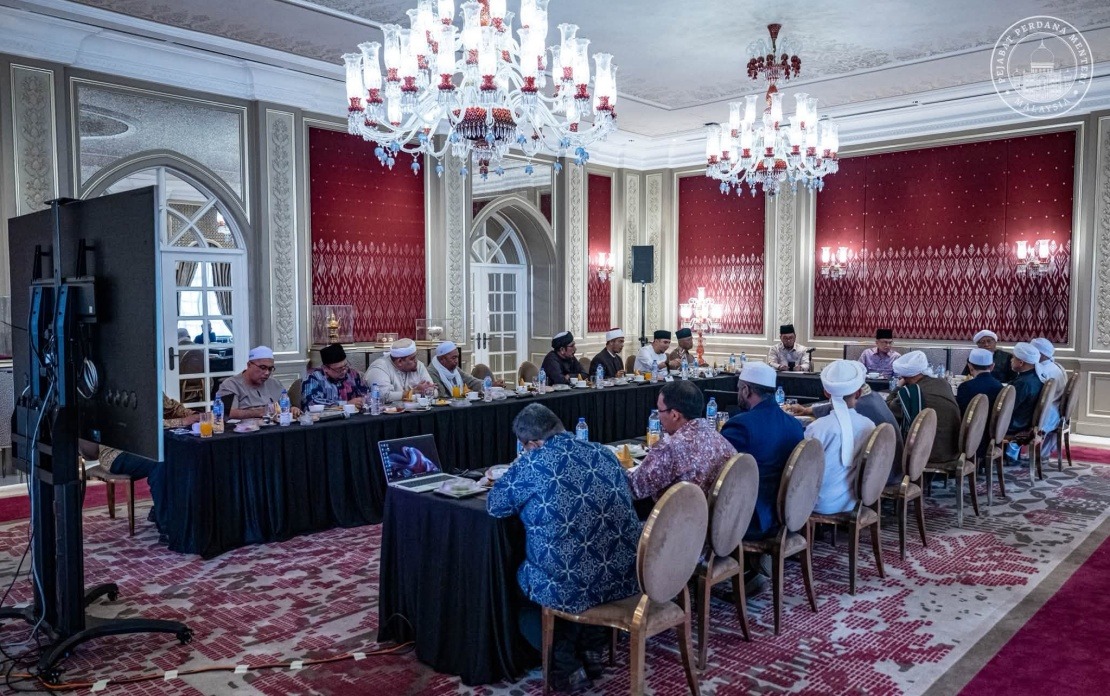
Prime Minister Datuk Seri Anwar Ibrahim has positioned engagement with Islamic scholars as a cornerstone of his administration's approach to governance, framing consultation with religious experts as integral to crafting policies that resonate with Malaysia's Muslim population. Speaking through a social media address, Anwar characterised these interactions not as ceremonial meetings but as deliberate occasions for introspection, enabling policymakers to anchor their initiatives in scholarly wisdom and contemporary understanding.
The prime minister's remarks came during a series of muzakarah discussions held in Kuala Lumpur, timed to honour the spirit of Maulidur Rasul celebrations. Among his interlocutors was Sheikh Dr Muhyiddin Awwamah, representing Darul Hadis al-Awwamiyyah, a respected centre of Islamic learning. This choice of partner reflects Anwar's strategy of reaching out to established intellectual circles within Malaysia's Islamic ecosystem, signalling a commitment to grounding policy development in scholarly discourse.
Anwar's emphasis on structured dialogue with religious leaders addresses a broader governance challenge facing Muslim-majority nations: balancing modernisation with traditional Islamic values. By publicly underscoring the importance of seeking counsel from hadith scholars and Islamic intellectuals, the prime minister is attempting to forge a consensus-building approach that acknowledges both contemporary policy demands and religious sensibilities. This strategy suggests recognition that sustainable governance in Malaysia requires legitimacy not merely from secular institutions but from influential voices within the Islamic scholarly establishment.
The prime minister's reference to Sheikh Dr Muhyiddin's lineage—he is the son of the late Al-'Allamah Sheikh Muhammad bin Awwamah, a globally renowned hadith expert—underscores Anwar's deliberate cultivation of connections with established Islamic intellectual traditions. By publicly acknowledging the elder scholar's contributions to Islamic learning, Anwar positions his administration as respectful of deeply rooted scholarly heritage. This gesture serves multiple purposes: it validates the intellectual credentials of his interlocutors, signals reverence for Islamic intellectual history, and demonstrates that engagement with religious scholars extends beyond immediate policy consultation to encompass broader cultural and intellectual appreciation.
Anwar's framing of these consultations as opportunities to understand "the development and future of Islam in Malaysia" suggests a forward-looking approach to religious governance. Rather than treating Islamic scholarship as merely preserving traditions, the prime minister appears to be seeking perspectives on how Islamic thought can address contemporary Malaysian challenges. This interpretation aligns with his broader political positioning as someone who advocates for progressive Islamic governance—an approach that respects traditional learning while remaining responsive to modern realities.
The emphasis on dialogue also carries implications for how Malaysia's federal government engages with its diverse Islamic landscape. By conducting these muzakarah sessions, Anwar is creating formal channels through which religious scholars can influence policy deliberations. For Malaysia's significant Muslim population, such visible consultation mechanisms may enhance the perceived legitimacy of government decisions affecting Islamic affairs, education, and community welfare. However, the approach also raises questions about which voices are included in these conversations and how diverse Islamic viewpoints are represented within such consultative frameworks.
From a regional perspective, Anwar's approach reflects broader patterns in Southeast Asian governance where Islam plays a prominent role in national identity and politics. Countries like Indonesia and Brunei have similarly institutionalised consultation with Islamic scholars in policy formulation. Malaysia's approach under Anwar appears to emphasise building intellectual bridges between secular governmental structures and religious establishments, potentially offering a model for managing religious-state relations in the region. This consultative model contrasts with approaches that either marginalise religious voices or allow them to operate entirely independently of government structures.
The prime minister's characterisation of religious counsel as providing refinement "according to the needs of the Muslim community and the demands of the times" acknowledges an inherent tension in Islamic governance: adapting eternal religious principles to shifting social circumstances. By inviting scholars to participate in this reconciliation process, Anwar distributes responsibility for navigating this tension beyond the executive branch alone. This collaborative approach potentially reduces friction between government initiatives and religious constituencies by ensuring that policy adjustments incorporate scholarly perspectives from the outset rather than addressing resistance after implementation.
Anwar's public celebration of intellectual legacy—specifically his appreciation for works authored by Sheikh Muhyiddin's father—also reflects his understanding of how scholarly communities function. By recognising intellectual contributions across generations, he acknowledges that Islamic knowledge operates as a cumulative, intergenerational project. This recognition may strengthen relationships with prominent Islamic families and institutions that have historically wielded influence over Muslim public opinion and sentiment in Malaysia. Building these connections serves both immediate governance needs and longer-term political objectives of establishing the administration's credibility within influential Islamic circles.
The implications for Malaysian policymakers are significant. Anwar's emphasis on incorporating religious scholarship into governance suggests that contemporary Malaysian administration operates within constraints—both practical and perceived—that require alignment with Islamic intellectual frameworks. For the broader Malaysian public, these dialogues signal an attempt to prevent the alienation of religious communities from government decision-making, a concern that has occasionally surfaced in Malaysian politics. Whether this consultative approach successfully bridges potential divides between secular governance objectives and religious community expectations will likely become apparent through subsequent policy announcements and their reception.

