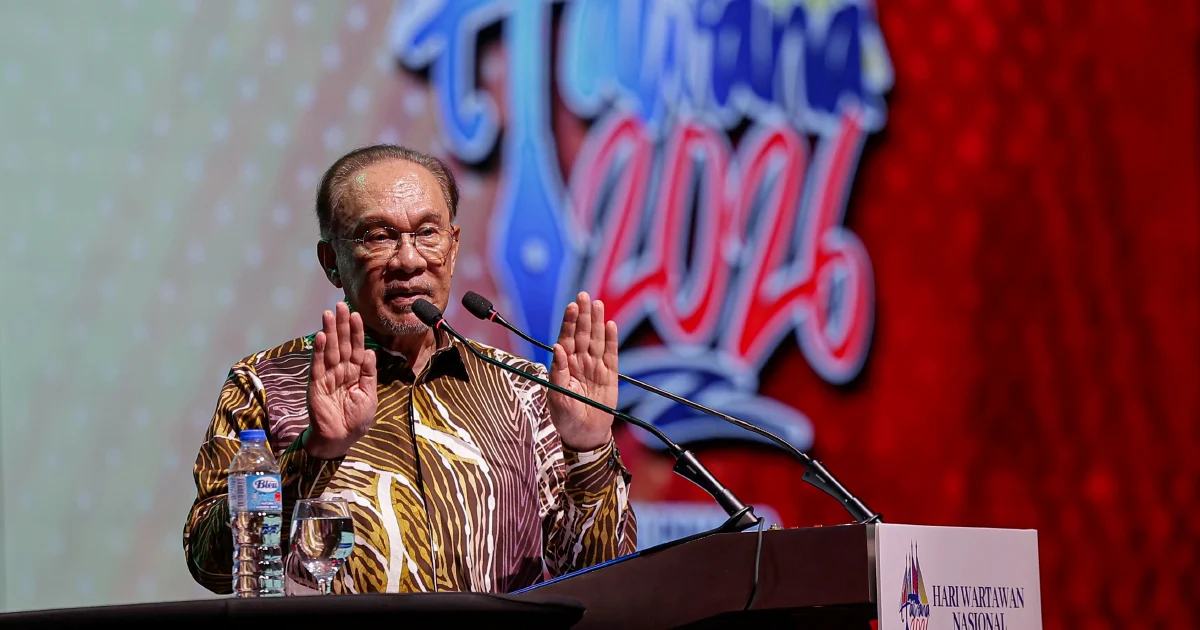
Prime Minister Datuk Seri Anwar Ibrahim has thrown his backing behind the appointment of Tan Sri Nallini Pathmanathan as the new chairman of the Malaysian Media Council, asserting that her appointment will substantially boost the credibility and public perception of the regulatory body. The announcement marks a significant development in Malaysia's media governance landscape, with the Prime Minister highlighting the jurist's credentials and track record during remarks made in Butterworth.
Tan Sri Nallini, who previously served with distinction on the Federal Court bench, brings considerable judicial experience to the role at a time when the MMC faces mounting scrutiny over its regulatory effectiveness and independence. Her transition from the judiciary to media oversight represents a cross-institutional approach to governance, reflecting growing expectations that leadership appointments should be informed by professional excellence and established institutional credibility. The appointment signifies deliberate effort to position the council as a body worthy of confidence among both media practitioners and the general public.
The MMC has faced recurring criticism from various quarters regarding its perceived effectiveness in balancing the competing interests of free expression, public interest protection, and responsible journalism. By selecting a retired judge with demonstrated legal acumen and judicial independence credentials, policymakers appear to be addressing longstanding concerns about the council's ability to act with impartiality. A leader with Nallini's background is expected to navigate the complex and often contentious relationship between regulatory oversight and editorial freedom—a balance that has proven challenging for her predecessors.
Anwar's public endorsement carries particular weight given his government's stated commitment to strengthening democratic institutions and institutional credibility. The Prime Minister's remarks in Butterworth underscore the administration's recognition that public trust in media regulation cannot be assumed but must be actively cultivated through transparent processes and credible leadership. This represents a conscious pivot toward placing substance and institutional legitimacy at the forefront of governance decisions, rather than relying solely on structural reform.
The appointment also arrives at a pivotal moment for Malaysian media as the sector grapples with the rise of digital platforms, misinformation concerns, and evolving audience expectations. Traditional media regulators worldwide have struggled to adapt their frameworks to address rapidly changing communication landscapes, and the MMC is no exception. Nallini's judicial background suggests potential for more rigorous, precedent-based approaches to regulatory decision-making, which could provide greater consistency and predictability for media organisations navigating compliance requirements.
For Malaysia's journalism community, the appointment offers both opportunity and challenge. Media outlets have long sought regulatory frameworks that are predictable, transparent, and rooted in established legal principles rather than discretionary interpretation. A chairman with Federal Court experience might bring enhanced rigor to council proceedings and help establish more systematic jurisprudence around media regulation. However, journalists and media organisations will remain watchful to ensure that enhanced judicial rigour does not inadvertently become a mechanism for constraining legitimate reporting or editorial independence.
The broader context of this appointment reflects international trends toward professionalising media regulation. Across the region and globally, governments have increasingly appointed individuals with strong backgrounds in law, journalism ethics, or media studies to lead regulatory bodies. Singapore, Australia, and New Zealand have similarly prioritised experienced, independent-minded leaders for comparable roles. Malaysia's selection of Nallini aligns with these international practices while offering the distinctive advantage of judicial credentials that specifically speak to issues of fairness, due process, and impartiality—values central to responsible regulation.
Public trust in media regulators carries implications far beyond the organisations being regulated. Citizens rely on these bodies to protect both press freedom and the integrity of information they consume daily. When confidence erodes in regulatory institutions, it can undermine broader faith in the entire media ecosystem and, by extension, democratic discourse itself. Anwar's emphasis on strengthening trust through this appointment reflects an understanding that effective media governance requires genuine legitimacy, not merely formal authority.
Looking ahead, Nallini's leadership will be closely observed by stakeholders including media proprietors, journalists, civil society organisations, and the public at large. Her first major decisions—setting council priorities, clarifying regulatory approaches to emerging issues, and demonstrating consistent application of standards—will either validate or challenge the confidence placed in her appointment. The coming months will prove revealing regarding whether her judicial background translates effectively into the distinctive challenges and constraints of media regulation, where legal frameworks must balance free expression against competing social values in ways that pure jurisprudence alone cannot resolve.
%22%2F%3E%3C%2Fpattern%3E%3C%2Fdefs%3E%3Crect%20width%3D%22100%25%22%20height%3D%22100%25%22%20fill%3D%22url(%23ph4o0rkg)%22%2F%3E%3Crect%20width%3D%22100%25%22%20height%3D%22100%25%22%20fill%3D%22url(%23ph4o0rkp)%22%2F%3E%3Ctext%20x%3D%2250%25%22%20y%3D%2250%25%22%20text-anchor%3D%22middle%22%20dominant-baseline%3D%22central%22%20fill%3D%22rgba(255%2C255%2C255%2C0.95)%22%20font-family%3D%22Georgia%2C%20'Times%20New%20Roman'%2C%20serif%22%20font-weight%3D%22700%22%20font-size%3D%22320%22%20letter-spacing%3D%22-0.02em%22%3E95%3C%2Ftext%3E%3C%2Fsvg%3E)