%22%2F%3E%3C%2Fpattern%3E%3C%2Fdefs%3E%3Crect%20width%3D%22100%25%22%20height%3D%22100%25%22%20fill%3D%22url(%23ph4o0rkg)%22%2F%3E%3Crect%20width%3D%22100%25%22%20height%3D%22100%25%22%20fill%3D%22url(%23ph4o0rkp)%22%2F%3E%3Ctext%20x%3D%2250%25%22%20y%3D%2250%25%22%20text-anchor%3D%22middle%22%20dominant-baseline%3D%22central%22%20fill%3D%22rgba(255%2C255%2C255%2C0.95)%22%20font-family%3D%22Georgia%2C%20'Times%20New%20Roman'%2C%20serif%22%20font-weight%3D%22700%22%20font-size%3D%22320%22%20letter-spacing%3D%22-0.02em%22%3E95%3C%2Ftext%3E%3C%2Fsvg%3E)
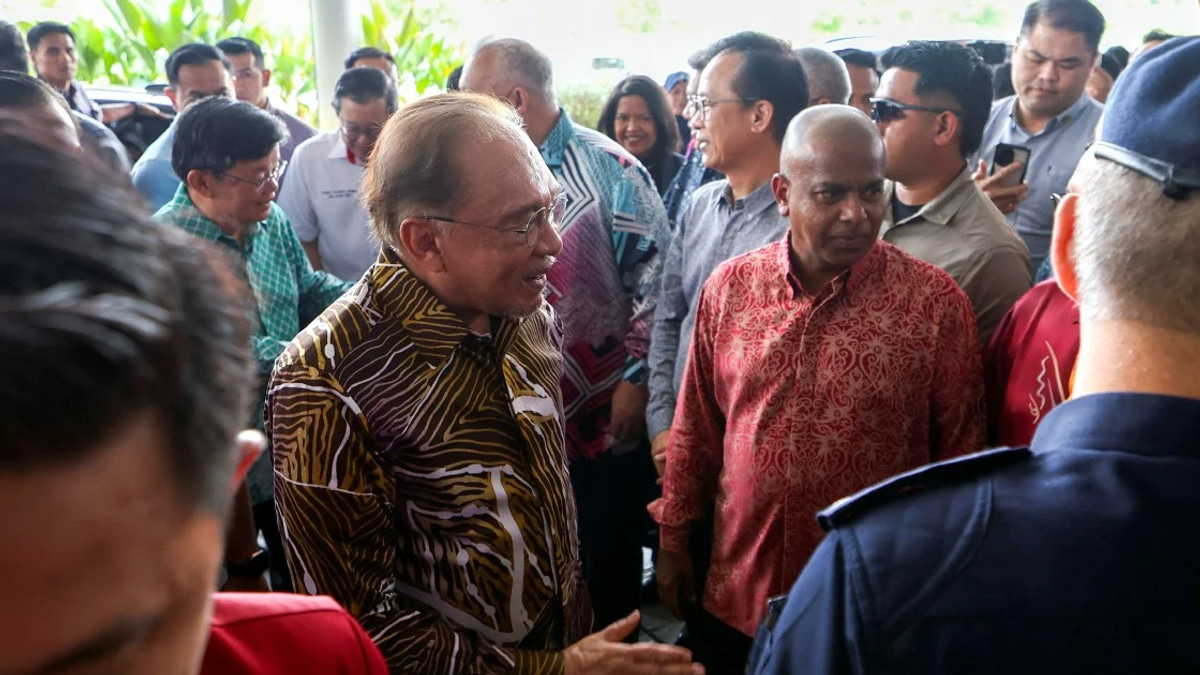
Ninety-five community leaders across the northern states of Kedah and Perlis have been formally appointed as MADANI Community representatives, marking an expansion of the government's grassroots engagement infrastructure. The appointment ceremony, held in Alor Setar on June 20, distributed letters to 68 appointees from Kedah alongside 27 from Perlis, establishing what officials describe as critical communication bridges between administrative structures and the people they serve.
Abdullah Izhar Mohamed Yusof, Political Secretary to the Communications Minister, framed the initiative within the broader MADANI governance philosophy championed by Prime Minister Datuk Seri Anwar Ibrahim. The appointments reflect strategic recognition that government effectiveness depends not merely on policy formulation but on ensuring messages penetrate community layers where implementation occurs and where public concerns originate. By designating community figures as official representatives, the administration seeks to create structured channels through which grassroots feedback can flow upward while government directives cascade downward with improved clarity and acceptance.
The concept underlying these appointments extends beyond conventional communication into what officials characterize as a two-way engagement model. MADANI Community leaders function as intermediaries who explain new policies, clarify eligibility criteria for assistance programmes, and crucially, help verify information against the proliferation of false narratives. This triangular role—simultaneously government representative, community advocate, and information gatekeeper—positions these leaders as essential infrastructure in an increasingly complex information environment.
Among their explicit functions is ensuring equitable distribution of targeted government assistance. Programmes including Sumbangan Tunai Rahmah (STR), Sumbangan Asas Rahmah (SARA), and Budi MADANI support depend partly on community leaders identifying eligible recipients and facilitating application processes. By embedding programme administrators within social networks rather than relying solely on bureaucratic channels, the government aims to reduce exclusion of genuinely vulnerable groups who might otherwise lack awareness or documentation access.
Darwin's insight that communication involves translation—not merely transmission—underpins Abdullah Izhar's framing. Government information must be understood, believed, and ultimately motivate behavioural change among recipients. Community leaders embedded in neighbourhood contexts possess linguistic fluency, cultural literacy, and established trust relationships that impersonal government media cannot replicate. Their interpretation of policy reshapes abstract directives into locally comprehensible guidance, significantly increasing the probability that programmes achieve their intended impact.
The digital dimension of this initiative addresses an acute contemporary challenge. Malaysia's rapid internet penetration has created unprecedented vulnerability to online scams, fabricated video content using deepfake technology, and artificial intelligence-enabled misinformation. Abdullah Izhar explicitly called upon MADANI Community leaders to function as digital literacy agents, educating neighbours on verification protocols before content sharing. The appointment reflects governmental acknowledgement that technological illiteracy increasingly threatens public welfare as cybercriminals exploit information gaps within vulnerable populations.
The deepfake problem deserves particular emphasis for Malaysian and broader Southeast Asian contexts. As artificial intelligence tools become accessible, the distinction between authentic and synthetic media collapses for unpractised viewers. Malicious actors have already weaponized such technology in regional political and commercial contexts. By empowering community figures to champion verification discipline—encouraging citizens to authenticate information sources before amplification—the government attempts to build cultural resistance to manipulation. This preventive approach may ultimately prove more effective than reactive fact-checking.
Geographically, concentrating initial appointments in Kedah and Perlis reflects strategic choice rather than randomness. These northern states represent particular demographic and information-access challenges. Rural areas within both states experience inconsistent digital infrastructure, creating pockets where official government communication struggles to penetrate while rumour and unverified claims flourish. By establishing community leader networks precisely where communication gaps are widest, the MADANI initiative targets resources toward greatest need.
The appointment mechanism itself carries significance for community dynamics. Formal letter distribution confers legitimacy and recognition upon selected individuals within their neighbourhoods. This ceremonial affirmation functions both practically—establishing clear authority to speak on government matters—and symbolically, suggesting that community participation in governance receives genuine state acknowledgement. Such recognition can incentivize community leaders to invest personal credibility in their representative roles, deepening their commitment beyond nominal positions.
Malaysian political economy increasingly hinges on whether government information architecture can operate effectively amid fragmented media consumption patterns. Younger citizens obtain news through algorithmic feeds optimizing engagement rather than accuracy, while older cohorts maintain trust in traditional media increasingly seen as unrepresentative. MADANI Community leaders potentially bridge these divides by operating within the genuine social networks where Malaysians actually discuss public matters—at markets, religious gatherings, community centres, and neighbourhood associations.
The appointment strategy also implicitly acknowledges limitations of top-down communication models that have historically characterized Malaysian governance. By recognizing community leaders as legitimate government representatives rather than merely government subjects, the structure suggests institutional evolution toward participatory approaches. However, sustaining this model requires ongoing investment in training, resource allocation, and most critically, genuine responsiveness to issues that community leaders identify as priorities. If appointments become merely decorative without corresponding empowerment, community leaders may lose credibility and the initiative's foundational legitimacy would erode.
Looking forward, the success of this 95-leader cohort will likely influence whether the MADANI government expands community leader appointments to other states. Other Malaysian regions facing similar communication challenges and information vulnerability could benefit from similar grassroots infrastructure. However, scale expansion introduces complexity around leader selection, training standardization, and ensuring accountability across expanding networks. The Kedah-Perlis pilot thus represents a testing ground whose outcomes will inform whether community leader models can become a systematic feature of Malaysian governance architecture.
%22%2F%3E%3C%2Fpattern%3E%3C%2Fdefs%3E%3Crect%20width%3D%22100%25%22%20height%3D%22100%25%22%20fill%3D%22url(%23ph3cp9ug)%22%2F%3E%3Crect%20width%3D%22100%25%22%20height%3D%22100%25%22%20fill%3D%22url(%23ph3cp9up)%22%2F%3E%3Ctext%20x%3D%2250%25%22%20y%3D%2250%25%22%20text-anchor%3D%22middle%22%20dominant-baseline%3D%22central%22%20fill%3D%22rgba(255%2C255%2C255%2C0.95)%22%20font-family%3D%22Georgia%2C%20'Times%20New%20Roman'%2C%20serif%22%20font-weight%3D%22700%22%20font-size%3D%22320%22%20letter-spacing%3D%22-0.02em%22%3ENew%3C%2Ftext%3E%3C%2Fsvg%3E)